
Related videos:
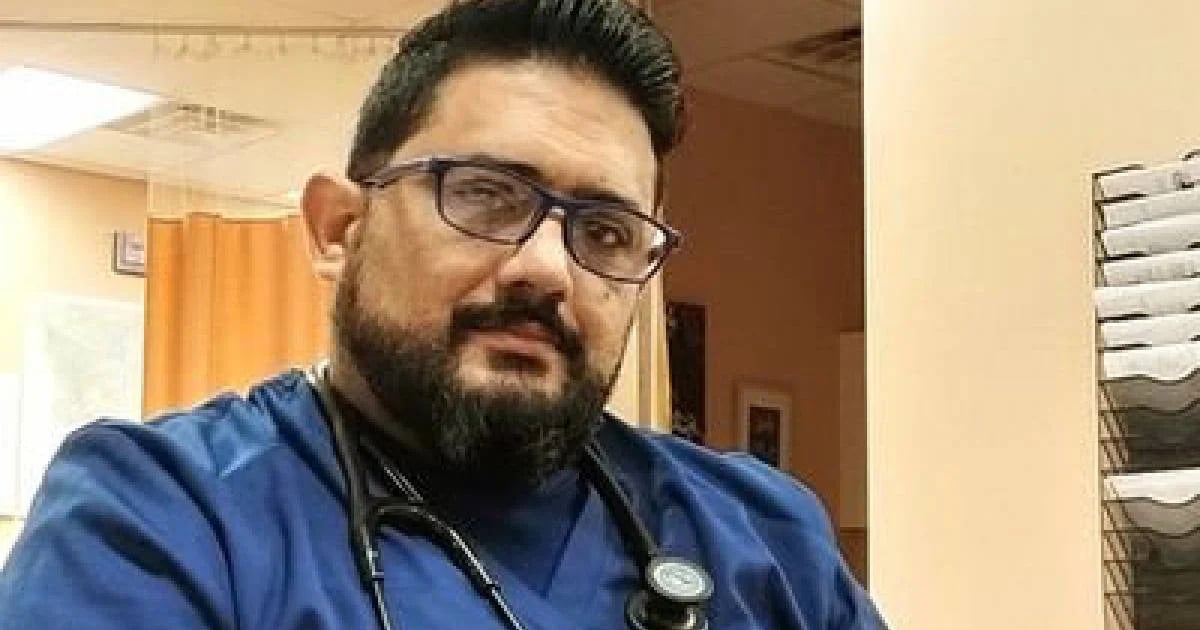
The Cuban doctor Alexander Jesús Figueredo Izaguirre, who arrived in the United States by crossing borders in July 2022, issued a defiant message on his social media amid the growing migratory uncertainty experienced by thousands of Cubans in that country.
"If tomorrow I lose my residency due to these stances and the Cuban dictatorship goes insane and allows me to enter, they better be prepared," he warned on Facebook, referring to the fact that Cuba decides which deportees it accepts and which it does not.
His post responds to a comment from the dissenting lawyer Manuel Viera, who remains in Cuba and has criticized both the regime and the U.S. immigration policy.
Figueredo, known for his activism on social media and his critiques of the Cuban healthcare system, currently lives in Houston, Texas, where he works at a clinic while preparing to validate his degree.
In his message, he referred to the current political climate in the United States, where recent actions by the government of Donald Trump have raised concerns among those who arrived under humanitarian programs or without a clear path to legalization.
"I do not kneel before Trump or Díaz-Canel," he wrote. "I say what I think, even if it hurts, and although it bothers some more than a truth spoken loudly in the middle of an empty square."
Although he did not directly mention his immigration status, Figueredo hinted that he could be affected by the new policies. His response to Manuel Viera made it clear that he is willing to continue fighting if he is forced to return to Cuba: "If one of my feet crosses the border back, I will call the entire Bayamo to the streets."
Crossed Critiques: Politics, Migration, and Cynicism
The digital conversation arose from an analysis published by Manuel Viera, who criticized on Facebook the "cynicism" of the immigration policies of both governments.
Viera, who announced her intention to leave the country in September, described the treatment of migrants by the United States as cynical: "Welcoming thousands of people with balloons and songs, only to then give them 30 days to leave the country," and compared it to the official acts of the Castro regime.
He also noted that both Cuba and the United States have used migration as a political tool, while "the only ones affected have been the Cuban families."
"Trump makes everyone pay because of a few and causes suffering to thousands of families..." he emphasized, a stance shared by his compatriot in exile.
The intersection between Viera and Figueredo occurs at a time of heightened tension for the Cuban community in the United States, following the announcement of the elimination of the humanitarian parole program by the Trump administration, which could leave thousands of people without legal protection.
Although Figueredo has had permanent residency since last year and is not at risk of deportation, his message reflects concern for those who have arrived recently and have yet to regularize their immigration status.
The physician had to leave Cuba after being professionally disqualified by the regime, as retaliation for his critical stance toward the healthcare system and the government. His departure from the country occurred alongside his colleague and fellow activist Alexander Pupo Casas, another doctor who faced sanctions for expressing himself freely.
Both crossed multiple borders until they reached lands of freedom, and since then they have maintained a direct stance against authoritarianism and in defense of the rights of Cubans.
Frequently Asked Questions About the Situation of Cuban Migrants in the United States
What challenges does Cuban doctor Alexander Figueredo face in the United States?
Alexander Figueredo faces immigration uncertainty due to Trump's policies, and although he has permanent residency, his critical stance towards the Cuban regime and U.S. immigration policies keeps him at the center of controversy. His situation reflects the concerns of many Cubans who have recently arrived without a clear path to legalization.
How do Donald Trump's immigration policies affect Cubans in the U.S.?
Trump's policies have generated fear among Cubans with precarious immigration status, such as beneficiaries of humanitarian parole and those with an I-220A. The revocation of these statuses could expose thousands to deportation proceedings, increasing the uncertainty about their future in the United States.
What is the I-220A status and how does it affect Cuban immigrants?
The I-220A status is a temporary stay permit in the U.S. granted to immigrants while they await legal resolutions. Many Cubans with this status fear deportation due to the lack of a clear path to legalization, which creates great uncertainty within the Cuban community.
Why do some Cubans choose self-deportation in the U.S.?
Some Cubans choose self-deportation due to uncertainty and lack of information about their immigration options in the U.S. They fear being detained and forcibly deported, so they prefer to return voluntarily to Cuba, despite the economic and social challenges on the island.
Filed under: