
Related videos:
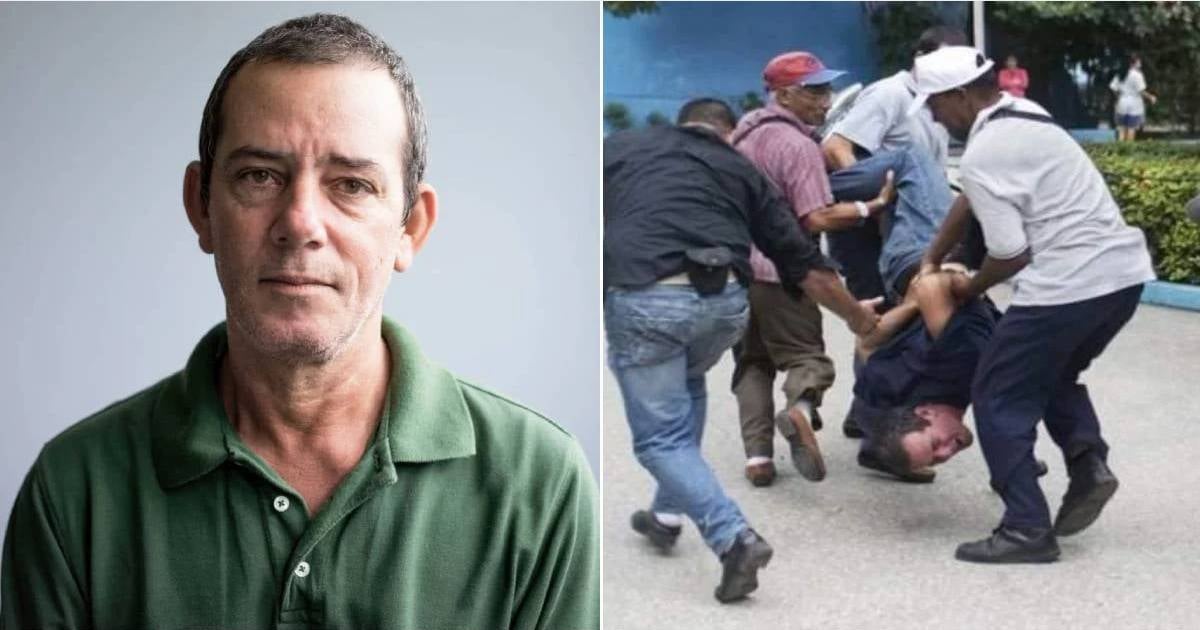
The Committee to Protect Journalists (CPJ) expressed its concern this Saturday regarding the imminent risk of deportation of the independent Cuban journalist and former political prisoner Lázaro Yuri Valle Roca, who is currently residing in the United States under humanitarian parole.
According to a report by CPJ on its official X (formerly Twitter) account, Valle Roca and his wife, Eralidis Frómeta, received letters from the Department of Homeland Security (DHS) informing them that they must leave the country by April 25 or they could face expedited deportation proceedings.
The CPJ urgently urged U.S. authorities to reverse this decision, which was made in the context of the revocation of the humanitarian parole ordered by Donald Trump.
Valle Roca left Cuba in June 2024, after serving nearly three years in prison for the alleged crime of "enemy propaganda," related to the distribution of critical materials against the Cuban regime.
His release was made possible thanks to the efforts of his wife and the approval of a humanitarian parole granted by the U.S.
The situation for the journalist has now become more complicated with the cancellation of parole programs for nationals of Cuba, Haiti, Nicaragua, and Venezuela, a measure announced by DHS on March 25, in compliance with Executive Order 14165 signed by President Donald Trump, aimed at tightening immigration policy and strengthening border control.
In a post on his social media, Valle Roca said, "They want to return us to death, but have FAITH in God and in our brothers. If they return me to my beloved Homeland, I will enter as always shouting #DownWithTheCubanDictatorship."
The official document received by the political prisoner indicates that his parole will end on April 24, 2025, and that any subsequent stay in the U.S. will be considered illegal presence, unless he obtains another legal basis to remain in the country.
Additionally, his employment authorization related to his immigration status has been revoked.
This decision threatens to jeopardize the life and freedom of Valle Roca, who has been a victim of political persecution in Cuba and whose public activism puts him in a high-risk situation if forced to return.
Human rights advocacy organizations and activists from the Cuban exile community have expressed alarm over what they consider an unjust and inhumane measure, urging U.S. immigration authorities to ensure effective protection for political refugees like Valle Roca.
Frequently Asked Questions about the Situation of Yuri Valle Roca and the Revocation of Humanitarian Parole
Why is Yuri Valle Roca facing deportation from the United States?
Yuri Valle Roca is facing deportation due to the revocation of the humanitarian parole that allowed him to reside temporarily in the United States. The Department of Homeland Security (DHS) notified that his legal status will expire on April 24, 2025, and thereafter, his presence in the country will be considered illegal unless he obtains another legal basis to remain.
What risks does Yuri Valle Roca face if he is deported to Cuba?
If Yuri Valle Roca is deported to Cuba, he faces serious risks to his life and freedom due to his history of opposition to the Cuban regime. Valle Roca has been a victim of political persecution in Cuba and, as a political prisoner, his safety could be seriously compromised if he returns.
What measures has the U.S. government taken regarding humanitarian parole?
The administration of Donald Trump has revoked the humanitarian parole program, affecting more than 530,000 migrants, including Cubans, Haitians, Nicaraguans, and Venezuelans. This measure, which takes effect on April 24, 2025, will require beneficiaries to leave the United States or face deportation.
How has the international community reacted to the revocation of humanitarian parole?
The international community has reacted critically to the decision to revoke humanitarian parole. Organizations such as Amnesty International have described the measure as a disregard for human rights, warning about the devastating consequences for the affected migrants.
Filed under: