
Related videos:
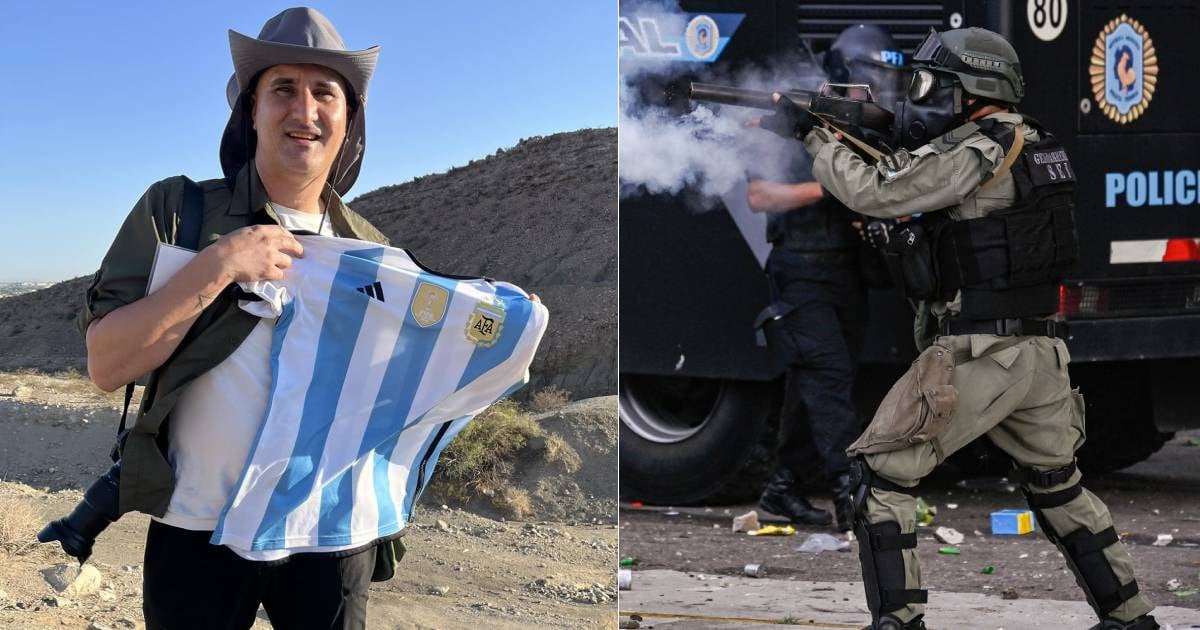
The Argentine government dismissed the Cuban photographer Kaloian Santos Cabrera, the author of an image that became crucial in identifying the police agent who seriously injured a reporter during the retirees' march on March 12 in Buenos Aires.
The images —taken in front of the Argentine Congress— reveal not only the exact moment of the shot but also the name of the officer on his uniform, which allowed the independent platform Mapa de la Policía to reconstruct the events that led to photographer Pablo Grillo being hospitalized due to a head injury. Kaloian's visual work was crucial in publicly exposing state violence.
The dismissal of Kaloian occurred on March 31, just a few days after the widespread release of the images. The public complaint was made by the researcher from the University of Buenos Aires Cora Gamarnik, who directly accused the government of "censoring the messenger" in retaliation for documenting an abuse.
According to the ATE (Association of State Workers), Kaloian was the only worker laid off from the Secretary of Culture on that date. When he requested his reinstatement, the authorities allegedly responded that the order “came from above” and was “irreversible”. Kaloian had been working at that institution for 13 years.
"Thank you for your photos, Kaloian. This farewell will be a point of pride in your career," wrote Gamarnik on his social media, in a statement that has been replicated by hundreds of journalists, photojournalists, and human rights organizations. Although Kaloian himself has not yet made a statement on the matter.
Born in Holguín, Santos Cabrera worked as a photographer and journalist for the Cuban state newspaper Juventud Rebelde and the digital magazine La Jiribilla.
Its aesthetic and discursive gaze —at least in its early years— was inscribed within the narrative of the Revolution. Many of its photographic essays and visual chronicles presented a romantic or legitimizing view of Cuban socialism, with a strong emphasis on sacrifice, national identity, and resistance to "the aggressions of imperialism."
For 13 years, he worked for the National Secretariat of Culture of Argentina, where he carried out a sustained effort in institutional, cultural, and street coverage. Additionally, he has contributed to various print and digital media, including Página/12, where his photographs have illustrated high-impact reports on social and political issues.
He has exhibited his work in galleries and cultural spaces in both Buenos Aires and Havana, and is a part of photography collectives in the region.
In recent years, their work in Argentina has been more connected to critical photojournalism in democratic contexts, documenting social movements, police abuses, and inequality.
It is unclear whether this turn signifies a break with the Cuban regime or an ideological shift, but his dismissal in Argentina for photographing an act of state repression paradoxically places him in a situation similar to that of many reporters who, in Cuba, have been silenced for showing what those in power do not want to be seen.
Frequently Asked Questions about the Dismissal of the Cuban Photographer Kaloian Santos Cabrera in Argentina
Why was Kaloian Santos Cabrera dismissed from the Ministry of Culture of Argentina?
Kaloian Santos Cabrera was dismissed from the Secretariat of Culture of Argentina after his photographs were used to identify a police officer who seriously injured a reporter during a retirees' march. The dismissal occurred as retaliation for documenting police abuse. The decision was denounced as an act of censorship by the Argentine government.
How did the photographs of Kaloian Santos Cabrera contribute to the investigation of the incident at the pensioners' march?
The photographs by Kaloian Santos Cabrera captured the exact moment of the shot and displayed the agent's name on their uniform, which allowed the independent platform Mapa de la Policía to reconstruct the events. This material was crucial in publicly exposing state violence at the event.
What has been the community's reaction to the dismissal of Kaloian Santos Cabrera?
The community, including journalists, photojournalists, and human rights organizations, has shown its support for Kaloian Santos Cabrera, echoing the complaint of censorship and highlighting his bravery in documenting state abuses. A wave of solidarity and recognition for his work has emerged.
What is Kaloian Santos Cabrera's professional background?
Kaloian Santos Cabrera is a Cuban photographer who worked for 13 years in the Secretariat of Culture of Argentina, engaging in institutional, cultural, and street coverage. With a career that includes collaborations with media outlets such as Página/12, his focus has been on critical photojournalism, documenting social mobilizations and police abuses.
Filed under: