
Related videos:
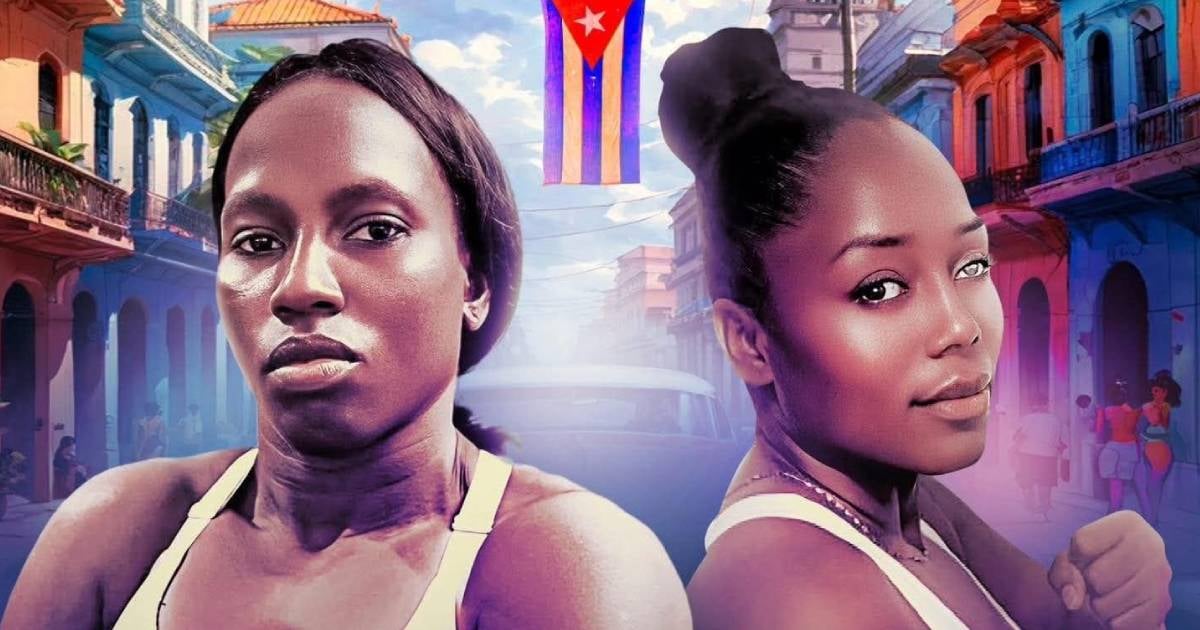
Yakelín Estornell Elizastegui will make history this April 11. The two-time Cuban champion and multiple international medalist will debut as a professional boxer in her homeland, becoming the first woman to do so under the Cuban flag, as highlighted by the event organizers.
Her fight against the Dominican Lina Tejada, scheduled for four rounds, will take place at the luxurious Hotel Meliá Internacional in Varadero, as part of the Cuban Boxing Night event, organized by the German promoter AGON Sports & Events, in collaboration with the Cuban Boxing Federation.
“No am fighting just for myself. I am fighting for the next generation of Cuban female boxers,” stated Estornell, who participated last year in the Olympic qualifying tournament for the Paris 2024 games.
AGON Sports has highlighted the symbolic value of the moment:
“The event will not only be remembered for the highly decorated Cuban boxers and the fights for the WBA title: with Yakelín Estornell Elizastegui, a woman will step into the ring as a professional boxer under the Cuban flag for the first time. A milestone for Cuban boxing, and AGON Sports is also involved!”
Although Cuba has had prominent female figures in amateur boxing in recent years, none had yet taken this step within the country and under an officially recognized structure.
This debut comes in a context where professional boxing has been making its way onto the Island, after more than six decades of prohibition.
In addition to the bout between Estornell and Tejada, the event will feature high-stakes matchups:
Julio César La Cruz vs. Dilan Prasovic, Arlen López vs. Martín Bulacio, Lázaro Álvarez vs. Miguel Queliz Santos, Erislandy Álvarez vs. Brainer Vásquez, Moussa Gholam vs. Misael Vásquez. But the match between Estornell and Tejada, beyond the titles and the spectacle, is the one that will be recorded in the history books.
For more than six decades, professional boxing was a forbidden word in Cuba. After the Revolution, Fidel Castro's government completely abolished paid boxing in 1962, citing its mercantilist and exploitative nature.
In exchange, the amateur model was promoted, under the auspices of the State, which yielded undeniable results in the Olympic medal count where Cuba became a global boxing powerhouse.
But time, along with the economy, has done its part. Since 2022, Cuban boxers have been granted permission to venture into professionalism, always under strict state supervision, in a scheme that has been criticized for its lack of transparency and for maintaining strict controls over contracts and athletes' earnings.
First time? Not exactly: Havana has already had its champions' night
Although this poster has been marketed as "the great night of the return of professional boxing to Cuba", it is not the first time that rented gloves have crossed Cuban soil since 1962.
In August 2024, the Coliseum of the Sports City in Havana hosted the so-called "Night of Champions", where Cuban boxers swept their international rivals in six matches.
It was an event driven by the International Boxing Association (AIBA), and although less luxurious than the one in Varadero, it served as the true return of professional boxing to the island after more than half a century.
The difference now is clear: Varadero seeks spectacle, dollars, and international visibility. Havana offered discipline, results, and internal propaganda.
Real opening or controlled ring?
Although the return of professionalism may seem like a sign of openness, many analysts, sports journalists, and activists warn that the Cuban model still maintains strict control over the careers of athletes. Boxers do not negotiate their contracts freely. The State, through the Federation and authorized promoters, manages their appearances, earnings, and image rights.
And while many of these athletes succeed and enrich themselves abroad, those who remain within the state system continue to be bound by unclear agreements, with a significant portion of their earnings in the hands of the official sporting apparatus.
Therefore, the Varadero evening is much more than a series of boxing matches. It is an attempt to relaunch the "Cuba" brand to the world through muscle and spectacle. But it is also a reflection of the internal contradictions of a country that represses individual initiative while promoting superficial openings.
Filed under: