Orlando Cruzata, director of the Lucas Awards, admitted in the official Cuban press that they resort to censorship as part of a "cultural policy," to prevent negative discussion about the "revolution."
"Of course, we will not allow anyone to speak ill of the revolution on television, it is part of our cultural policy, just as we should not denigrate women, homosexuals, or anyone with different religious inclinations," he said in an interview for Cubadebate.
Questioned about the phenomenon of distribution in Cuba, Cruzata emphasized that they always tried to "add" to cultural projects and quoted the late art critic Rufo Caballero: "True cultural processes include, not exclude." "Those who wish to do so have that right, but true cultural projects cannot exclude."
However, he noted that they could not include any negative comments about the Government.
In their view, those in charge of audiovisual projects have a great responsibility when it comes to choosing what is broadcasted and what is not, in a context where mass media has been democratized.
"This is not about being against what a human being decides to express through an audiovisual medium. They are artistic expressions, like painting or poetry. When it comes to major media outlets, what must be respected is the programming policy, which allows these contents to reach thousands of people," they said.
He also added that in deciding what to show on television, one must be "careful" and consider the context.
"The key is to be very careful when choosing what to wear or not to wear. It’s easy to say no, but I believe it’s important to consider the context, who the creators are, and even take into account the creator's own poetic approach, because a mediocre theme can lead to a great music video, or vice versa," he added.
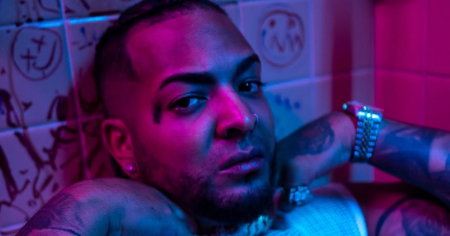
Regarding reggaeton, he said that during a meeting, they imposed on the producers that the lyrics could not be vulgar if they wanted to appear on television and that the productions "had to be of higher quality": "Until that moment, the music videos were of low quality."
Orlando Cruzata, creator and director of "Los Lucas," has faced recent challenges in his relationship with Cuban Television since the program's inception in 1997, although he is now aligned with the official cultural policy.
In February 2023, he publicly denounced his exclusion from the Annual Evaluation Meeting of the Musical Programs Directorate of Cuban Television, an event he used to attend regularly. Cruzata interpreted this exclusion as an attempt to silence his criticisms and opinions regarding the management of that directorate.
Censorship and manipulation hinder cultural, sporting, and artistic practices in Cuba. This type of control highlights the lack of freedom of expression and the use of culture, or even sports, as tools for official propaganda.
In another recent episode of censorship, former pitcher Omar Ajete, regarded as one of the best left-handed players in the history of baseball on the island, was suddenly silenced during a live broadcast of the III Elite League of the sport.
From the Capitán San Luis stadium, Ajete was responding to a question from journalist Yoan Luis Piedra when he dared to mention an uncomfortable truth: the deplorable conditions faced by retired athletes.
When he complained about the attention given to retirees, they cut off his microphone and removed him from the shot along with the interviewer.
Frequently Asked Questions about Censorship and Cultural Policy in Cuban Television
Why does Orlando Cruzata accept censorship on Cuban television?
Orlando Cruzata, director of the Lucas Awards, acknowledges censorship as part of a "cultural policy" that prevents speaking ill of the Cuban revolution on television. This censorship is justified as a measure to protect certain values and to avoid criticism of the government and socialist regime of the island. Cruzata argues that those in charge of audiovisual projects must be careful with what is broadcast, adhering to the official programming policy.
How does censorship affect urban music in Cuba?
Censorship impacts urban music in Cuba by imposing restrictions on the content of lyrics and the quality of productions broadcast on television. In particular, genres such as reggaeton and reparto are subject to criticism and regulations due to their explicit lyrics and cultural impact. The Cuban government seeks to control these genres, often seen as a form of youthful expression that challenges established norms.
What is the Cuban government's stance on reggaeton and the distribution of music?
The Cuban government has shown an ambivalent stance towards reggaeton and distribution. Although it initially opposed these genres due to their "vulgar" and "macho" content, it has recently attempted to incorporate them into its official cultural policy. This reflects an effort to control the influence of these popular expressions while facing an increasingly disengaged youth from official narratives.
What happened with Orlando Cruzata and his relationship with Cuban television?
Orlando Cruzata has faced challenges in his relationship with Cuban television, being excluded from important events and feeling censored for his criticisms of cultural management in the country. In February 2023, he publicly denounced his exclusion from the Annual Balance Meeting of the Directorate of Musical Programs, which he interpreted as an attempt to silence his views on state television.
Filed under: