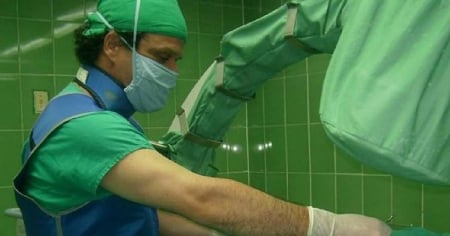
The Government of Venezuela provided Cuba with a donation of 90,000 doses of the vaccine against diphtheria and tetanus, two diseases that Cuban health authorities claim to have eliminated for years.
The news was confirmed by the Ministry of Public Health of Cuba (MINSAP), which will incorporate the batch into the National Immunization Program.
According to the institution, as explained through the government-aligned newspaper Granma, these doses will be administered to first-grade students as part of the official vaccination program in place since 1962.
This donation arrives at a time when the Cuban regime continues to promote the country as a “medical power”, while the reality in hospitals and polyclinics reveals a profound health crisis.
Cubans are facing a lack of basic supplies, shortages of medications, deterioration of hospital infrastructures, and a shortage of specialized personnel, which has led to constant complaints on social media and from patients.
In this context, it is contradictory that a country which prides itself on international leadership in health depends on external donations even to maintain basic childhood vaccination programs.
The delivery of these vaccines, while welcome, demonstrates an increasingly growing dependency and the silent collapse of a system that was a regional example decades ago.
In a Cuba where hospitals lack syringes and patients must bring their own sheets, the official narrative of medical prowess continues to falter. And while the Venezuelan donation may temporarily ease one area of the system, the public health of the island is experiencing its worst moment in decades.
Frequently asked questions about the donation of vaccines from Venezuela to Cuba and the health crisis in Cuba
How many vaccine doses did Venezuela donate to Cuba and for which diseases?
Venezuela donated 90,000 doses of the combined bacterial vaccine, intended for immunization against diphtheria and tetanus. These vaccines will be incorporated into Cuba's National Immunization Program and administered to first-grade school children.
What is the current situation of the healthcare system in Cuba?
The healthcare system in Cuba is undergoing a profound crisis, marked by a shortage of basic supplies, medications, and specialized personnel, as well as the deterioration of hospital infrastructure. More than 70% of essential medications are unavailable, forcing many Cubans to seek alternatives in parallel markets, thus increasing the costs of medical care.
How does the dependence on external donations affect Cuba's image as a medical powerhouse?
The dependence on external donations highlights the fragility of Cuba's healthcare system and contradicts its narrative of being a medical powerhouse. The collapse of the Cuban healthcare system is an increasingly evident reality, and the need for external assistance to maintain basic childhood vaccination programs underscores the precariousness of the sector.
What role does the international context play in the health crisis in Cuba?
The Cuban regime continues to attribute the health crisis to the economic embargo and the rising costs of raw materials and freight. However, internal factors such as poor management and lack of funding have also significantly contributed to the collapse of the healthcare system in Cuba. International aid, such as donations of vaccines and medications, has become a necessary resource to alleviate the situation.
Filed under: