
Related videos:
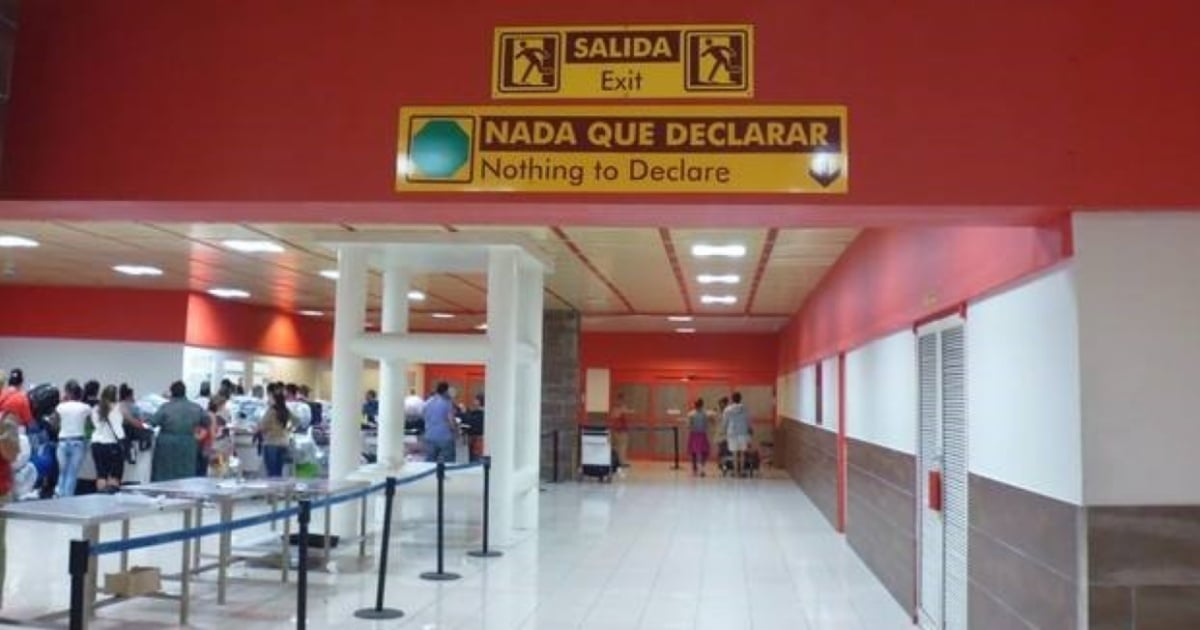
The Cuban regime approved a proposal for justification and the draft of the Customs Decree-Law this Friday, to regulate customs operations, according to what was reported on government social media.
According to the profile of X from the Cuban government, the new legislation will be presented soon before the Council of State. Nelson Cordovés Reyes, head of the General Customs of the Republic (AGR), stated in a session of the Council of Ministers that the Decree-Law aims to regulate the organization of the AGR and its operations regarding the "formalization, authorization, enjoyment, and control of customs regimes."
Moreover, it proposes the "customs clearance" of goods and the means of transport, shipments, travelers, and their luggage.
Customs clearance is the administrative process through which goods are withdrawn from customs after fulfilling the legal and administrative requirements for their legal entry into the country. This involves the nationalization of imported goods, meaning their release so that they can be used or marketed within the country.
The new regulation will also advocate for compliance with the regulations that impact the activity of Customs at the border.
"The text aligns with constitutional principles and current legislation, particularly regarding administrative, tax, financial, and foreign trade matters," the regime states, without providing further details about the document.
Internet users continued to criticize the preparation of another law that only entails greater restrictions for the people. On Facebook, a Cuban emphasized that Customs is the "direct responsible for the blockade against the people of Cuba", as it takes on powers that it grants to itself.
Another person added: "As a result, more misery for the people. Those who propose and approve all these laws, articles, and legislations do not suffer the consequences. Meanwhile, corruption increases at those high levels every day. It's a law of the funnel. Enjoy it, for no evil lasts a hundred years, and your time will come."
In January, the Cuban regime implemented a reform to Decree-Law 22 of 2020 which imposed customs duties in dollars on non-commercial imports of certain items.
The measure introduced significant changes to import policies for travelers, as stipulated in Decree-Law 101, published in the Official Gazette.
The new decree updated the provisions of Decree-Law 22 of 2020, which regulated non-commercial imports, that is, those made by individuals or legal entities for personal consumption or specific use.
Among the most significant changes is the requirement to pay tariffs in freely convertible currency (MLC), such as the US dollar (USD), for certain imported products.
Frequently Asked Questions about the New Customs Decree-Law in Cuba
What is the new Customs Decree-Law in Cuba?
The new Customs Decree-Law aims to regulate the operations of the General Customs of the Republic of Cuba, including the formalization, authorization, and control of customs regimes. It also focuses on the "customs clearance" of goods, shipments, and luggage, allowing for the nationalization of imported products for use or sale in the country.
How does this Decree-Law affect imports in Cuba?
The Decree-Law introduces stricter regulations on the importation of goods, which may imply greater restrictions for travelers and citizens attempting to bring products into the country. The regulation aims to control and formalize the customs clearance process, which could lead to increased costs and customs procedures for personal imports.
What criticisms has the new Customs Decree-Law received?
The criticisms focus on the fact that the Decree-Law could increase the restrictions and difficulties for the Cuban people, who are already facing a severe economic crisis. Internet users have expressed that these regulations only serve to further block access to essential products, while government officials do not face the consequences of the measures they impose.
Are there tariff exemptions under this new regulation?
Yes, there are temporary exemptions for certain products such as food, hygiene items, and medications, as stipulated in Resolution 26 of 2025. These exemptions aim to ease the economic burden on citizens who import these essential products, although they are temporary measures subject to extensions.
Filed under: