
Related videos:
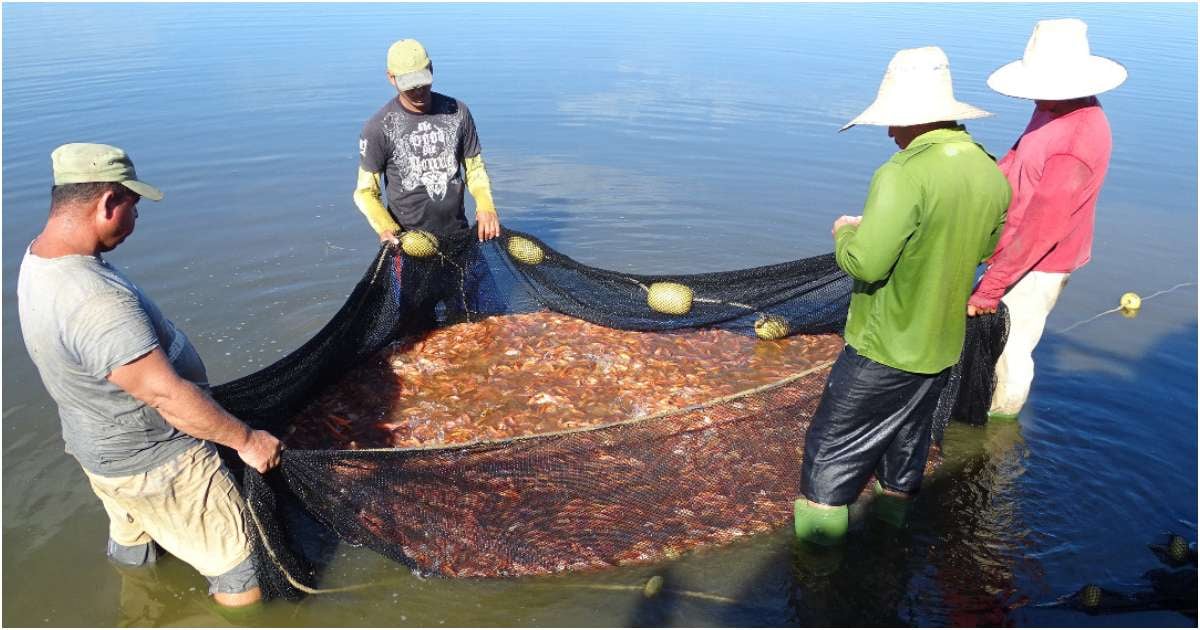
Sancti Spíritus contributes nearly 30% of the freshwater fish caught in Cuba, and in 2024, it surpassed 3,000 tons. However, this food is hardly seen in the retail market or on the tables of its residents, similar to what happens throughout the rest of the country.
While the population wonders why fish is not sold regularly, or disappears as soon as it arrives, the authorities claim that it is indeed being distributed, but the demand is so high that it sells out immediately.
“In the past, citizens could buy eggs, chicken, pork, dairy products, and other items in state-run stores, but those are no longer available, are very scarce, or are priced out of reach for many people,” admitted Erich Pérez Márquez, director of the Empresa Pesquera Sancti Spíritus (Pescaspir), as reported by the official newspaper Granma.
However, the official assured that Pescaspir's products are sold in 15 fixed fish shops and one mobile one and “they sell out quickly because people buy everything we put out and more. That's when the impression arises that the volumes are lower.”
Pescaspir processed about 2,108 tons in 2024, 450 more than in 2023. Investment in the industry exceeded 10 million pesos over the past four years.
According to Pérez, this has allowed for the diversification of production and to "extend" it with nearly 20 derivatives such as croquettes, hamburgers, hash, or cured meats, to reach more families.
However, Granma acknowledged that a portion of that production is directed to other provinces as part of a "national balance" aimed at addressing the high demand for food in the country.
Illegal fishing also reduces product availability, the newspaper justified. According to the report, operations have been carried out and surveillance in the reservoirs has been strengthened to curb it, but these catches, which it labeled as theft, illegal practice, and crime, persist and drive up the price of fish in the informal market.
"Although in the end what is captured (stolen) by poachers ends up in some family pot, it’s not the same. Firstly, this hidden and illegal practice affects the productive levels, processing, and diversification of the company. Secondly: At what price does the product 'land' in the pocket of the buyer? Don’t even mention it!” the article questioned, avoiding any reference to the food crisis in the country, which has led many Cubans to seek alternatives to meet their essential food needs.
However, she did mention that Pescaspir has a line of exportable products, although it does not yet export "everything that is potentially possible."
Privilege or failed policy?
"Eating fish in Cuba is a privilege for a few, an island surrounded by sea—what's the point? In Guantánamo, you can get something to eat thanks to the vendors from Caimanera, but even though the prices are not that high, few people buy it," Marco noted in a comment on the post.
The problem is not just access; there is also frustration with the distribution model. "How can an island not ensure fish for its people?" some wondered.
In 2023, the government claimed that "Cuba is a country surrounded by the sea, but the waters do not have the levels of fish needed to meet the demand of the population, in order to satisfy this growing demand."
The fishing sector in Cuba, like those of housing construction, sugar production, agriculture, and others, fails to meet its production targets due to multiple factors, among which the government cites resource, energy, vessel, and equipment shortages, as well as illegal fishing, while prioritizing exports and tourism over domestic consumption.
In the comments on the Granma report, proposals also emerged to encourage fish farming in cages located in rivers or streams, use freshwater tanks in rural areas, or implement successful practices from countries like Brazil or China.
Spirits fishermen complain that not enough fry is being planted, but the company claims that for the past two years, it has exceeded the target set for 2030 with more than 40 million fry planted, which allows for self-sufficiency, supports other provinces, and increases the survival rate.
In November 2022, it was reported that despite continuously releasing fry, there were "fewer species in the aquatic environments," especially in the Zaza reservoir, and that the aquaculture sector in Sancti Spíritus was failing to meet the fish capture plan in the reservoirs of the area.
Pescaspir promotes partnerships with agricultural producers to use waste in the production of animal feed. A joint strategy is also being studied between the two fishing companies in the region (freshwater and saltwater) and a state-owned small and medium-sized enterprise that could supply the network of fish markets in a more coordinated manner.
From the central government, Vice President Salvador Valdés Mesa called for exploring options to export, generate foreign currency, and improve conditions in the sector. However, on the streets, people are still waiting for fish, rather than plans.
"We seem to have a decorative sea," wrote Pedro Antonio. "We can revive this sector that is so depressed and contribute to food sovereignty and even export much more (...), but we need to break the mold, enhance science, change our mindset, let go of fears and justifications."
Frequently Asked Questions about Fish Availability in Cuba
Why is it so difficult to find fish on the tables of Cubans?
Despite the significant fish production in Sancti Spíritus, the product barely reaches consumers due to high demand and insufficient distribution in the retail network. The supply quickly runs out in the few available fish markets, and part of it is allocated to other provinces as part of a national balance. Additionally, poaching and the prioritization of exports contribute to the scarcity.
What measures are being taken to improve the availability of fish in Cuba?
Investments have been made to diversify fish production into products such as croquettes and hamburgers in order to reach more families. In Sancti Spíritus, productive linkages with agricultural producers are being promoted to improve fish feeding, and a joint strategy is being studied to better supply fish markets.
How does the export policy of fishery products affect the Cuban population?
The export policy for seafood products, such as lobster, restricts the Cuban population's access to these foods. While it generates essential income for the country, this practice leaves Cubans without access to seafood, leading to frustration and discontent. The preference for exports also reflects an economic strategy that prioritizes revenue over domestic supply.
Filed under: