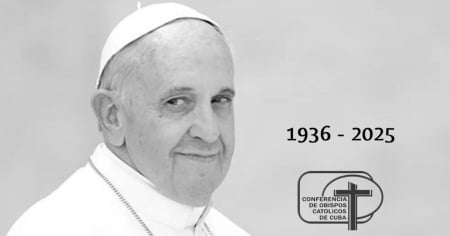
The Cuban leader Miguel Díaz-Canel expressed his sorrow on Monday over the passing of Pope Francis, whom he fondly recalled for his gestures towards the Cuban people and his visit to the island.
"We deeply regret the passing of the unforgettable Pope Francis," wrote Díaz-Canel on his social media account X, in a message where he highlighted the expressions of affection and closeness that, according to him, the pontiff had towards those born on the island. "They were always reciprocated by the Cubans," he added.
In another message, the president recalled Pope Francis's visits to Cuba, as well as "the words of affection he dedicated to our country in his messages."
Díaz-Canel also extended his "sincere condolences to the families and to the international Catholic community."
Francisco visited Cuba from September 19 to 22, 2015, during the diplomatic thaw between Havana and Washington initiated by then U.S. President Barack Obama and General Raúl Castro. That apostolic journey included a private visit to Fidel Castro.
In addition, in February 2016, he made a brief stop during his trip to Mexico, where he met with Patriarch Kirill of Moscow.
During his papacy, he maintained a close relationship with the Cuban regime and was criticized by sectors of the exile community and dissidents for not speaking out openly against the repression on the island.
In June 2023, Miguel Díaz-Canel held a meeting with Pope Francis at the Vatican. He described the meeting as a “pleasant reunion.”
They discussed various topics related to the "current Cuban reality." Díaz-Canel also expressed his gratitude to the pontiff for his signs of "closeness and encouragement" towards Cuba, and he emphasized their shared views on urgent matters on the international agenda.
More than a year later, on February 23, 2025, amidst the serious health crisis of Pope Francis, Díaz-Canel shared a message on social media wishing the leader of the Catholic Church a speedy recovery.
The Pope Francis has passed away this Monday, April 21, 2025, at the age of 88, at the Casa Santa Marta residence in the Vatican. Cardinal Kevin Farrell, Camerlengo of the Apostolic Chamber, officially announced his death at 9:45 a.m. Rome time.
Frequently Asked Questions about the Death of Pope Francis and Cuba's Reaction
What did Miguel Díaz-Canel say about the death of Pope Francis?
Miguel Díaz-Canel expressed his sorrow over the passing of Pope Francis, fondly recalling his gestures towards the Cuban people and his visits to the island. He also extended condolences to the family and the international Catholic community.
What was Pope Francis's relationship with the Cuban government like?
During his pontificate, Pope Francis maintained a close relationship with the Cuban regime, facing criticism for not openly speaking out against the repression on the island. He visited Cuba in 2015 and played a key role in the reestablishment of diplomatic relations between the United States and Cuba.
What impact did Pope Francis's visit to Cuba in 2015 have?
Pope Francis's visit to Cuba in 2015 took place during the diplomatic thaw between Havana and Washington, and was a significant milestone in the relationship between the Catholic Church and the Cuban government. It included a private visit with Fidel Castro and was seen as a tacit endorsement of the regime.
How was Pope Francis's health in his final days?
Pope Francis died at the age of 88 after a critical deterioration of his health due to a lung infection with severe complications. He was hospitalized for bronchitis that progressed to bilateral pneumonia and experienced respiratory difficulties in his final days.
What role did the Vatican play in the releases of prisoners in Cuba?
The Vatican mediated the release of 553 prisoners in Cuba, a gesture that was seen as a reflection of the spirit of reconciliation promoted by Pope Francis on the eve of the Holy Year. This action coincided with Cuba's removal from the list of state sponsors of terrorism by the U.S.
Filed under: