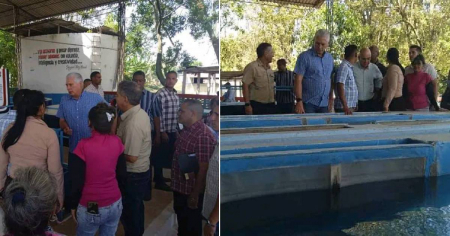
The Cuban leader Miguel Díaz-Canel acknowledged the existence of troubling social manifestations such as child labor, begging, informal work, and harassment of tourists, phenomena that, he stated, had been eradicated and should not be allowed to resurface, even in the current economic crisis scenario.
“We have always felt proud, because the Revolution eliminated them, and we cannot allow this to proliferate during this period of economic crisis: the needy, the beggars, street vendors with children, the harassment of tourists,” said the leader from the province of Granma.
However, instead of taking direct state responsibility for the collapse of Cuban social fabric, Díaz-Canel chose to place blame on families, suggesting that many of the cases that today outrage public opinion are not a result of government ineffectiveness, but rather the alleged “shamelessness” of some citizens.
"There are people who need to be attended to, who need assistance, but there are also many others for whom we must ask families to take responsibility, according to the laws we have […]. There are people who appear to be physically well, who could be working, yet they are taking advantage of the situation and creating very negative circumstances," he said.
When stating that these situations should not be addressed “with welfare” and distinguishing between the “vulnerable” and the “frauds,” Díaz-Canel introduces a narrative that criminalizes poverty, a common strategy used to justify the lack of structural response with punitive or selective measures.
During decades, the Cuban government systematically denied the existence of phenomena such as begging or child labor. Admitting their proliferation today not only implies a break from the foundational revolutionary narrative but also exposes the social consequences of the current economic model.
In March, a report broadcasted by Canal Caribe, titled "Actions to Prevent Wandering Behaviors in Cuba," pointed to addictions as the main culprit for the existence of homeless people living on the streets, neglecting to mention the deep structural roots and the state's failure to address the crisis.
In Las Tunas, the press addressed child labor, shedding light on a phenomenon that, although informal and shaped by the economic crisis, undermines fundamental rights of children.
This approach not only evades self-criticism, but also opens the door to new forms of social control and stigmatization, with potential legal implications under the new Penal Code and the Family Code, both referenced in the speech as tools for holding accountability.
Despite the seriousness of the diagnosis, the leader did not announce any specific public policies or immediate actions to address the growing vulnerability of thousands of Cubans.
Frequently Asked Questions about Child Labor and Begging in Cuba
What has Díaz-Canel acknowledged about child labor and begging in Cuba?
Díaz-Canel has acknowledged the existence of child labor and begging in Cuba, phenomena that, according to him, had been eradicated by the Revolution but have resurfaced in the context of the current economic crisis.
How has Díaz-Canel responded to criticism regarding social collapse in Cuba?
Díaz-Canel has chosen to hold families accountable, suggesting that the "shamelessness" of some citizens is the cause of these problems, instead of taking direct state responsibility for social decay.
What implications does Díaz-Canel's narrative on poverty in Cuba have?
The narrative of Díaz-Canel criminalizes poverty, making a distinction between "vulnerable" individuals and "impostors," which justifies punitive and selective measures instead of addressing the problem in a structural way. This stance evades self-criticism and could have legal implications under the new Penal Code and the Family Code.
What has been the historical stance of the Cuban government regarding begging and child labor?
For decades, the Cuban government denied the existence of begging and child labor. Acknowledging their proliferation now marks a break in the revolutionary narrative and exposes the social consequences of the current economic model.
Filed under: