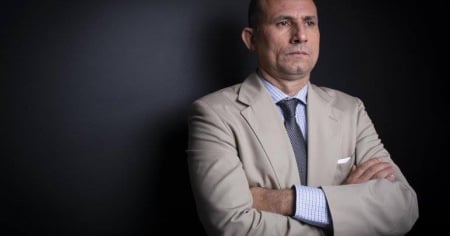
The Florida attorney, immigration expert, Willy Allen, discourages Cuban parents emigrating to the United States from sending their children alone to cross the border with a grandmother, older sibling, or aunt. The issue is that these minors are not given an entry document to the country, which is necessary for later regularizing their immigration status. Therefore, he sends a clear message: "Don't risk your children," he said in an interview granted this Monday, April 21, to CiberCuba.
"I have been asking people for years not to risk their children crossing the border alone. And alone means with a grandparent, with siblings, or with uncles, because they will not be given an entry document and they will not be granted parole internally," Allen said.
"When you are a minor and you enter with your grandmother, your aunt, or your older brother, you do not receive an entry document (to the United States). You are detained in a shelter, and when you are released, it’s only with an NTA (Notice to Appear) and a court date. It is very difficult at that moment to fight these cases, especially when they involve young children, such as seven-year-olds, who are in front of a judge. My experience, at least here in Miami, has been that when I have had these types of cases, I have managed to get the prosecutors and the judge to agree to close the court so that the child can be connected with what their parents have in the United States. The reality is that often, parents who have I-220A or are waiting to legalize their status or have been waiting for a long time become anxious and instead of waiting to bring their children to the United States through family petitions, once they are legalized, they bring them with older siblings, grandparents, aunts, or cousins. For the past seven years, these minors have not been given an entry document to the United States; they are only given a notice to go to court, which takes away their opportunity to easily legalize their status. Right now, I have a girl who entered at the border with an aunt, who was not given an entry document, and I am currently looking for a way to legalize her now that she has entered without documentation," the lawyer stated.
"I have recommended that they not send the child with the grandparents, siblings, or uncles because it's a disaster when they are minors. A disaster. Even through CBP One. I had a grandmother who entered through CBP One and was granted parole, but they took the granddaughter to a shelter and handed her over to the mother, who has an I-220A, without any entry documents. So it's a huge problem," he emphasized.
One of the solutions involves including the minor who enters the United States without documentation in the mother’s asylum application. "However, if the mother does not win her asylum case, it affects the child and she cannot be legalized. If the mother legalizes herself with the I-220A as a resident, she does not legalize the daughter because the minor does not have a legal entry document," she insisted.
Willy Allen claims that he has gone over seven years without being granted parole for a child who entered alone, that is, without their parents at the border. "Also, absurdly, I have now had several cases of parents who entered with their children, where the children were granted residency, but the parents are being accused of human trafficking for having brought their children illegally. We are challenging the denial of that residency and fighting against the accusation of human trafficking when they enter with their minor child."
The lawyer also addressed the case of Cubans who are receiving notifications declaring them deceased. In his opinion, this is an unusual situation, one he has not encountered in his nearly 40 years of experience. He has never handled a case like this, but advises individuals to appear at the institution that has issued the death notification to prove that they are still alive.
Filed under: