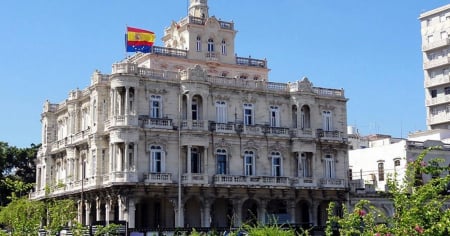
Beginning May 5th, the Consulate General of Spain in Havana will increase the number of weekly appointments available for the submission of applications under the Law of Democratic Memory (LMD) by 336.
The official announcement of the measure was made on April 25, on their profile on the social network X. The new available appointments for the submission of documents represent a 27.2% increase in service capacity, according to the diplomatic mission.
The news has been received with enthusiasm by many Cuban descendants who aspire to obtain Spanish nationality, viewing this expansion as an opportunity to progress in their procedures.
However, the announcement has also sparked a wave of criticism and complaints. Users are reporting delays, lack of transparency, and inefficient management of the process at the Spanish consulate in Havana.
"At this rate, the law will expire, and many of us will be left out. Speed things up, hire more staff, do something," expressed a visibly concerned applicant because the deadline for submitting applications remains set for October 22.
Another user questioned the effectiveness of increasing appointments if the rest of the procedure is not expedited as well. "We hope that if they have increased the daily capacity for receiving applications, they will also accelerate the process of registration or sending literal certifications."
Doubts are not limited to delays in document shipments. There are also voices raised regarding alleged irregularities in the order of service. “The increase in appointments is great, but I have a question. Will people still be skipped? (...) This will be of no use if people do not receive their credentials.”
Others demand consistency between the increase in appointments and the processing of documentation. “If there are more appointments, then provide more credentials,” said a user.
Amid widespread frustration, a message captures the collective sentiment of many Cuban descendants: "We also want to be Spanish by right."
The Consulate, for its part, has not publicly responded to these criticisms. Meanwhile, social pressure is growing on the diplomatic mission, calling for a more effective management of the nationalization process under the Democratic Memory Law.
The desperation of many Cubans to complete their paperwork is evident. Obtaining the Spanish nationality of their grandparents could mean an important change in their lives and an option to escape the misery in Cuba.
Frequently Asked Questions about the Spanish Consulate in Cuba and the Law of Democratic Memory
How has the number of available appointments at the Spanish Consulate in Havana changed?
Starting May 5, the Spanish Consulate General in Havana will increase the number of weekly appointments by 336 for the submission of applications under the Law of Democratic Memory, representing a 27.2% increase in its service capacity.
What are the criticisms of the Spanish Consulate in Havana?
Criticism focuses on the prolonged delays, lack of transparency, and inefficient management of the nationalization process under the Law of Democratic Memory. Users have pointed out issues such as the delay in sending documents and alleged irregularities in the order of attention.
What measures are being taken to improve the nationalization process in Cuba?
The Spanish government has announced the opening of new general consulates in Cuba and the implementation of technological reforms, such as the Dicireg platform, to streamline and modernize consular services. However, the lack of access to the new system remains a problem for many applicants.
What advantages does the new electronic Civil Registry system offer at the Spanish Consulate in Havana?
The new electronic Civil Registry system allows for the digital issuance of consular certificates, reducing waiting times and streamlining administrative processes. This includes certificates of criminal records, marriage, birth, among others.
How does the Law of Democratic Memory affect Cubans seeking Spanish nationality?
The Law of Democratic Memory allows the descendants of Spaniards exiled during the Civil War and Franco's regime to obtain citizenship. However, they must meet certain requirements and face challenges such as the lack of credentials to schedule appointments, which has led to criticism of the consulate for its handling of the process.
Filed under: