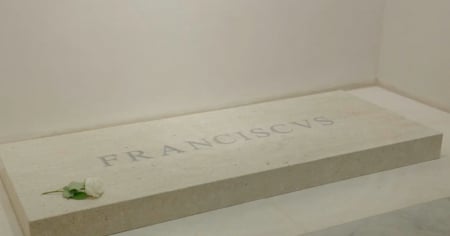
The Catholic cardinals agreed to begin the conclave on May 7 to elect the successor of Pope Francis, choosing to delay the start of the secret voting by two days to encourage more interaction among themselves and to achieve a stronger consensus before secluding themselves in the Sistine Chapel.
The date was set this Monday, April 28, during the fifth General Congregation held in the New Classroom of the Synod. Although the conclave could have started on May 5, they chose to postpone it by two days to hold more informal meetings, exchange opinions, and seek consensus before entering the seclusion that characterizes the voting process.
During the session, 20 interventions were presented that analyzed the current challenges of the Church and the profile that the new Pope should have, reported the site Vatican News.
Cardinals Reinhard Marx, Luis Antonio Tagle, and Dominique Mamberti were also chosen to assist the Cardinal Camerlengo in his duties during these days.
A process governed by centuries-old rules
According to the apostolic constitution Universi Dominici Gregis, promulgated by Saint John Paul II and later updated by Benedict XVI, the Conclave must begin between 15 and 20 days after the vacancy of the Apostolic See, although it can be advanced if all the electors are already present in Rome, as is the case on this occasion.
On the morning of May 7, before entering the Sistine Chapel, the cardinals will celebrate the solemn Mass Pro eligendo Pontifice at St. Peter's Basilica. Then, in solemn procession while singing the Veni, Creator Spiritus, they will enter the Sistine Chapel, where they will take an oath of secrecy and the voting process will begin.
How is the new Pope elected?
To be elected Pope, a cardinal must receive a qualified majority of two-thirds of the votes. Four ballots are scheduled daily (two in the morning and two in the afternoon). If consensus is not reached after 33 or 34 votes, a mandatory run-off will be held between the two cardinals with the most votes, with the requirement of a two-thirds majority remaining in place.
Once elected, the new Pontiff will be asked if he accepts his election and what name he wishes to adopt. Upon confirming his acceptance, the voting ballots will be burned, producing the expected white smoke that will announce to the world the birth of a new Pope.
Subsequently, the chosen one will retire to the "Hall of Tears" to don the papal ornaments, and shortly thereafter, he will appear from the balcony of St. Peter's Basilica to impart his first blessing Urbi et Orbi.
World expectations
The election of a new Pope always creates intense global anticipation, and this time will be no exception. With the ongoing arrival of cardinals from around the world in Rome, and in light of the current challenges facing the Catholic Church, international attention will be focused on every movement within the Vatican starting on May 7th.
Pope Francis passed away on Monday, April 21, 2025, at the age of 88, in the residence of Casa Santa Marta in the Vatican, as reported that day by Cardinal Kevin Farrell, Camerlengo of the Apostolic Chamber, at 9:45 a.m. Rome time.
Frequently Asked Questions about the Conclave to Choose the New Pope and the Situation in Cuba
When will the conclave to elect the new Pope begin?
The conclave to elect the new Pope will begin on May 7. The cardinals decided to postpone the start of the process to allow for more informal meetings and to achieve a stronger consensus before the secret vote in the Sistine Chapel.
How is the new Pope elected in the conclave?
To elect the new Pope, a cardinal must obtain a qualified majority of two-thirds of the votes. Four ballots are conducted daily, and if a consensus is not reached after 33 or 34 votes, a runoff takes place between the two cardinals with the most votes.
Who is the Cuban cardinal participating in the conclave?
The Cuban cardinal participating in the conclave is Juan de la Caridad García Rodríguez, Archbishop of Havana. At 76 years old, he is among the cardinal electors, and his presence is a source of pride for the Cuban Catholic community.
Why did Miguel Díaz-Canel not attend Pope Francis's funeral?
Miguel Díaz-Canel did not attend the funeral of Pope Francis, and instead, Vice President Salvador Valdés Mesa traveled in his place. The specific reason for his absence was not disclosed, but Valdés Mesa led the Cuban delegation to honor the Pontiff in Rome.
Filed under: