
Related videos:
Despite a decrease in the number of reported workplace accidents in Cuba during 2024, the number of work-related fatalities has not changed: 52 people lost their lives in the year, maintaining the alarming statistic of one death per week.
According to the most recent report from the National Office of Statistics and Information (ONEI), the total number of accidents decreased by 37.7% compared to the previous year, dropping from 1,498 to 934.
More than a relief, the official data reveals a worrying trend: while there are fewer accidents, those that do occur tend to be more lethal.
The fatality rate per 1,000 injured individuals increased by almost 60%, rising from 33.7 in 2023 to 53.3 in 2024. This figure reveals a more dangerous work environment and a protection system unable to soften the impact of accidents when they occur.
Vulnerable sectors and critical regions
The report details that the sectors most affected by accidents were public health and social assistance, with 165 incidents and 169 injured. In second place is the manufacturing industry, with 141 events and 156 affected individuals.
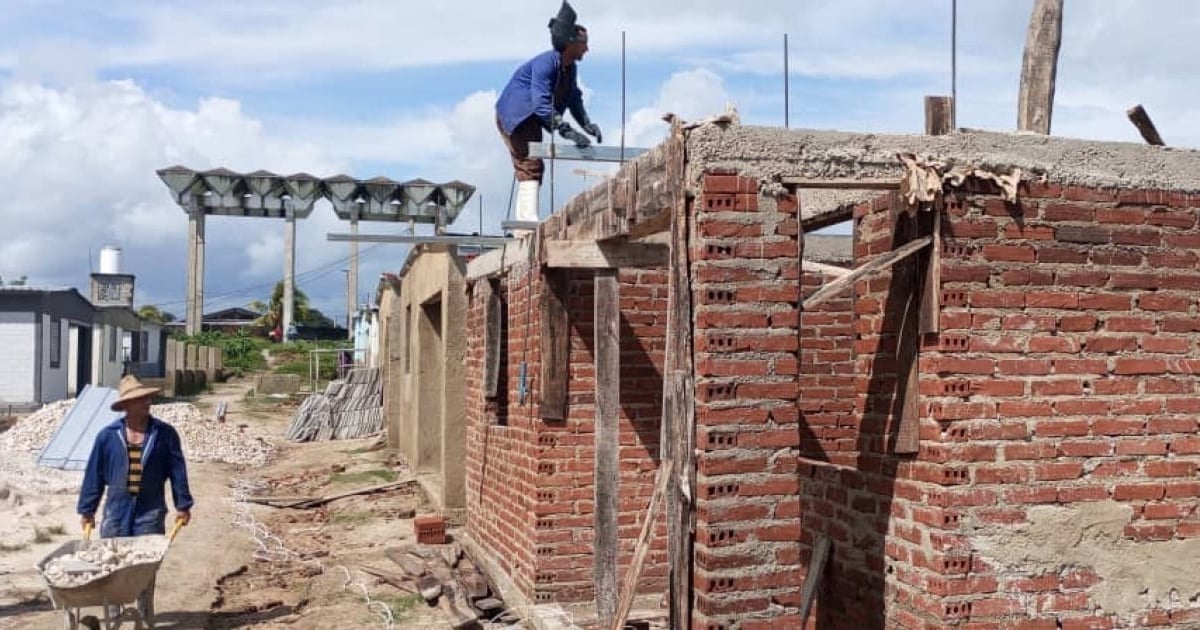
Regarding mortality, the construction sector leads with eight fatalities, followed by the supply of electricity, gas, and water, as well as agriculture and forestry, each with seven deaths.
On the map of provinces, Havana remains the epicenter of workplace accidents. It accounts for 34.6% of the country's accidents (a total of 324), resulting in 341 injuries and eight fatalities.
However, Santiago de Cuba is the province with the highest number of deaths: nine workers lost their lives there in 2024.
Holguín follows Havana in the number of accidents (131), with 133 injuries and four fatalities.
Sancti Spíritus, although listed in official data as the only province without fatalities, was the scene of the tragic death of Alexei Díaz Salas, a worker at an asphalt plant who passed away following a fire at the factory that occurred on December 24. His death was 11 days later, on January 4 of this year.
It is not clear whether the ONEI report includes the deaths of the two Turkish technicians who died after a fire in a truck related to the Hermanos Ameijeiras hospital.
Structural disrepair
The number of injured workers also saw a decline, dropping by 36.9%, from 1,545 in 2023 to 975 in 2024.
The analysis by gender reveals another constant: men make up the majority of those injured, representing 69.1% compared to 30.9% for women. However, beyond the gender statistics, what stands out is the profound structural precariousness experienced across multiple economic sectors in Cuba.
Workers with minimal or no protection against evident risks, lacking safety equipment, decaying infrastructures, and degraded working conditions make accidents an everyday danger.
In many cases, these are not chance events, but rather foreseeable consequences in a deteriorated system, where work is carried out amid a scarcity of materials and the urgency of production.
The other side of the crisis: absence of state responses
Although official figures indicate a supposed efficiency in reducing accidents, the ongoing occurrence of workplace deaths reveals a persistent crisis in labor safety that is not improving.
The mortality rate is not decreasing, along with a lack of clear and up-to-date information.
Experts agree that an urgent review of labor safety protocols is needed, sustained investment in protective equipment is essential, and above all, a genuine commitment from the Cuban state to the lives and well-being of its workers is necessary.
Meanwhile, in everyday life, a worker dies at their post each week, leaving behind a broken family and an industry that does not respond.
Frequently Asked Questions about Workplace Accidents in Cuba
How many workplace accidents were reported in Cuba in 2024?
In 2024, there were 934 workplace accidents reported in Cuba, representing a decrease of 37.7% compared to the previous year, when 1,498 accidents were recorded. However, the mortality rate did not decrease, indicating a more dangerous working environment.
How many work-related deaths occurred in Cuba in 2024?
In 2024, a total of 52 people died in workplace accidents in Cuba, maintaining the alarming statistic of one death per week. This figure highlights the system's inability to cushion the impact of accidents when they occur.
What are the most dangerous sectors to work in Cuba?
The most dangerous sectors to work in Cuba are construction, electricity, gas, and water supply, as well as agriculture and forestry. In 2024, the construction sector led in fatalities with eight deaths, followed by the other two sectors with seven deaths each.
Which Cuban provinces recorded the most workplace accidents?
Havana was the province with the highest number of workplace accidents, accounting for 34.6% of the incidents in the country, followed by Holguín with 131 accidents. However, Santiago de Cuba reported the highest number of workplace fatalities, with nine deaths in 2024.
What measures are needed to improve workplace safety in Cuba?
To improve workplace safety in Cuba, an urgent review of safety protocols is required, alongside sustained investment in protective equipment and a genuine commitment from the Cuban state to the lives and well-being of its workers. The lack of clear and up-to-date information is also an issue that must be addressed.
Filed under: