
Related videos:
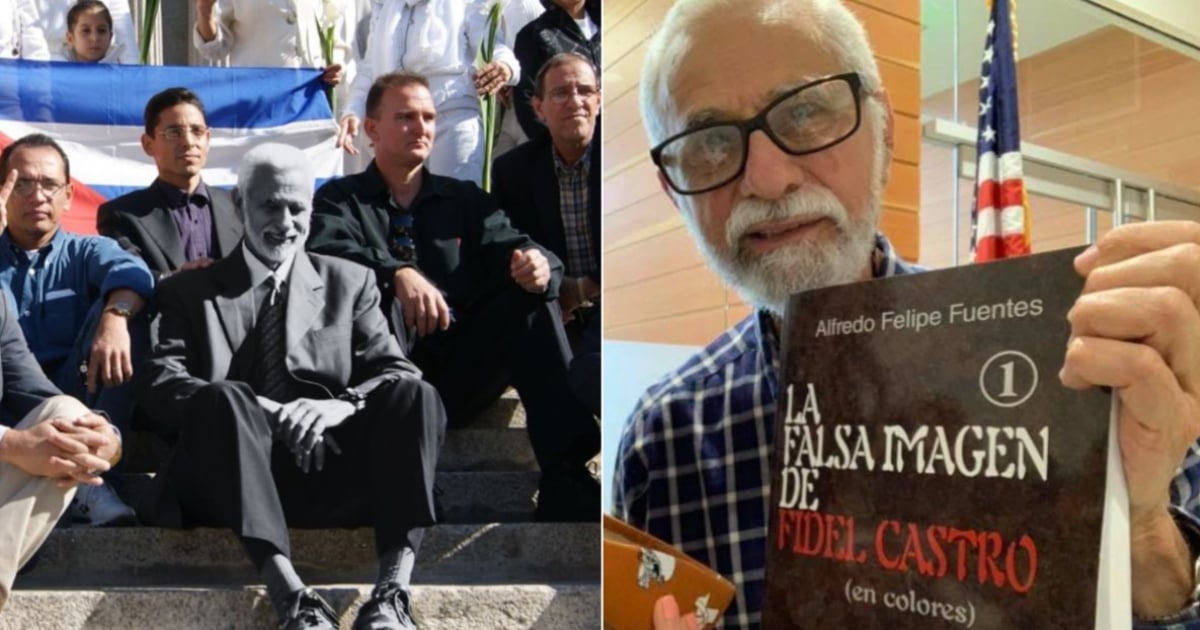
The independent journalist and former political prisoner from Cuba Alfredo Felipe Fuentes passed away in Austin, Texas, at the age of 75, confirmed human rights organizations this Friday.
Fuentes was one of the 75 opposition members sentenced during the repressive wave known as the Black Spring of 2003 in Cuba and was part of the group of prisoners released in 2010 on the condition of emigrating to Spain.
Fuentes, recognized for his activism in defense of human rights and freedom of expression, was sentenced to 26 years in prison after being arrested in March 2003, following a raid on his home in Artemisa.
Accused of violating Article 91 of the Cuban Penal Code, he was incarcerated in the maximum-security prison of Guanajay.
“Alfredo Felipe was one of the most just, most intelligent individuals, with an incredible temperament. A patriot who leaves us without seeing our free and democratic Cuba, or a different Cuba as he envisioned it,” declared former political prisoner Pablo Pacheco Ávila to Martí Noticias.
In 2010, Fuentes was exiled to Spain as part of an agreement between the Catholic Church, the Spanish government, and the Cuban regime. After a stay in Málaga, he settled in Texas, where he lived until his passing.
The Cuban Observatory of Human Rights lamented his death and recalled that his life "was marked by the defense of human rights, freedom of expression, and his bravery in the face of repression."
CUBALEX also recalled that "he was one of the 75 dissidents imprisoned during the Black Spring of 2003, a repressive offensive by the Cuban regime against civil society. For exercising his right to freedom of expression and peacefully defending human rights, he was unjustly sentenced to 26 years in prison in a trial without transparency or due process guarantees."
It is noteworthy that "after seven years of confinement for thinking differently, in 2010 he was exiled as a result of a negotiation between the Catholic Church, the Spanish government, and the Cuban regime."
"From exile—first in Málaga and then in the United States—he maintained, with words and conviction, his dedication to the cause of a democratic Cuba," the publication emphasizes.
An economist by training, Fuentes was a member of the Cuban Workers' Unified Council and actively participated in the Varela Project, driven by the opposition leader Oswaldo Payá.
He began his work as an independent journalist in 1991, and he is the author of books such as The False Image of Fidel Castro: Irrefutable Evidence and Fidel Castro and the Argentine Military Junta, the latter presented in Miami in 2022.
“He was a man who denounced the prison system from within the jails,” Pacheco concluded.
Frequently asked questions about Alfredo Felipe Fuentes and repression in Cuba
Who was Alfredo Felipe Fuentes and why is he important?
Alfredo Felipe Fuentes was an independent journalist and former political prisoner from Cuba, known for his activism in defense of human rights and freedom of expression. He was one of the 75 opponents sentenced during the Black Spring of 2003 in Cuba. His life and work are a symbol of resistance against the repression of the Cuban regime.
What was the Black Spring of 2003 in Cuba?
The Black Spring of 2003 was a repressive wave from the Cuban regime that resulted in the arrest and sentencing of 75 opponents, including Alfredo Felipe Fuentes. These dissidents were detained for exercising their right to freedom of expression and peacefully defending human rights. They were subjected to trials without due process guarantees, which led to international condemnation.
What was Alfredo Felipe Fuentes' life like after his release?
After being exiled to Spain in 2010 as part of an agreement between the Catholic Church, the Spanish government, and the Cuban regime, Alfredo Felipe Fuentes settled in the United States, where he continued his activism for a democratic Cuba from exile. His commitment to the Cuban cause remained until his passing in Texas.
What is the current situation of human rights in Cuba according to the provided context?
The situation of human rights in Cuba remains precarious, with multiple cases of repression and imprisonment of opponents, such as José Daniel Ferrer and Félix Navarro. The Cuban regime continues to use the judicial system to silence dissent, and conditions in the prisons are inhumane, with reports of torture and medical neglect towards political prisoners.
Filed under: