Sonia Rodríguez, a 69-year-old Cuban who has dedicated more than four decades to work, has just experienced a transformative moment: for the first time since 2018, her home is illuminated, stocked with food, and, above all, fully paid off.
This change in her life did not come about due to public policies or social assistance programs from the regime, but rather thanks to the spontaneous solidarity of hundreds of people who, after learning her story on TikTok, chose to help her.
From darkness to gratitude
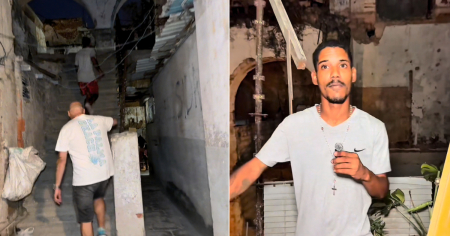
The case of Sonia, a resident of the Punta Gorda neighborhood in Santiago de Cuba, was brought to light through the account of content creator Conducta, a TikToker who documents vulnerable situations both in Cuba and among migrants in Miami.
The woman recounted how Hurricane Sandy destroyed her home in 2012, forcing her to spend five years in a shelter with her children. In 2018, the government assigned her a small house, but she still owed about 6,000 pesos—around 25 dollars at the informal exchange rate—for the property to be legally hers.
Weeks after her story was published, the elderly woman sends a thank-you video, also shared by Conducta, in which she appears smiling, showcasing her house now illuminated and with food on the table.
"I just left the bank after paying for the little house. I feel very happy, joyful, and grateful," she expressed. "I never dreamed of having this support from so far away."
Thanks to the donations received, Sonia was able to pay off her debt to the state and turn on the lights in her home for the first time in years.
She also received essential items such as rice, oil, a small electric stove, and hygiene products. "I now completely own my house; I'm no longer in the dark. I have light," she said excitedly.
The first video of the elderly woman, shared last April, showed a heartbreaking reality: living without electricity or basic furniture, earning a minimal salary as a caretaker and with no possibility of retiring, she was experiencing old age in conditions of absolute precariousness.
Her voice, however, did not convey defeat. With a touching serenity, she asked for the bare minimum: "a little plate, a small glass, a little seat." It was precisely that humility that touched the hearts of thousands.
Sonia's story is not an exception in a country where working poverty is the norm.
With an average salary that barely covers a week of basic needs, many Cuban workers and retirees survive in conditions of extreme vulnerability.
In this context, citizen assistance channeled through social networks has become a kind of informal safety net.
A symbol of a broader reality
Although Sonia's happy ending is a reason for celebration, it also reveals an uncomfortable truth: in Cuba, having worked a lifetime does not guarantee a dignified old age.
The consequences of decades of structural crisis, combined with natural phenomena such as hurricanes and the disastrous economic policies of the government, have pushed thousands to the brink of survival.
Sonia represents a generation that sacrificed for the country and is now aging amid material shortages and unfulfilled official promises. Nevertheless, her story also speaks of resilience, dignity in adversity, and the ability of citizen solidarity to bring about concrete changes.
In closing her message, Sonia expressed her deepest wish: "May God bless you and always be able to help those in need." Her testimony is now not only a reflection of the daily struggles of many Cubans but also a living proof that a gesture, no matter how small it may seem, can change an entire life.
Frequently asked questions about the social and economic situation in Cuba
How did Sonia Rodríguez manage to pay for her house in Cuba?
Sonia Rodríguez, a 69-year-old Cuban, was able to pay for her house thanks to the generosity of hundreds of people who learned of her situation through TikTok. The donations allowed her to settle the debt she owed to the state to legalize her home. This act of civic support occurred in the context of economic hardship in Cuba, where salaries do not meet basic needs.
What is the economic situation of retirees in Cuba?
In Cuba, many retirees face extremely precarious economic conditions. The average salary and pensions are insufficient to cover basic needs for a week. Sonia’s story represents a generation that has worked their entire life but is not guaranteed a dignified old age due to the structural crises and failed economic policies of the country.
What role do social media play in assisting vulnerable individuals in Cuba?
Social media platforms, such as TikTok, have been essential in raising awareness and channeling assistance to individuals in vulnerable situations in Cuba. Stories like that of Sonia Rodríguez have gone viral, allowing civic solidarity to transform into an informal rescue network. This is due to the lack of effective social assistance programs from the Cuban government.
How has Hurricane Sandy affected Cuban families like Sonia's?
The hurricane Sandy, which struck Cuba in 2012, had a devastating impact on many families, including Sonia Rodríguez's. Her home was destroyed, forcing her to live in a shelter for five years before receiving a small state-provided housing unit. However, the difficulties in paying for her house and the lack of state support have affected her life and the lives of many other families impacted by natural disasters.
Filed under: