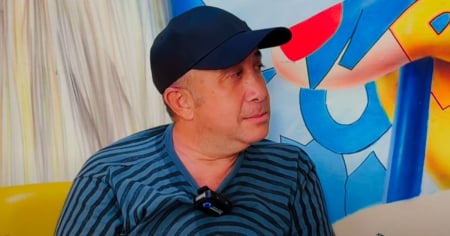
The renowned Cuban actor and comedian Osvaldo Doimeadiós provided a critical perspective on the current situation of Cuban television during an interview on the YouTube channel D'Robles Podcast, hosted by former athlete Dayron Robles.
Doimeadiós addressed various aspects of his artistic career, from his beginnings in acting to his establishment as one of the leading figures of contemporary Cuban humor.
However, one of the highlights was when he reflected on the evolution, and stagnation, of Televisión Nacional de Cuba.
"Unfortunately, television has lost a lot," the artist stated. "I believe there was a time when they didn't want comedians to depend on television; now we don't depend on television and they want us to rely on it. It's quite curious," he added.
Doimeadiós highlighted how the Cuban audience has significantly migrated to social media, where they find a wider variety of content, less censorship, and greater creative freedom.
"The audience has migrated to social media and has other more open options, with less censorship, where one can discuss topics that are sometimes a bit more sensitive or not, but they are more open," he explained.
In this regard, the actor believed that state television has become stuck in rigid structures, detached from the interests of the audience.
"Television has become an overly entrenched structure; it leads to a type of barricade humor where certain topics cannot be addressed, and one ultimately loses the trust and desire to engage with it," he concluded.
The comedian's statements reflect a growing trend among Cuban artists who have opted for digital platforms to express themselves without the restrictions imposed by government-controlled media.
On social media, Doimeadiós is promoting a stand-up comedy project that is gaining more followers. It is called "La Risa por Delante", a show where he and his guests reflect the tenacity and vision of Cuban comedians and content creators in the current context.
The statements made by Doimeadiós, with a broad background in theater, film, and television, are particularly significant due to the authority with which he speaks about the cultural landscape of the country and the censorship that artists face in state media.
Frequently Asked Questions about Criticism of Cuban Television and the Role of Social Media
What did Osvaldo Doimeadiós think about Cuban television?
Osvaldo Doimeadiós expressed a critical view of Cuban television, indicating that it has lost relevance and that comedians no longer depend on it. He highlighted how the audience has migrated to social media in search of more open and less censored content.
Why do the Cuban public prefer social media over state television?
The Cuban public has migrated to social media because they find more varied, less censored content, and greater creative freedom. Social media allows for the discussion of sensitive topics that are not addressed on state television, which is anchored in rigid structures.
How does censorship affect comedians in Cuba?
Censorship limits the opportunities of comedians in Cuba, as the rigid structures of state television do not allow for the discussion of certain topics. Many artists turn to digital platforms to express themselves without the restrictions imposed by official media.
What alternatives do Cuban artists have in the face of censorship in the state media?
Cuban artists have found in social media an alternative to express themselves more freely and reach a broader audience. These platforms allow them to share content without the restrictions they face in state media.
Filed under: