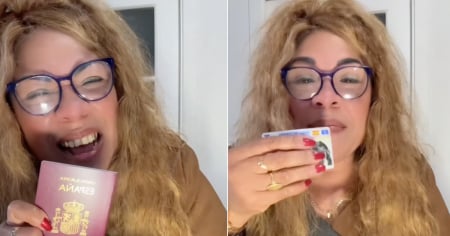
Thousands of Cuban descendants of Spaniards are engaged in a race against time to obtain Spanish citizenship through the Democratic Memory Law (LMD), commonly known as the Grandchildren's Law.
This regulation represents a golden opportunity for legal emigration, but it has also led to a collapse in consulates, documentary fraud, and criticism of the process, especially at the diplomatic mission in Havana.
Below, we explain the most relevant facts, what the Spanish government is doing to expedite the procedures, how the process is progressing, and what you need to keep in mind before the legal deadline closes.
What has happened? Fraud, collapse, and frustration
Since March of this year, reports have emerged regarding the existence of a black market for false documents in Cuba, with manipulated birth and baptism certificates to simulate ties to Spain.
- The Diocesan Historical Archive of Ourense detected documents that appeared to be legitimate, but in reality had been altered.
- According to its representative, Pablo Cid, the certificates that cost 10 euros in Spain are sold in Cuba for up to 3,000 euros. Some intermediary law firms even charge 300 euros for handling these documents.
These forgeries have forced a strengthening of controls and have further slowed down the process, especially in Havana, where the demand has been overwhelming. Daily, the Galician archive receives up to 50 requests, primarily from Cuba, Argentina, and Venezuela.
What is the Spanish government doing?
In response to criticism regarding delays, the Consulate General of Spain in Havana announced an increase in appointments for processing files under the LMD on April 25th:
- Desde el 5 de mayo, supuestamente se habilitaron 336 additional weekly appointments, lo que representa un an increase of 27.2% en su capacidad de atención.
- This expansion aims to relieve the bottleneck created by the high demand for processing Spanish citizenship applications in Havana.
However, many people continue to express their frustration with the slowness, disorganization, and lack of transparency. On social media, applicants complain about stalled processes, jumps in the order of attention, and delays in the delivery of official documents.
How is the process going?
Since the approval of the Democratic Memory Law in October 2022, more than 680,000 applications for Spanish nationality have been recorded, primarily from Latin America and the United States.
As of now, only about 30% of these applications have been processed, which means that more than 474,000 cases are pending resolution.
The Consulate General of Spain in Havana has received approximately 87,000 applications, successfully registering around 56% of them, the highest percentage among the consulates with the greatest demand.
However, those who submit their request via email to start the process receive an automatic response that warns of a wait of up to 10 months just to obtain the credentials necessary to request an in-person appointment.
Cuba is one of the main processing hubs alongside Argentine cities such as Buenos Aires, Mendoza, and Rosario.
What should you take into account?
- The legal deadline for submitting new applications is October 22, 2025.
- If you manage to create your consular account or secure an appointment before that date, you will be able to complete the process until 2028.
- Esto does not mean an extension of the deadline, sino una garantía para quienes properly begin the process within the official deadline.
According to Juan Manuel de Hoz, spokesperson for the Center of Descendants of United Spaniards (CeDEU), the key is to register in the system of the corresponding Spanish consulate before the legal deadline.
The opportunity presented by the Law of Democratic Memory is real, but time is running out. For many Cubans, obtaining Spanish nationality means a way out of the crisis.
Make sure to act legally, avoid questionable intermediaries, and don’t leave your paperwork until the last moment.
Filed under: