
Related videos:
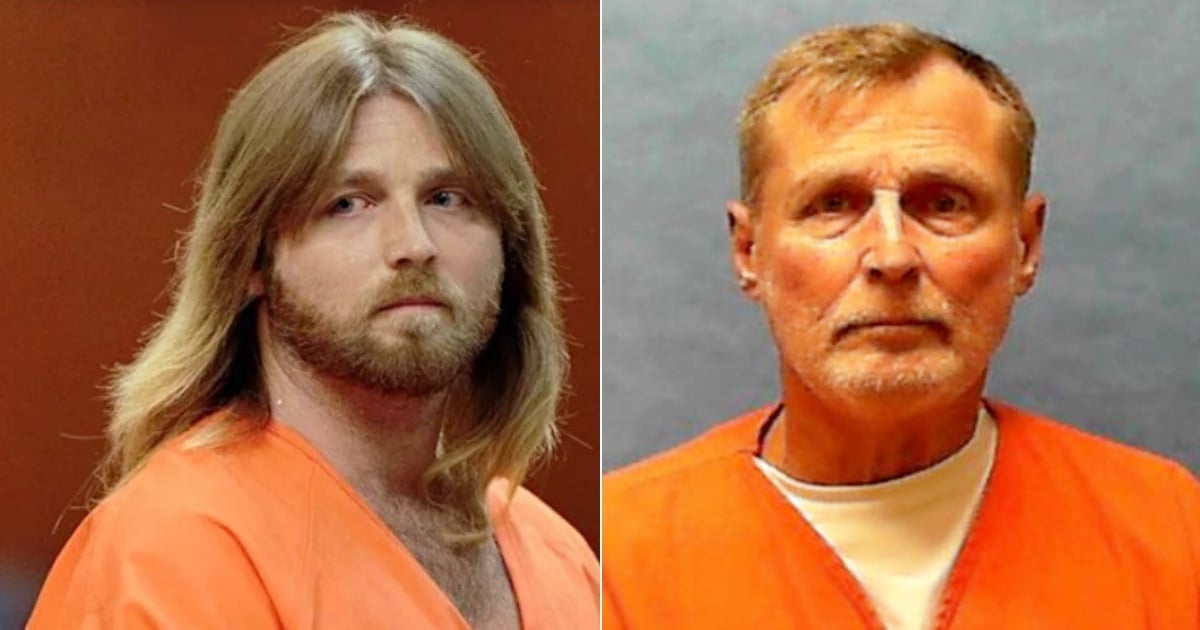
The American serial killer Glen Edward Rogers was executed on Thursday, May 15, at 6:16 p.m. (local time) at Florida State Prison, near Starke.
Known as the "Casanova Killer" for his charisma and the seductive method he used to lure his victims, Rogers was sentenced to death for two murders committed in 1995, although he claimed to have killed around 70 people.
The American press reports that his last words, directed to President Donald Trump, reignited the controversy that has always surrounded his figure.
"President Trump, keep making America great. I'm ready to leave," he said.
The Legacy of a Killer: From Seducer to Predator
Rogers, 62, was executed by lethal injection after spending nearly three decades on death row.
Born in Hamilton, Ohio, his childhood was marked by domestic violence. According to court records, he grew up in a dysfunctional home, witnessing constant abuse from his alcoholic father.
From a young age, Rogers fell into drug and alcohol use and began his criminal career committing petty thefts.
As an adult, he worked in sporadic jobs—from school bus driver to carnival worker—while weaving a web of violent crimes in at least five states: Florida, California, Ohio, Mississippi, and Louisiana.
Also nicknamed the "Killer of the Crossroads" or the "Transcontinental Killer," his victims were typically women between the ages of 30 and 40, with reddish hair, whom he met in bars and motels.
The horror method: Charming appearance, brutal death
Rogers' modus operandi was as methodical as it was brutal.
He used his attractive appearance and charisma to gain the trust of vulnerable women.
After brief encounters, which often ended in fleeting intimate relationships, he would kill them using violent methods such as stabbings or strangulations.
Later, he stole personal belongings from his victims and fled to another state, which complicated his capture for years.
One of the two victims for whom he was sentenced to death in Florida was Tina Marie Cribbs, a 34-year-old mother of two.
Rogers met her in a bar in Tampa and convinced her to take him to a motel. He told his friends he would be back soon, but he never returned.
Days later, Cribbs' body was found stabbed in the bathtub of the room that Rogers had rented.
His ring, watch, and car had disappeared. Rogers was arrested a week later while driving Cribbs' vehicle in Kentucky.
Another case for which he received the death penalty in California was that of Sandra Gallagher, also a mother, whom he met in a bar in Van Nuys. Her body was found burned in her truck near Rogers' home, just a day after they met.
Crimes without trial and connections without evidence
Although he was only convicted of two murders, authorities suspect that Rogers may have been involved in at least five homicides.
He was even linked, without conclusive evidence, to the infamous case of Nicole Brown Simpson and Ron Goldman in 1994.
His brother stated in a 2012 documentary that Rogers confessed to those crimes, but the Los Angeles police strongly denied any evidence linking him to them.
Additionally, besides his two death sentences, Rogers attempted to overturn his verdict three times, all without success.
His lawyers also argued in recent days that a medical condition in his liver could interact with one of the drugs used in the lethal injection, causing extreme suffering, but both the Florida Supreme Court and the United States Supreme Court rejected the argument.
Families of the victims: 30 years of waiting for justice
For the victims' families, Rogers' execution was a long-awaited moment of closure.
Mary Dicke, mother of Tina Cribbs, overcame a brain tumor and another lung cancer with the promise of living long enough to see her daughter's murderer die.
Randy Roberson, whose mother Andy Lou Jiles Sutton was murdered and whose case never went to trial in Louisiana, attended the execution seeking a peace that justice had not provided him for decades.
Jerri Vallicella, sister of Sandra Gallagher, was more blunt: “It has been 30 years of nightmares, and I am ready for this to end.”
An execution that closes a chapter
During the execution, Rogers remained motionless. A guard shook him by the shoulders to check his consciousness, but received no response.
He was the fifth inmate executed in Florida this year and the sixteenth in the United States so far in 2025.
The authorities employed a cocktail of three drugs: a sedative, a paralytic, and a drug that stops the heart.
In his latest statement, he thanked his wife, who had visited him that very day, and added cryptically: "In the near future, your questions will be answered."
The next inmate scheduled for execution in Florida is Anthony Wainwright, on June 10, convicted of kidnapping, rape, and murder.
Frequently Asked Questions about the Execution of Glen Edward Rogers and the Death Penalty in Florida
Who was Glen Edward Rogers and why was he executed?
Glen Edward Rogers, known as the "Casanova Killer," was an American serial killer executed in Florida on May 15, 2025. He was sentenced to death for two murders committed in 1995, although he claimed to have killed about 70 people. Rogers became infamous for his charisma and seductive methods to lure his victims, usually women aged between 30 and 40, whom he met in bars and motels. His modus operandi involved brief encounters that ended in fleeting intimate relationships, followed by violent murders.
What is Florida's stance on the death penalty and how has Ron DeSantis' administration impacted its application?
Florida is one of the most active states in the application of the death penalty in the United States. Under Ron DeSantis's administration, executions have increased significantly, with a focus on reinforcing the image of a "tough on crime" approach. By 2025, Florida has already carried out five executions, reflecting an increase compared to previous years. The governor's decisions have been interpreted as an attempt to appeal to more conservative voters and strengthen his political stance in a state where a large portion of the population supports capital punishment.
What controversies surrounded the figure of Glen Edward Rogers during his conviction and execution?
The figure of Glen Edward Rogers has been surrounded by controversies from his capture to his execution. It is suspected that Rogers may have been involved in at least five more homicides, and he was linked without conclusive evidence to the case of Nicole Brown Simpson and Ron Goldman. Despite Rogers' attempts to overturn his verdict and his lawyers' appeals regarding a possible painful interaction between his medical condition and lethal injection, the courts rejected these arguments. His last words, directed at President Donald Trump, reignited media interest in his case.
How does Florida's death penalty policy affect public opinion and the state's judicial system?
The death penalty policy in Florida generates deep divisions in public opinion. While some defend capital punishment as a necessary form of justice for victims, others criticize the risks of condemning the innocent and the high costs associated with lengthy legal processes. Critics have pointed out that the state’s judicial system has a history of controversies, with convictions that have later been overturned due to procedural errors or insufficient evidence. However, cases with compelling evidence, such as that of Glen Edward Rogers, strengthen the arguments of those who support the death penalty.
Filed under: