
Related videos:
A 25-year-old man without legal status in the United States could become the first individual to be sentenced to death under a new Florida law that imposes an automatic death penalty on undocumented immigrants convicted of capital crimes.
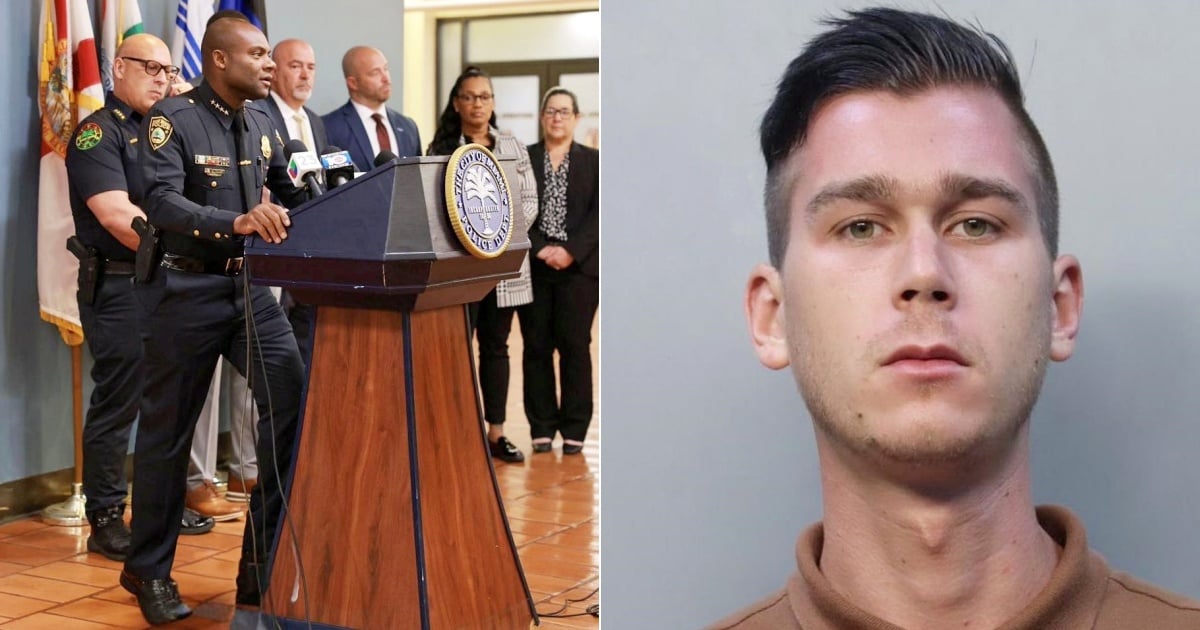
This concerns the Hungarian Zsolt Zsolyomi, accused of murdering two disabled men in the Miami area, as well as other crimes.
The law in question was approved on January 28, 2025 by the Florida legislature in a special session called by Governor Ron DeSantis.
Despite the criticism from various human rights advocates, who question the constitutionality of the measure, some lawmakers are convinced that the regulation will withstand judicial scrutiny.
Interestingly, DeSantis himself has expressed his intention to veto it due to certain clauses he deems "weak," although its final implementation is still under discussion.
A history of violence and crime
Zsolyomi entered the United States with a 90-day visa in October 2022, but remained in the country illegally after his stay expired.
In July 2024, he committed a robbery and was arrested, but was later released under electronic monitoring while his deportation was being processed by Immigration and Customs Enforcement (ICE).
However, the authorities lost track of him when the monitoring system failed, which allowed him to continue committing crimes until his capture at the end of February this year.
Two murders that could cost him the death penalty.
On November 21 of last year, the body of 66-year-old Carlos Alonso Villaquiran was found in his apartment in Miami Beach.
Villaquiran was in a relationship with Zsolyomi, who was using the fake name "Thomas."
According to the investigation, the victim was strangled in her bathtub, where the body was found submerged in water.
Evidence such as text messages, photos, and security camera recordings revealed that Zsolyomi had already attacked and robbed Villaquiran on several occasions prior to the murder.
On January 19th of this year, Zsolyomi committed his second homicide.
His victim in that case was Rodolfo Fernández de Velasco, 71 years old, who was found dead in the driver's seat of his car.
In an attempt to cover up the crime, the killer staged an accident, but investigations revealed that Velasco was strangled with the vehicle's seatbelts.
Security cameras and fingerprints at the scene allowed for the identification of Zsolyomi as the perpetrator.
"The personification of evil" according to the authorities
Miami Beach authorities have classified Zsolyomi as an extremely dangerous criminal.
Wayne Jones, the city police chief, described him as "the personification of evil," warning that if he had not been captured, "he would have continued killing over and over again."
Zsolyomi is currently in custody while the investigation into other possible crimes continues.
The police have urged anyone with information about the accused to contact the authorities.
This case marks a turning point in the application of the death penalty in Florida, and its outcome could set a precedent in the state's legislation regarding undocumented immigrants charged with serious crimes.
Frequently asked questions about the death penalty and immigration legislation in Florida
Why might Zsolt Zsolyomi face the death penalty in Florida?
Zsolt Zsolyomi could face the death penalty in Florida due to a new law that imposes automatic capital punishment on undocumented immigrants convicted of capital crimes, such as murder. Zsolyomi, an undocumented Hungarian immigrant, is accused of murdering two people in Miami.
What does the new Florida law establish regarding undocumented immigrants and felonies?
The new Florida law establishes the death penalty for undocumented immigrants who commit capital offenses, such as first-degree murder or the molestation of minors. This measure is part of a broader legislative package against illegal immigration pushed by Governor Ron DeSantis, which also includes harsher penalties for other crimes committed by undocumented individuals.
What criticisms has Florida's immigration legislation received?
Florida's immigration legislation has been criticized by human rights advocates, who argue that it violates the constitutional guarantee of equal protection. Additionally, its constitutionality is being called into question, with concerns that it could increase the persecution of vulnerable communities. Some Democratic legislators have announced the possibility of filing lawsuits in court.
How does the new law affect public safety in Florida according to its supporters?
Defenders of the new law, including Governor Ron DeSantis, argue that the legislation will make Florida a safer state by imposing harsher penalties on undocumented immigrants who commit crimes. They maintain that the measures will deter potential offenders and enhance security through cooperation with federal agencies.
Filed under: