
Related videos:
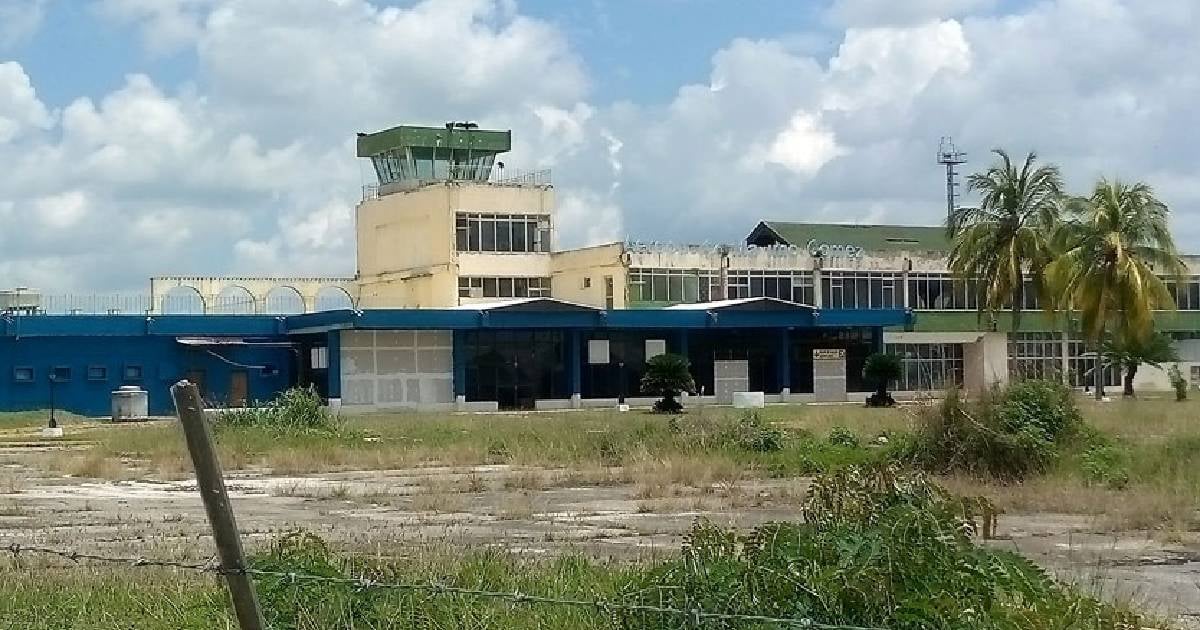
Where planes once landed, cows now graze: the Máximo Gómez Airport in Ciego de Ávila, built with more than 100 million pesos, is now a concrete graveyard consumed by weeds and institutional neglect, a symbol of a Cuba where infrastructure dies from bureaucracy before it becomes obsolete.
More than 20 years after the last commercial flight, the site lies in ruins, with not a single serious project for rescue or re-use in sight. Meanwhile, the country continues to "plan until 2030" without looking back.
Since late 2002, with the opening of the Jardines del Rey International Airport in the tourist area of Cayo Coco, the "Máximo Gómez," located 20 kilometers from the provincial capital, lost its primary function as an intermediate link to the northern keys. Domestic flights to and from Havana and Varadero ceased operations there as well, and it was left without regular commercial traffic, revealed the official newspaper Invasor.
The current image borders on the grotesque: collapsed roofs, parking areas overgrown with weeds, a restaurant that no longer serves food, and rusty, motionless luggage carts as if in a museum of failure.
The platform and the runway, although not completely lost, show alarming deterioration. The runways are overrun by marabou and the facilities have been reduced to skeletons of their former selves. Only
"Now it depicts the imprint of solitude and decay... The airport terminal struggles between existence and non-existence, between silence and horror," emphasized the newspaper.
He lamented that, in over 20 years, "no saving program or initiative has arrived there to prevent the loss of a site built at a cost of more than 100 million pesos, including a significant component in foreign currency."
At the same time, he acknowledged that while rescuing it would involve considerable expenses, “the most sensible and wise approach would be to develop other projects to avoid the complete destruction of what required so much work and effort.”
Invasor noted that, up to now, there are no known procedures for its recovery, nor has it been considered in the National Economic and Social Development Plan until 2030, aimed at improving airport infrastructure or achieving sustainability. Furthermore, the projections from the Ministry of Transportation make no mention of the "Máximo Gómez."
The state's priorities are focused on "Varadero, Santa Clara, and Cayo Las Brujas, as well as maintenance and repair workshops, among other facilities, considering that the country has 22 airports, 10 of which are international." Apparently, the infrastructure that does not serve the tourist hubs, or the regime's triumphalist narrative, simply does not matter.
According to the newspaper, the site could have an alternative use, such as a track for sporting events, a center for skydiving, or racing of karts, motorcycles, and even cars, similar to what occurs at other abandoned airports around the world.
"It would be illogical for it to continue as it has until today, trapped in neglect and an institutional inertia that causes harm. What is logical? To allow local projects, or others, using existing tracks and facilities that generate income and jobs, because there is a lot of money buried there," the report urged.
The case of the airport in Ciego de Ávila is another example of how public value is destroyed in Cuba, not by natural disasters, but by negligence, disinterest, and erratic policies that condemn infrastructure to neglect. In a country where housing is scarce, transportation is collapsing, and the economy is faltering, keeping an airport closed and without purpose is not an exception, but rather a reflection of the nation.
Also in Ciego de Ávila, the budget, which already exceeds 100 million pesos for the capital repair of the Morón Railway Terminal, reflects how infrastructure projects deteriorate and subsequently incur additional costs due to lack of planning and inadequate control over public resources.
In Havana, a great number of buildings are destroyed by the relentless passage of time, along with institutional neglect and abandonment. The lack of resources prevents Cubans from restoring their buildings, and the State does not provide viable alternatives to do so.
The once iconic Teatro Musical de La Habana, a space that once shone as a cultural epicenter, now lies completely abandoned, turned into a dump in Centro Habana.
Similarly, the old Hotel Venus, in Santiago de Cuba lies in ruins and has become a dumping ground, reflecting the neglect of the architectural infrastructure in the city.
In contrast to the destruction of Cuba's urban heritage, uncontrolled hotel investment highlights a symptom of the widespread crisis in the country.
Frequently Asked Questions about the Abandonment of Máximo Gómez Airport in Ciego de Ávila
What is the current status of Máximo Gómez Airport in Ciego de Ávila?
The Máximo Gómez Airport in Ciego de Ávila is in ruins, with the runways overrun by marabou and the facilities reduced to skeletons of their past. There are no serious rescue or repurposing projects underway.
Why did Máximo Gómez Airport stop operating commercial flights?
Since the opening of the international airport of Jardines del Rey in Cayo Coco in 2002, Máximo Gómez Airport lost its role as a link to the northern keys and ceased its regular commercial operations, including domestic flights.
What options have been considered for repurposing the Máximo Gómez airport?
Possible alternative uses have been suggested, such as venues for sporting events, skydiving, or karting, motorcycle, and car racing. However, no concrete initiatives for their reuse have been implemented.
What is the Cuban government's position regarding the Máximo Gómez airport?
The Cuban government has not included the Máximo Gómez airport in its development plans until 2030, focusing instead on other airport infrastructures that serve important tourist areas.
Filed under: