
Related videos:
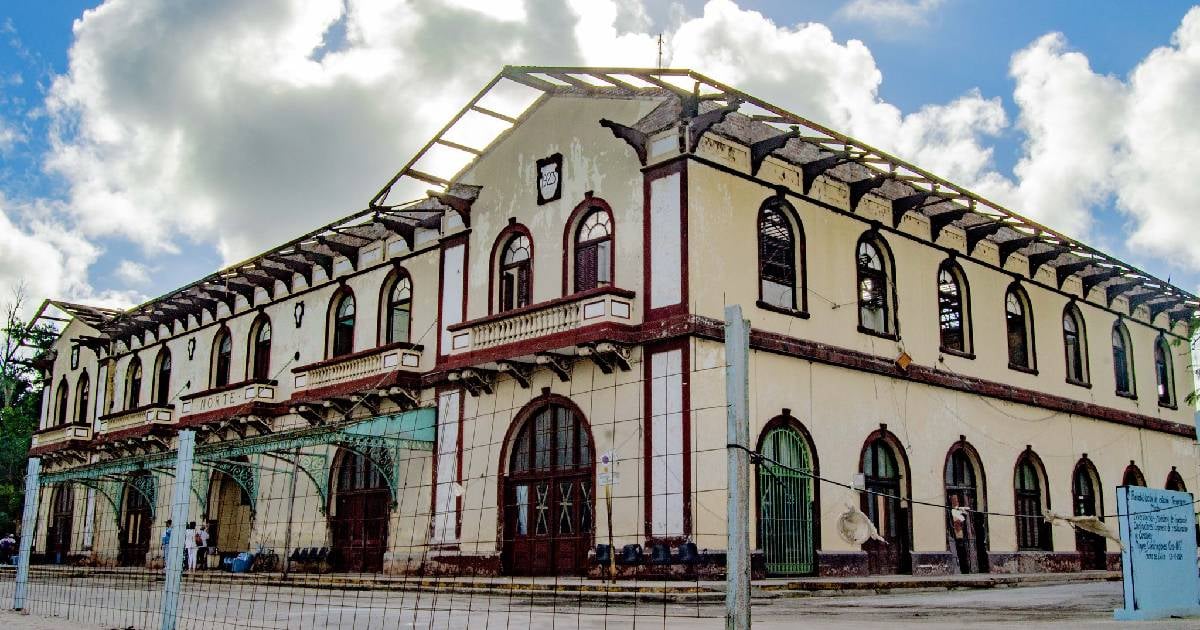
The Morón Railway Terminal, a National Monument and the second largest in the country, is another example of how public budgets in Cuba soar without realistic planning or transparency. What began in 2022 as a “capital restoration” with a budget of 3.4 million pesos (CUP) has turned into a state megaproject that has already exceeded 100 million pesos.
Olga Gener Pérez, provincial director of Transportation in Ciego de Ávila, reported that the Development Fund of the Ministry of Transportation, responsible for financing construction activities, approved over 61 million pesos just for the first phase, which includes the complete repair of the building's roof.
"With this financing, it was necessary to purchase the wood that, due to its specifications, had to be imported, since the existing wood in the building is impossible to reuse due to its deterioration. This will also be used for the doors," emphasized Gener in statements published by the provincial newspaper Invasor.
In the first stage of the restoration—which included the dismantling of the roof structure—specialized teams from the province of Camagüey and the local area, with experience in similar projects related to heritage sites, are involved.
However, Gener warned that “an additional 15 million pesos is needed for the restoration of the large stained glass window that distinguishes the terminal, which will be handled by a brigade of visual artists from Camagüey.”
Invasor did not specify how the remaining 24 million pesos would be used to complete the total budget mentioned in the information.
What the official specified is that the construction schedule "prioritizes the execution of the roof, to prevent further deterioration of the building due to spring rains, which poses greater risk to the false ceiling and the stained glass."
Next, as stated by Gener, "work will proceed with the rest of the interior, which includes wall elements, hydraulic, sanitary, and electrical networks, as the solidity of the walls necessitates less extensive interventions. Work on the platforms and entrances should take place by 2026."
A bottomless pit
On November 6, 2022, a note published in the official newspaper Granma referred only to carpentry changes at the Morón Railway Terminal. The information did not mention imports (such as the wood purchased abroad for the roof and doors), nor complex interventions related to the stained glass, let alone an investment 30 times greater.
At that time, Kadileisy Pelier, the director of the Base Business Unit managing the terminal, stated that for 2023 "conservation work, refurbishment, replacement of carpentry, and hydraulic networks were planned."
The official admitted that the deterioration of the building, declared a National Monument in 2000 and awarded the National Conservation Prize in 2010, was due to negligence and poor management in previous interventions.
He criticized that in 2019 "some actions were taken there such as changing the wooden beams, replacing the damaged French tiles, among other works, more akin to cosmetic fixes than to complete restoration, as it lacked the repair of eaves, plumbing facilities, modernization of the electrical system to handle current loads, changing the carpentry, and addressing the presence of makeshift internal divisions."
Shortly thereafter, it became known that the dilapidated facility, notable for its original design influenced by Southern U.S. architecture and featuring elements of French carpentry, was infested with bats and swallows, which caused the site to remain in a constantly unsanitary condition.
The official narrative changes, but the poor management does not
In 2022, the authorities spoke of the intention for the Morón train station, inaugurated on July 14, 1924, to arrive “fully renovated by the centenary of its operations,” although with the usual aspirational language of the official press, they considered it “a difficult endeavor given the lack of resources, but possible” due to “the will of the residents of the City of the Rooster and the construction forces.”
Three years later, in 2025, the provincial director of Transportation in Ciego de Ávila states: "We are in love with the project, and we constantly insist that the building must not lose its heritage values."
However, the budget jump reflects a pattern: the rehabilitation of the Terminal in Havana, between 2016 and 2023 also faced cost overruns and delays due to a lack of materials and its advanced deterioration, which hindered the acceleration of the works due to the risk of collapse, as admitted in 2019 by architect Ahmed Gómez.
What was sold in 2022 as a "modest" restoration (3.4 million pesos) at the Morón Railway Terminal is now a megaproject with state funding exceeding 100 million pesos.
This case reflects something deeper than a mere miscalculation: it reveals a structural crisis in the management of heritage in Cuba, characterized by empty promises, improvisation, and a lack of real control over public resources.
A question hangs in the air: will they reach 100 million to save the century-old train station from ruin?
Frequently Asked Questions about the Restoration of the Morón Railway Terminal
Why did the cost of restoring the Morón Terminal increase from 3.4 to over 100 million pesos?
The restoration cost of the Morón Terminal has increased due to the initial underestimation and the complexity of restoring heritage sites in Cuba. The need to import wood for the roof and doors, as well as the high cost of restoring the large stained glass, contributed to the budget increase. Additionally, the current project is more ambitious than the original plan, which did not account for all the challenges that would arise.
What specific challenges does the restoration of heritage buildings in Cuba face?
The restoration of heritage buildings in Cuba faces issues such as a lack of realistic planning, uncontrolled inflation, and a shortage of materials. These problems are exacerbated by bureaucracy and a lack of resources, resulting in significant cost overruns and delays in restoration projects.
What implications does the increase in the budget for the restoration of the Morón Terminal have for other projects in Cuba?
The increase in the budget for the renovation of the Morón Terminal reflects a pattern of cost overruns and delays in infrastructure projects in Cuba. This has significant implications for other projects in the country, demonstrating a trend of poor resource management and inadequate planning, as evidenced in the Central Railway Station of Havana and other infrastructure projects that have faced similar issues.
How does deteriorating infrastructure affect transportation in Cuba?
The deteriorated infrastructure in Cuba significantly impacts the efficiency and safety of transportation. The lack of proper maintenance and poor project execution lead to risky situations, such as the closure of train stations due to the danger of collapse. This negatively affects the quality of life for citizens and the country's economy.
Filed under: