
Related videos:
It is no surprise that the blackouts plaguing Cuban society also impact transportation.
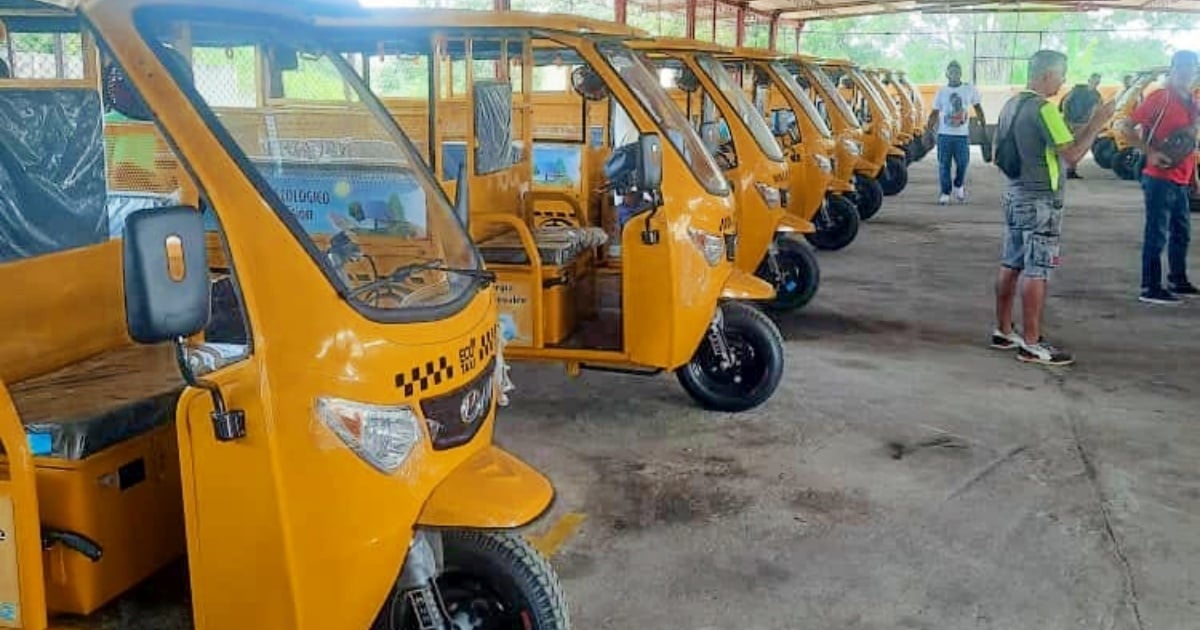
What many predicted since the announcement of the implementation of electric tricycles is beginning to come true: without electricity, there is no charge; and without charge, there is no service.
The official confirmation arrived this Tuesday via the Facebook profile of Transportación Habana TH, which reported on "a disastrous situation" at Agency 14, located in the Playa municipality, where power outages prevented the loading process of the vehicles.
As a result, routes 9, 10, 11, and 42 will only be able to operate partially throughout the day.
"We know this is a great inconvenience for everyone," admitted the official profile, which also requested "understanding and patience during these difficult times."
Although presented as an ecological and efficient solution to alleviate the transportation crisis, electric tricycles face the same reality as the rest of the country: a collapsed electrical grid with minimal guarantees of stability.
The outcome is predictable, and the cost is borne by the population.
The energy situation in Cuba continues to deteriorate, with severe impacts on the National Electric System (SEN) and continuous blackouts sweeping across the country.
According to reports from the Electric Union (UNE) itself, the generation deficit during peak hours exceeds 1,500 megawatts, which results in extensive power outages.
Under these conditions, keeping electric transportation operational becomes increasingly unfeasible, and the tricycles are no exception.
Frequently Asked Questions about Electric Tricycles and the Energy Crisis in Havana
Why are electric tricycles in Havana experiencing operational issues?
The electric tricycles in Havana are experiencing operational issues due to frequent blackouts that prevent their batteries from being charged. This adds to the limited battery capacity, which only allows for a maximum of 16 trips per day without recharging. The situation jeopardizes the transportation service, especially during peak hours.
What are the electric tricycle routes affected by the blackouts in Havana?
The electric tricycle routes 9, 10, 11, and 42 in Havana are operating partially due to power outages. The lack of electricity has hindered the proper charging of the vehicles, thus affecting their availability to operate on the designated routes.
What measures are being taken to improve the situation of electric tricycles in Havana?
To improve the situation of electric tricycles in Havana, solutions are being studied such as implementing staggered schedules to cover peak hours in the morning and afternoon, and reinforcing routes with internal combustion vehicles. Disciplinary measures are also being applied to address misconduct and technical malfunctions.
How does the energy crisis in Cuba affect public transportation?
The energy crisis in Cuba severely affects public transportation due to blackouts and fuel shortages. This has led to the suspension of services like electric tricycles and the "Gazelles", leaving the population with fewer mobility options and increasing daily difficulties.
Filed under: