
Related videos:
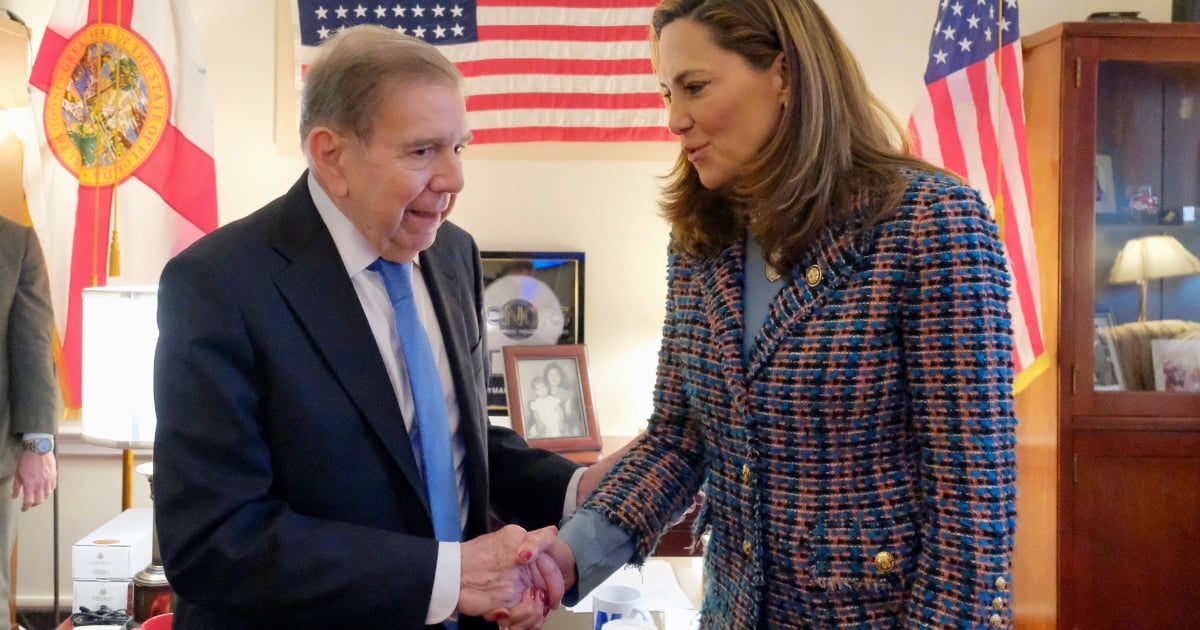
The Republican congresswoman María Elvira Salazar expressed herself "deeply disappointed" this Monday after learning that the Supreme Court of the United States allowed the government to withdraw Temporary Protected Status (TPS) from more than 350,000 Venezuelans.
The Supreme Court's decision reactivates the immigration agenda of the Donald Trump administration, whose team filed the appeal that led to the court ruling.
In his message posted on X, Salazar stated that "we cannot send innocent people back into the clutches of a narco-terrorist," referring to Nicolás Maduro. He also urged President Trump to grant Deferred Enforced Departure (DED) for Venezuelans and beneficiaries of the humanitarian parole program.
However, their message has been interpreted by analysts and citizens as a maneuver to distance themselves from a political decision that had the support of their own party.
The Supreme Court ruled in favor of an emergency request submitted by the Trump administration to reverse an extension of TPS approved under Joe Biden's administration. This protection was set to expire in 2026, but the new ruling would allow for its cancellation this year.
Salazar herself has been at the center of contradictions on this matter. In April, she was refuted by users on social media after claiming the extension of the TPS as a personal achievement. X marked her post and added context clarifying that the measure was a response to a court order that blocked Trump's attempts to revoke the program.
Most recently, in early May, Salazar presented a bipartisan bill to reinstate TPS for Venezuelans for 18 months. Although the gesture was appreciated by immigrant sectors, it has not erased the criticisms regarding his support for a party that has systematically sought to restrict immigration benefits.
The Court will also soon evaluate an appeal from the Trump administration to annul the humanitarian parole benefiting migrants from Venezuela, Cuba, Haiti, and Nicaragua.
The TPS, in effect since 2023, protects hundreds of thousands of Venezuelans in the U.S. and grants them work permits. With the court ruling, thousands could find themselves in an irregular situation, without protection against deportation.
Salazar's public discourse thus contrasts with the role that his political bloc has played in this agenda. While he criticizes the judicial outcome, he neglects to mention that it was his party that initiated the legal offensive that now leaves tens of thousands of Venezuelans in migratory limbo.
Frequently Asked Questions about TPS for Venezuelans and U.S. Immigration Policy.
What is Temporary Protected Status (TPS) and how does it affect Venezuelans in the U.S.?
The Temporary Protected Status (TPS) is a program that allows individuals from countries affected by armed conflict or natural disasters to reside and work legally in the U.S. In the case of Venezuelans, TPS has protected over 350,000 migrants, but the recent decision by the Supreme Court, championed by the Trump administration, could leave many of them in an irregular situation.
Why did the U.S. Supreme Court allow the revocation of TPS for Venezuelans?
The Supreme Court allowed the revocation of TPS following an emergency request from the Trump administration, which seeks to reverse an extension of TPS approved under Joe Biden's government. The Trump administration argues that conditions in Venezuela have improved and that TPS is no longer necessary. However, this decision has been criticized for leaving thousands of Venezuelans in immigration limbo.
What alternatives do Venezuelans affected by the TPS revocation have?
In light of the TPS revocation, Congresswoman María Elvira Salazar has urged President Trump to grant Deferred Enforced Departure (DED) for Venezuelans, which would provide temporary protection. Moreover, Salazar has introduced a bipartisan bill to reinstate TPS for an additional 18 months. Those affected may also explore other legal options, such as applying for asylum.
What role has María Elvira Salazar played in the TPS situation for Venezuelans?
María Elvira Salazar has been a vocal figure in advocating for TPS for Venezuelans, though she has faced criticism for the contradictions between her rhetoric and her party's actions. She has made proposals to reinstate TPS and has called for temporary protective measures like DED, but her support for a party that has sought to restrict immigration benefits has generated skepticism.
Filed under: