
Related videos:
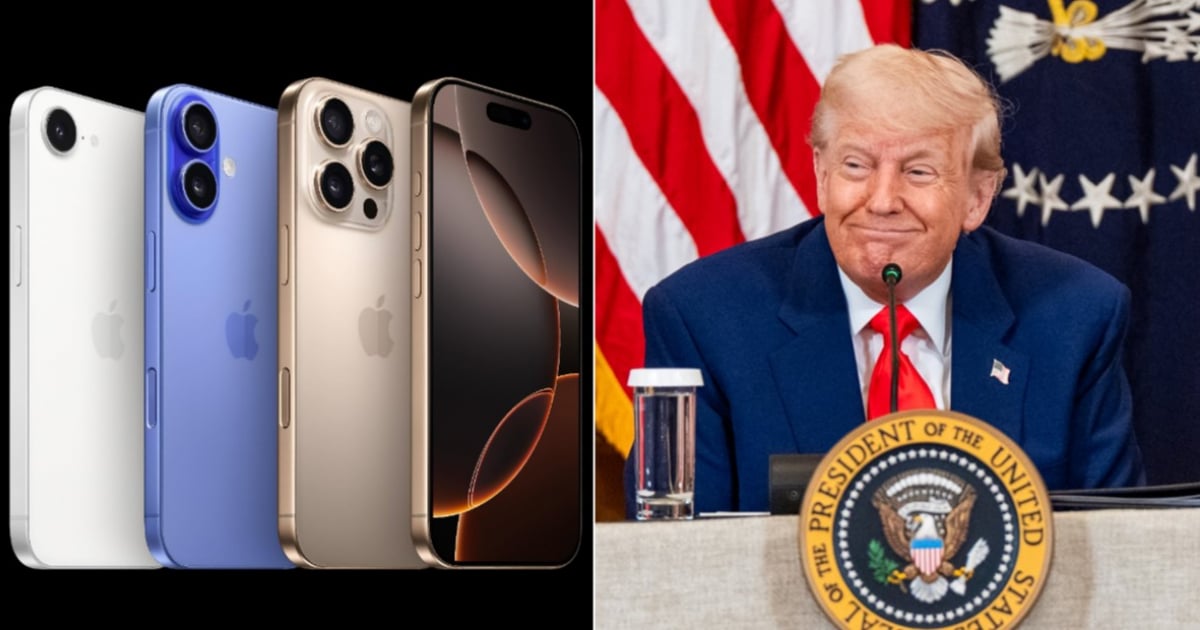
The president Donald Trump threatened a 25% tariff on Apple if it does not start manufacturing its iPhones in the United States.
In a post made this Friday on Truth Social, Trump insisted that products intended for the American market should be produced within the country.
“I informed Tim Cook of Apple some time ago that I hope the iPhones sold in the United States are manufactured and built in the United States, not in India or anywhere else,” he wrote.
“If that is not the case, a tariff of at least 25% must be paid by Apple to the United States,” he emphasized.
The threat comes days after Trump expressed his frustration during a visit to the Middle East over Apple's strategy of moving some of its production to new facilities in India.
"Tim, you are my friend... but now I'm finding out that you are building all of India. I don’t want you to build in India," he stated from Qatar.
Apple has intensified its efforts in recent years to diversify its supply chain outside of China.
According to CEO Tim Cook, in a recent call with investors, it is expected that “the majority of iPhones sold in the U.S. will come from India” in the near future.
Cook also warned that, due to current business challenges, Apple could face a tariff burden of up to 900 million dollars this quarter, although he highlighted that the company managed to avoid greater impacts thanks to the exemption of certain electronic products from tariffs on China.
However, relocating the production to U.S. territory poses a monumental challenge for the most valuable company in the world. The lack of sufficient industrial engineers in the U.S., high labor costs, and the complexity of the Asian manufacturing ecosystem make replicating that model in the United States nearly unfeasible, according to experts.
“The idea that Apple could manufacture its iPhones in the United States is a fairy tale that is not feasible,” said Dan Ives, an analyst at Wedbush Securities, who estimates that producing iPhones on American soil could triple their current price, reaching up to 3,500 dollars per unit.
The American company, which sells over 220 million iPhones a year in the U.S., China, and Europe, mainly manufactures its products in China.
Despite the pressures, Apple has recently announced a $500 billion investment to expand its presence in the United States. Among its plans is the domestic production of servers to boost Apple Intelligence — its new line of artificial intelligence products — as well as the expansion of data centers and production of content for Apple TV+ in over 20 states.
Apple has not issued official comments in response to Trump's threat.
Frequently Asked Questions About Trump's Tariffs on Apple and Their Impact on Production
Why is Donald Trump threatening a 25% tariff on Apple?
Trump threatens a 25% tariff on Apple because he wants the company to manufacture its iPhones in the United States instead of India or other countries. According to Trump, products intended for the U.S. market must be produced within the country. This measure seeks to pressure Apple to move its production to U.S. soil, despite the logistical and economic complications this entails.
How would it affect Apple to produce iPhones in the United States?
Producing iPhones in the United States would be a monumental challenge for Apple due to the lack of sufficient industrial engineers, high labor costs, and the complexity of the Asian manufacturing ecosystem. It is estimated that the cost of producing an iPhone in the U.S. could triple its current price, reaching up to $3,500 per unit. This would make Apple products far less competitive in the global market.
What investments does Apple plan in the United States despite the threat of tariffs?
Apple has announced a $500 billion investment in the United States to expand its presence in the country. This investment includes the domestic production of servers for Apple Intelligence, the expansion of data centers, and the production of content for Apple TV+ in more than 20 states. Despite the pressures, Apple aims to reinforce its commitment to the American economy without relocating iPhone production.
What impact do Trump's tariffs have on electronic products?
The tariffs imposed by Trump have significantly impacted technology companies, although smartphones and laptops were temporarily exempted from reciprocal tariffs. However, the possibility that these exemptions may expire in the coming months creates uncertainty in the tech sector, which could lead to rising prices and product shortages in the near future.
Filed under: