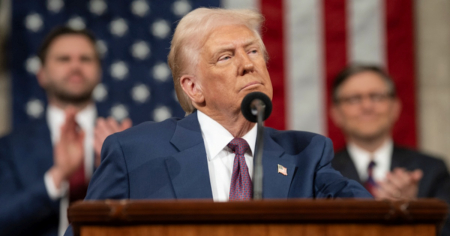
In a key decision that could redefine the balance of power between the Executive and independent agencies of the federal government, the Supreme Court of the United States ruled this Thursday in favor of President Donald Trump, granting him the authority to dismiss officials from federal agencies without the need to justify cause.
The case revolves around the removal of a member of the National Labor Relations Board (NLRB) and a member of the Merit System Board (MSPB). Both dismissals were initially blocked by a district court in the District of Columbia, as it deemed that they violated federal statutes requiring "just cause" for removing these officials.
However, the highest court in the country issued a stay order, allowing Trump to proceed with the removals while the main issue of the case is resolved. The decision was made with a majority of 6 votes in favor and 3 against, with Justices Sonia Sotomayor, Elena Kagan, and Ketanji Brown Jackson dissenting.
The Court argued that, under the Constitution, the president can remove officials exercising executive authority on his behalf without cause, citing precedents such as Seila Law LLC v. Consumer Financial Protection Bureau (2020).
Although the ruling does not yet determine whether the NLRB and the MSPB formally fall within these exceptions, it anticipates that the Government is likely to prevail in its argument that both exercise substantial executive power.
In its ruling, the court emphasizes that the risk of allowing a previously dismissed official to remain in office could cause more harm to the Government than the harm suffered from an improper removal.
The decision has sparked immediate reactions in the political sphere. The social media influencer of Make America Great Again (MAGA), Gunther Eagleman celebrated the ruling on social media, stating that "the Supreme Court just ruled in favor of Trump and is confirming that he has the power to fire members of federal agencies. It is a shame that the lower courts attempted to usurp the power of the Executive Branch!"
This resolution reinforces President Trump's thesis on the need to exert greater control over the "deep state."
Critics warn that the decision could undermine the autonomy of key bodies designed to operate without partisan interference, such as the Federal Trade Commission (FTC) or the Securities and Exchange Commission (SEC). For them, this legal victory represents a step towards greater concentration of power in the hands of the Executive.
The court's decision legitimizes a practice that had already begun months earlier. In February, the Trump administration had started the dismissal of federal workers, relying on an executive order that reinstated elements of the controversial "Schedule F," created during its first term.
At that time, experts warned that the measure aimed to depoliticize the bureaucratic apparatus according to Trump, although critics argued that it actually intended to purge the government of dissenting voices and consolidate an environment of unconditional loyalty to the president.
However, on May 12, a federal judge in Washington D.C. attempted to temporarily block that plan for mass layoffs, warning that it could be unconstitutional and create a climate of political retaliation within the state apparatus.
Frequently Asked Questions about the Supreme Court's Decision and Trump's Firing Authority
What decision did the Supreme Court make regarding Trump's firing power?
The Supreme Court allowed Trump to dismiss members of federal agencies without needing to provide cause. This ruling grants the president greater control over independent agencies by enabling him to remove officials who exercise executive authority on his behalf.
What are the implications of this decision for federal agencies?
The decision could undermine the autonomy of key agencies designed to operate without partisan interference, such as the Federal Trade Commission (FTC) or the Securities and Exchange Commission (SEC). Critics warn of an increased concentration of power in the hands of the Executive.
What background and judicial decisions influenced this ruling?
The ruling cites precedents such as Seila Law LLC v. Consumer Financial Protection Bureau (2020). The Supreme Court argued that the Constitution allows the president to remove officials exercising executive authority on his behalf without cause.
What reaction has this decision generated in the political sphere?
The decision has sparked immediate reactions in the political realm. Some of Trump's supporters, such as influencer Gunther Eagleman, celebrate the ruling as a victory for the executive branch, while critics warn about the risks of increased power being concentrated in the hands of the president.
Filed under: