
Related videos:
Just hours after the nighttime protests in the city of Bayamo due to prolonged blackouts and widespread shortages, the Cuban government responded by organizing food fairs in several municipalities of Granma province, including Pilón.
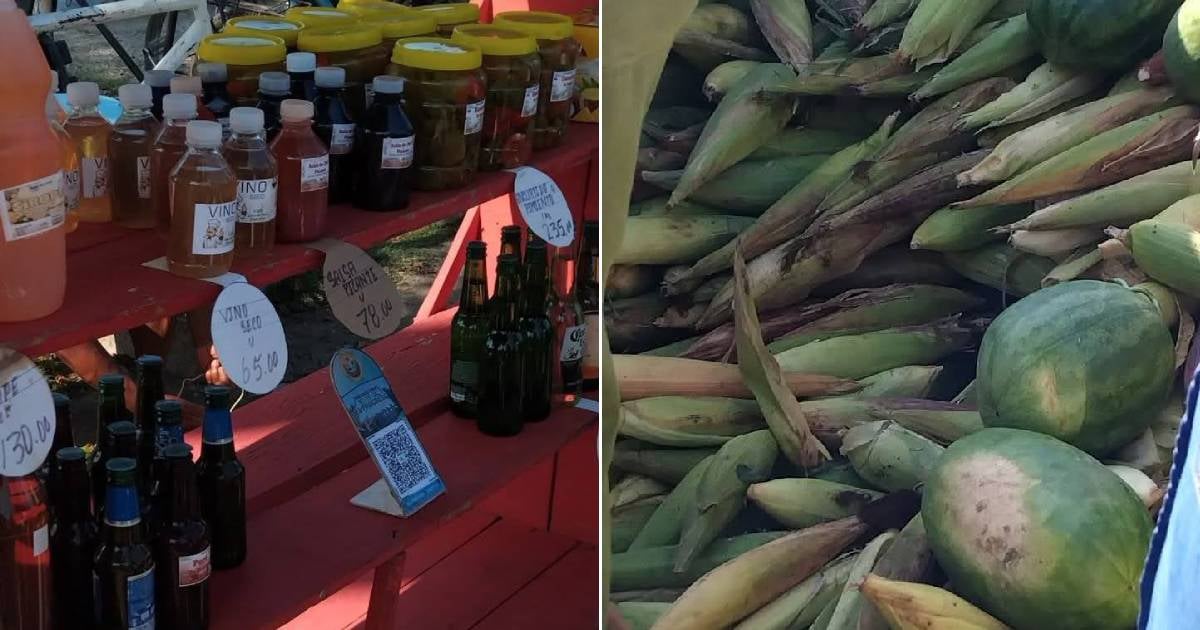
Images shared on Facebook by Dayamis Silva Lara, a member of the Communist Party of Cuba (PCC) in Pilón, showcase stands with agricultural products, including corn and other basic foods, under the slogan of a "Saturday fair within everyone's reach."
The organization of these food fairs fits into a well-known pattern of distributing basic goods as an immediate remedy to public discontent, a strategy that has been implemented in other provinces such as Santiago de Cuba in recent times.
Last Wednesday, following similar protests in Santiago, the regime rushed the distribution of donated rice and pasta, providing only one kilogram per person to meet the food quota for March.
Despite its late nature, the distribution was presented with a triumphant tone by state media, which emphasized the logistics of the operation more than the structural deficiencies that prompted it.
The early morning of Friday, May 24, witnessed a new wave of popular protests in Bayamo and Cienfuegos, triggered by over 36 hours without electricity service, according to residents of the La Bayamesa neighborhood.
Videos shared on social media show citizens marching with flashlights, chanting slogans, and confronting the presence of repressive forces, including black berets with dogs.
In Cienfuegos, the events focused on Parque Martí, where shouts and disturbances were reported during the early morning hours. Although some publications were questioned, several witnesses confirmed the authenticity of the protests and the growing discontent.
The recent protests add to a wave of mobilizations in eastern Cuban cities, such as Santiago de Cuba and Holguín, where shouts of “We want food!” and “Down with the dictatorship!” are increasingly echoed.
Although food fairs provide a temporary relief, they do not address the underlying problem: a collapsed economy, inefficient agricultural production, and a chronic dependence on donations and makeshift operations.
Frequently Asked Questions about Food Fairs in Cuba Following Protests
Why does the Cuban government organize food fairs in Granma?
The Cuban government organizes food fairs in Granma in response to protests over prolonged blackouts and shortages of basic goods. These fairs are a recurring strategy of the regime to try to quell social discontent, providing temporary relief without addressing the structural causes of the crisis.
What are the causes of the recent protests in Bayamo and Cienfuegos?
The recent protests in Bayamo and Cienfuegos are due to prolonged blackouts and a critical food shortage situation. These shortages have driven the population to take to the streets to demand concrete solutions, even facing repression from the Cuban government.
What measures does the Cuban government take in response to the protests?
In response to protests, the Cuban government typically responds with repressive measures, such as arbitrary arrests, increased police patrols, and internet outages. Additionally, it resorts to organizing food fairs as a temporary solution to quell social unrest, without addressing the underlying causes.
What is the current situation of the food crisis in Cuba?
The food crisis in Cuba is severe, with a widespread shortage of basic products affecting the population throughout the country. The government attributes this situation to the U.S. "blockade," but does not provide structural solutions, which exacerbates social discontent and leads to public protests.
Filed under: