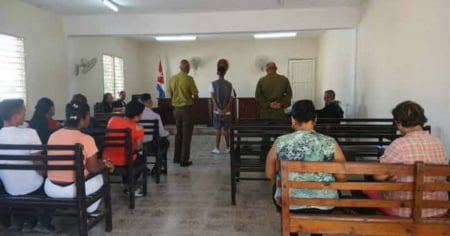
In the Colón Popular Council, one of the neighborhoods most affected by drug use in Central Havana, a young man dared to share his story with his neighbors, looking them in the eyes, acknowledging his mistakes and the deep wounds he inflicted on his family.
“My dad spent many nights searching for me, even paying off debts that I left behind. I sold food, the television, the clothes I wore, the phone… I never thought about the consequences, I just wanted to consume,” was the testimony of the young man, collected in a report from the official Cuban Television Informative System.
The account, raw and unfiltered, revealed a reality that is often concealed beneath official figures or institutional narratives.
The voice of this young man broke the silence at a community debate organized by the Mental Health Center of the municipality, where specialists from various ministries participated.
But beyond the government rhetoric, what resonated was the confession of a human being destroyed by drugs.
“One day everything came to an end. There was no food, and no fan to sleep. My dad, at 70 years old, is now in bed, unable to get up, because of me. That was my low point. He can’t even give me a hug anymore.”
His call was not just a testimony, but also an urgent message for other young people: “Don’t believe that you have to try everything. That led me to lose everything. If you are using and don’t know what to do, ask for help. Professionals are there for that.”
Dr. Alejandro García, head of Mental Health in the municipality, warned that the phenomenon of drugs in Cuba has changed. It’s no longer just about marijuana or alcohol, but rather unknown synthetic substances, commonly referred to as "chemicals," which cause irreversible consequences.
"We are receiving cases of adolescents aged between 14 and 17 with severe intoxications. The substances they are consuming are uncontrolled, highly toxic, and cause permanent damage."
Cuba is currently experiencing a silent crisis: young people trapped by drugs, broken families, and a state response that often comes too late or from a perspective of control rather than human understanding.
In 2024, a young Cuban undergoing detoxification shared his experience after developing an extreme addiction to "the chemical", a synthetic drug that is sold at a low cost in Cuba and whose demand has increased among teenagers.
According to his account, he consumed up to 58 doses daily, which caused him to suffer two cardiac arrests and an embolism at a young age. His testimony, collected by the Periódico 26, reflects family neglect, physical deterioration, and the ease with which he accessed the drug even while confined at home.
Shortly after, several young people in rehabilitation shared their testimonies about the devastating impact of this substance on their lives. They spoke about how they lost control over their bodies, their surroundings, and their relationships, falling into substance use after a party or due to peer pressure. Some began treatment following suicide attempts or severe physical crises.
In response to social pressure and the increasing visibility of the phenomenon, the Cuban regime publicly acknowledged the existence of the problem.
In statements released by official media, Miguel Díaz-Canel admitted that drug consumption has expanded in Havana. However, the government's responses have predominantly been repressive: increased surveillance, operations, and the launch of the National Drug Observatory.
Recently, there was an alert regarding the circulation of even more toxic variants of the "chemical", made with formaldehyde and veterinary anesthetics. These substances have caused seizures, severe neurological disorders, and even deaths.
Despite the arrests made in Havana neighborhoods and drug seizures, the substance remains available, and its consumption is growing unchecked.
Frequently Asked Questions about Drug Use and Its Impact in Cuba
What is "El Químico" and why is it so dangerous?
"El Químico" is an extremely potent synthetic cannabinoid that mimics the effects of marijuana, but is much more dangerous due to its clandestine production using toxic ingredients such as formaldehyde and veterinary anesthetics. This substance can be up to a hundred times more potent than marijuana, increasing the risk of poisoning and deaths from overdose, severely impacting the physical and mental health of consumers.
How is "El Químico" impacting young people in Cuba?
"El Químico" is generating deep concern in Cuba due to its devastating effects on the health of young people. Its use can lead to a loss of values and self-esteem, and many young individuals end up physically deteriorated, facing a path of suffering that can culminate in death from overdose. The drug has become popular among youth due to its low cost and rapid effects, which increases its demand and the risk of addiction.
What actions are being taken in Cuba to combat the consumption of "El Químico"?
Cuban authorities have intensified anti-drug operations, detaining individuals involved in the sale of "El Químico." However, there is an urgent need to strengthen prevention and education strategies to combat the use and distribution of this dangerous drug. The family plays a crucial role in the early detection of substance use, setting boundaries, and fostering values, as well as seeking professional help if necessary.
What are the health consequences of consuming "El Químico"?
The consumption of "El Químico" can cause immediate and devastating effects: euphoria, alterations in perception, nausea, tachycardia, seizures, and loss of muscular control. In the long term, the damage is irreversible, affecting mental health with disorders such as anxiety, psychosis, and hallucinations, as well as physical health with kidney, liver, and heart failure.
Filed under: