
Related videos:
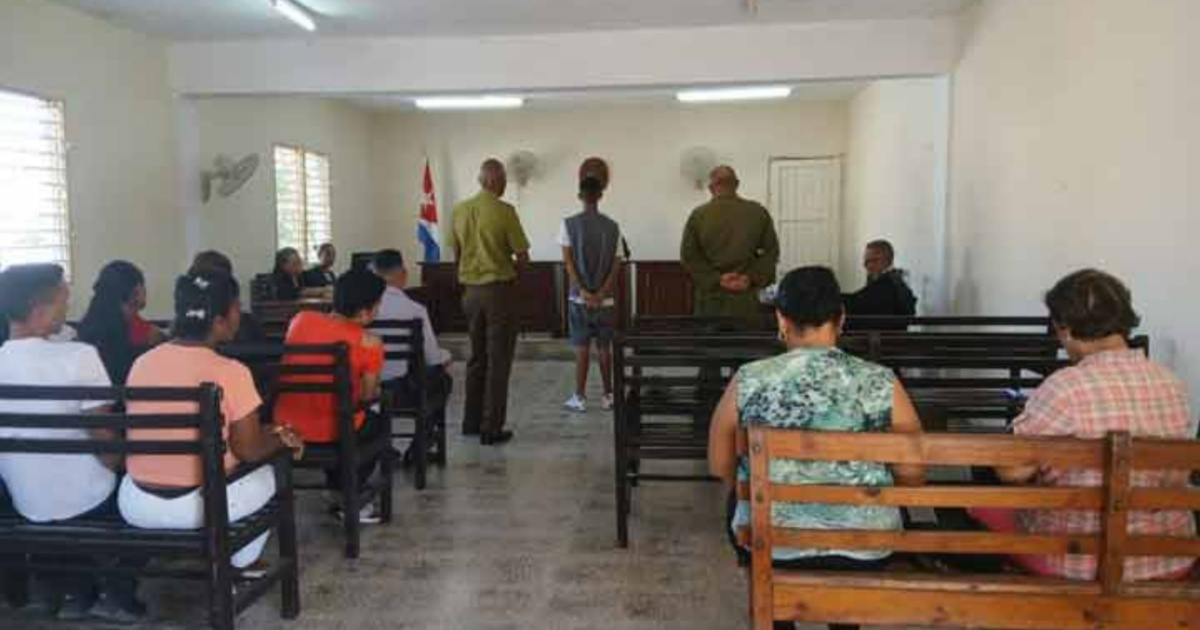
A 22-year-old man was sentenced "as a deterrent" to one year in prison in Las Tunas for possession of the "chemical".
Furthermore, the young man will not be able to exercise his "public rights or request a passport or departure from the national territory during the period of his sentence, reported the official Cuban News Agency (ACN)
The young man will face the "maximum limit of the sanctioning framework for this type of crime" in a sentence that is part of the Cuban regime's punitive offensive against the widespread use of this drug
The report details that it was the "trial corresponding to case 61 of 2025 in the Municipal Court of Las Tunas" for "the crime of possession of drugs or substances with similar effects, the synthetic cannabinoid known as 'chemical'."
"During the public hearing, documentary, testimonial, and expert evidence was presented that demonstrated the guilt of the accused (...). At the public session, the parties expressed agreement with the imposed sentence, thus confirming the firmness of the judgment," the information concludes.
Offensive against the "chemist"
This trial in Las Tunas is part of a series of similar criminal proceedings that have recently taken place in other provinces of the country.
On Saturday, the state-run press also reported on the sentences of 15, 18, and 20 years of imprisonment for three citizens, found guilty of the crime of illicit drug trafficking in an oral and public trial held on Thursday in the chamber of crimes against state security at the People's Provincial Court of Havana.
Granma reported that the judicial process was also classified as "exemplary" by the Prosecutor's Office, which accused the defendants of profiting through the interprovincial trafficking and distribution of cocaine.
In April of last month, the Provincial People's Court of Santiago de Cuba sentenced a man to 12 years in prison for transporting 485 grams of marijuana to Camagüey.
In that case, additional measures were also implemented, such as the confiscation of money, the prohibition of leaving the country, and the deprivation of civil rights. Two young men were sentenced to eight and nine years in prison for cultivating and selling marijuana and "the chemical."
A few days ago, it was confirmed that a more lethal version of the "chemical" is circulating in Cuba, as it contains fentanyl, formaldehyde, and anesthetics for animals. Ninety percent of those who try this drug become addicted from the very first dose. The regime states that it is a rapidly spreading product with high lethality.
"Exemplary severity" as a control strategy
Since last year, authorities have intensified the severity of penalties for drug-related offenses. The president of the First Criminal Chamber of the Provincial Court of Havana stated that more than 92% of those accused of drug trafficking have been sentenced to actual prison terms.
Sanctions could reach up to 30 years in prison, life imprisonment, or even the death penalty, depending on aggravating circumstances such as the involvement of minors, large quantities of drugs, or connections to international networks.
Additionally, the courts have begun to confiscate properties from citizens that allow for the sale or consumption of drugs in their homes, known as "consumption houses," as part of the tightening of control and repression of this phenomenon.
Increase in consumption among schools and minors involved
This judicial offensive occurs amid a concerning increase in drug use within Cuban schools, a situation acknowledged even by state media.
The government admitted that there are minors involved in both the consumption and sale of drugs, which has raised alarms within the judicial system and state security.
The government has responded to this situation by reinforcing the official narrative that "the full weight of the law" will fall upon those who threaten the stability of society, through a discourse that combines exemplary punishment with a supposed preventive action.
Frequently Asked Questions about Drug Trafficking and Exemplary Trials in Cuba
Why was the young man in Las Tunas sentenced?
The young man was sentenced to one year in prison for possession of the "chemical," a synthetic cannabinoid that is illegal in Cuba. Additionally, he was prohibited from exercising public rights and from leaving the country during his sentence. This case is part of a punitive offensive by the Cuban regime against the use of this drug.
What is "the chemical" and why is it so dangerous?
"The chemist" is an extremely potent synthetic cannabinoid that mimics the effects of marijuana, but it is much more dangerous due to its clandestine production using toxic ingredients such as fentanyl and animal anesthetics. Its consumption can be highly addictive and has devastating effects on the physical and mental health of young Cubans.
What are exemplary trials in Cuba and what is their purpose?
Exemplary trials in Cuba are public judicial processes designed to deter the commission of crimes by showcasing the legal consequences of illegal actions. The government claims that these trials not only punish the guilty but also have an educational component for the community, as they are witnessed by individuals with potential for criminal behavior.
How is drug trafficking affecting Cuban society?
The drug trade, especially of "the chemical", has generated increasing concern in Cuba due to its widespread consumption among young people, who are suffering severe physical and mental consequences. The lack of control and education about the dangers of these drugs has led to an increase in crime and deaths from overdoses, highlighting the regime's inability to handle this public health crisis.
Filed under: