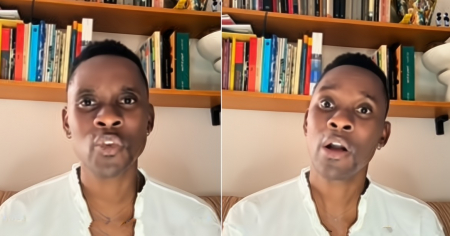
The Cuban Carolina, who lives in the United States with her husband, shared her experience on TikTok after spending several months living in a mobile home, a lifestyle that is gaining more followers among Latino migrants. In a new viral video, the young woman explained the positives and negatives of living full-time in an RV (recreational vehicle), asserting that in her case, the benefits far outweigh any inconveniences.
"The good thing about living in a motorhome is that we can move wherever we want. If a better job comes up in another state, we just hook the truck to the RV and that's it, we're off," said Carolina in the video posted on her profile @carolina_gf99, where she also highlighted the flexibility that the parking options for this type of housing offer: "Almost none have long-term contracts. Just as you arrive and park, you can leave without any problem."
The young woman also highlighted the direct contact with nature as another major appeal of this nomadic lifestyle: “For many, this means nothing, but personally, I really enjoy it. And I don’t know why, but the people who live in RV parks are very supportive; they always try to help you.”
Regarding the negative aspects, Carolina was clear: "Honestly, I don't think there's anything wrong. Although they are obviously smaller than regular houses, I feel really comfortable in my RV." As advice, she recommended that anyone considering moving into an RV choose one that suits their needs in order to feel truly at ease.
A growing lifestyle
This is not the first time Carolina has spoken about her life in a motorhome. Last April, CiberCuba reported how she and her husband acquired a luxurious Eagle model RV, equipped with a modern kitchen, central island, white cabinets, pendant lighting, and optimized spaces. The goal: to adopt a minimalist lifestyle without sacrificing comfort.
In another video, she revealed the monthly cost of her lifestyle: $700 for the vehicle, $950 for parking in Belle Chasse, Louisiana, and $110 for insurance. “It’s about the same as rent for an apartment or a house,” she explained.
Additionally, Carolina has shared details of her daily life, such as her routine for doing laundry inside the RV, generating thousands of interactions with followers who encourage her, offer recommendations, or share their own experiences.
Reactions and support on social media
Carolina's most recent video was well received on TikTok, where followers highlighted her positive attitude and her way of sharing reality without filters. Some requested that she do a full tour of her "little rolling house," to which she enthusiastically responded: "Let me know in the comments if you would like me to do a tour... kisses and blessings."
Carolina represents a growing community of Cubans and Latinos exploring alternative ways of life in the United States, driven by necessity, job flexibility, or the desire for freedom. Her close and authentic testimony continues to inspire many from the simplicity of her mobile home.
Frequently Asked Questions about Living in an RV in the United States
What are the advantages of living in an RV in the United States?
Living in an RV offers mobility, savings on housing costs, and a connection to nature. It allows families to easily relocate based on job opportunities in different states and enjoy a simpler life closer to nature. Additionally, RV parks typically do not require long contracts, providing flexibility for those seeking stability without committing to a permanent location.
Is it expensive to live in an RV compared to renting an apartment?
Although living in an RV may seem more affordable, the monthly costs can equal those of conventional rental. Carolina, a Cuban resident in the U.S., pays 700 dollars per month for her RV, 950 for the parking, and 110 for insurance, totaling 1,760 dollars a month, a figure comparable to renting a home in many cities in the U.S.
What are the main challenges of living in an RV?
Living in an RV presents challenges such as adapting to limited space and managing basic services. Difficulties may also arise with children's education and the need for remote work to maintain mobility. Legal restrictions in some states can impact this lifestyle, in addition to the lack of certain amenities offered by traditional homes.
Why do some people choose to live in an RV instead of a traditional home?
People choose to live in an RV to enjoy greater freedom and flexibility. This lifestyle allows families to escape the pressures of traditional renting, live closer to nature, and manage their financial resources better. For many, it's an opportunity to simplify their lives and reconnect with what’s essential, prioritizing quality of life and family time.
Filed under: