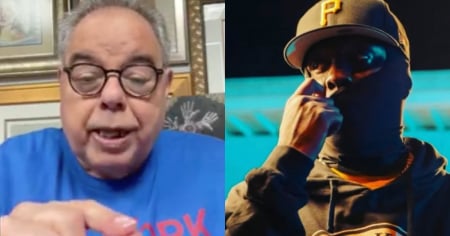
The Florida attorney specializing in Immigration Willy Allen described the visa denials at the U.S. embassy in Havana as "concerning."
"Concerning, I believe there are a number of individuals who have been wrongly denied due to their past occupations or suspicions of having been members of the Communist Party," said Allen in response to a question from an internet user during the program this Monday on CiberCuba.
"I believe there must be a more decent way to investigate people rather than accusing for the sake of it and denying just to deny," the expert added.
Last week, the head of the U.S. diplomatic mission in Cuba, Mike Hammer, confirmed that U.S. immigration laws are being enforced more strictly that prevent visas from being granted to individuals with recent ties to the Communist Party of Cuba (PCC).
"Yes, we are strengthening U.S. laws that prevent visas from being granted to members of the Communist Party of Cuba who have held high positions or have been activists until recent years," he said, referring to family reunification programs.
"Family reunification is a sensitive topic, and the Trump administration's policy on illegal immigrants in the country is well-known. However, we continue, as an Embassy, to fulfill our mission of reuniting families through a legal process," he emphasized
Cubans claim that their family reunification visas have recently been denied due to having work ties with state institutions on the island.
“The consular team is making the best decision based on the information they have, because what we want to avoid is having the repressive forces on the streets of South Beach, enjoying a mojito. That cannot happen; it is not fair,” Hammer emphasized.
This position has raised concerns among Cubans who have met all the requirements of the legal process but see their applications rejected. Such was the case of Liadys Madrazo's father, whose visa was denied despite not having been a member of the PCC, solely because of his work history at a state-owned company.
Frequently Asked Questions About U.S. Visa Restrictions in Cuba
Why is the U.S. Embassy in Cuba denying family reunification visas?
The U.S. Embassy in Cuba is applying U.S. immigration laws more strictly that prevent granting visas to individuals with recent ties to the Communist Party of Cuba (PCC). This includes individuals who have worked in state institutions, regardless of whether they have been members of the PCC.
What criteria is the U.S. using to deny visas to Cubans?
The criteria focus on preventing individuals with recent or work-related ties to the Communist Party of Cuba from obtaining visas. This has included Cubans who have worked in state-owned enterprises, such as the case of Liadys Madrazo's father, who was denied despite not being a member of the PCC.
What can Cubans affected by visa denial do?
Cuban individuals affected can seek legal support to provide evidence that their employment relationship does not imply ideological affiliation with the regime. It is possible to submit a form I-601, a request for a waiver of inadmissibility, although this requires admitting to a wrongdoing, which is not always feasible or morally acceptable.
What does the U.S. Embassy say about the review of denied visa cases?
The Embassy has stated that it is possible to review individual cases to ensure that decisions are correct. The consular team makes decisions based on the information available, but it is acknowledged that the system can fail and that there is some flexibility to review specific cases.
Filed under: