
Related videos:
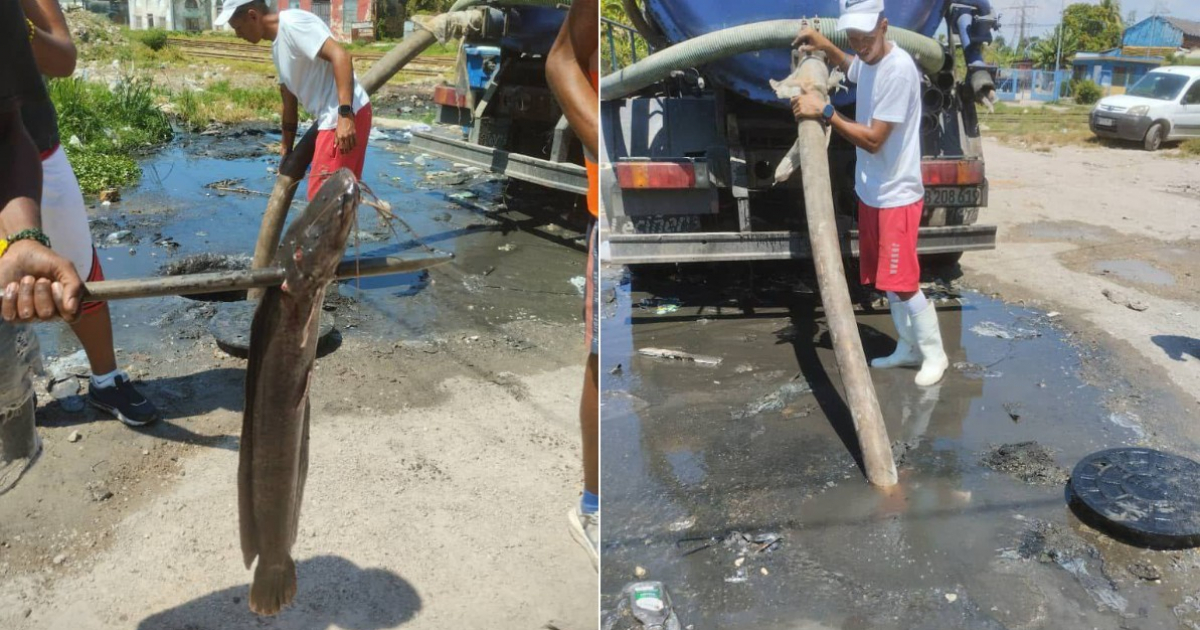
In a recent post on their official Facebook account, Aguas de La Habana shared an image that quickly went viral, showing a worker holding a large catfish, which was pulled from a drain in the Antonio Maceo community in the 10 de Octubre municipality.
The seemingly surprising event occurred during the Popular Drill for Action in Meteorological Disaster Situations 2025, which aims to test the country's ability to handle natural disasters, especially with the onset of the cyclone season, officially starting on June 1.
The publication, which shows brigades from the Central Sanitation Base using a high-pressure truck to clean drains and manholes, was accompanied by a triumphant tone, highlighting the readiness of the infrastructure for meteorological emergencies.
However, what should be a routine operation for the authorities was met with irony by many Cubans, as the action of cleaning drains is only carried out when the hurricane season is about to begin or during an exercise like Meteoro 2025.
In the image, a worker holds a claria, a fish that, while remarkable for its size, reflects more on the precarious conditions of the sanitation system than on its efficiency.
The company Aguas de La Habana, seemingly aware of the potential ridicule, disabled comments on the post to prevent mockery, as the claria is for many the sole source of protein due to the severe food crisis the country is experiencing.
A cleaning only when it suits
While the Cuban government prides itself on its emergency and disaster preparedness, the people of Havana, like those in the rest of the provinces, continue to struggle with a chronic water shortage.
A problem that is not only a result of drought but also of the poor condition of the hydraulic networks, which in many cases are outdated and full of leaks, leading to significant water losses before it reaches homes.
The situation is paradoxical: media efforts are made to show that the country is "prepared" to face hurricanes, but the underlying problem—poor infrastructure and lack of proper maintenance—remains unresolved.
The cleaning of drains and the repair of sewers, which are only carried out during these "emergency" moments or just before the hurricane season, highlight a serious disconnect between what is intended to be shown to the world and what the Cuban population truly faces every day.
The maneuvers carried out during the Meteoro 2025 exercise, which include evacuation drills and the deployment of technical resources, are seen by many as a "public relations" operation rather than a genuine effort to improve the country's hydraulic and sanitation systems.
The regime, far from taking responsibility for the historical repair and modernization of the country's basic infrastructure, prefers to invest in short-term visible actions, like these exercises, while structural problems remain unresolved.
A cleaning campaign to prepare for the rains… which have already been announced
Meanwhile, the weather forecast from the Cuban Institute of Meteorology (INSMET) has already announced the arrival of the first tropical wave of the season, which will bring rain and storms across the country.
In this way, the cleaning and drain unclogging brigades are presented as a last-minute effort to mitigate the effects of a hurricane season that seems to arrive without a real action plan to protect the population.
While it is true that the Cuban government has directed resources to "show" that it is prepared, the reality is that the preparation in terms of infrastructure is minimal and often limited to the visibility of these temporary efforts, without ongoing follow-up or maintenance
The government's responses seem more like a reaction to media pressure and public concerns than a real and effective solution to the shortcomings of the sanitation system.
The real problem remains unchanged
While Aguas de La Habana celebrates the cleaning of a drain and the removal of a fish, citizens continue to struggle with the scarcity of drinking water, inadequate sanitation services, and the risk of flooding.
The lack of a comprehensive maintenance and modernization policy for hydraulic infrastructure, which affects both the capital and the rest of the country, remains one of the most pressing issues facing the nation.
The Cuban government, more focused on its image during media events, has failed to provide lasting solutions to the underlying problems faced by Cubans in their daily lives.
Cleaning drains in the moments leading up to the hurricane season, when rains and hurricanes are already on the horizon, is nothing more than a temporary fix that highlights the lack of foresight and negligence in managing the vital infrastructure for the population.
The Cuban population deserves a more serious, structural, and effective response. Solidarity in times of crisis is valuable, but the lack of governmental attention to the basic issues of infrastructure and public services is a clear symptom of a model that prefers appearance over substance.
Frequently Asked Questions about Water and Sanitation Management in Havana
Why did Aguas de La Habana showcase a catfish in a sewer?
The image of the claria, shared by Aguas de La Habana, was captured during the Meteoro 2025 Exercise, which aims to prepare the country to face natural disasters. The discovery of the fish in a drain highlighted the precarious conditions of the city's sanitation system.
How does poor infrastructure affect water supply in Havana?
The inadequate infrastructure, characterized by outdated pipes and leaks, leads to significant water loss before it reaches homes. This worsens water scarcity and service quality in Havana.
What criticism has the Aguas de La Habana Company received for its management?
Aguas de La Habana has been criticized for its ineffectiveness in resolving issues such as leaks and the lack of maintenance of the infrastructure. The company has been accused of engaging in media actions without providing permanent solutions to the deficiencies in the sanitation system.
What are the consequences of flooding in Havana?
The floods in Havana are caused by heavy rainfall and the blockage of drainage systems due to trash. This leads to damage to homes, infrastructure, and poses a public health risk due to contaminated water.
Filed under: