
Related videos:
More than 173,000 people in Cuba lack access to adequate systems for the disposal of wastewater and excreta, while only 37% of the population is connected to sewage systems.
Most Cubans, 61%, rely on sanitation systems through septic tanks and latrines, a model that, while widespread, does not provide guarantees of health safety or environmental sustainability for the collection, transport, and treatment of wastewater from homes, businesses, and storm runoff, according to data from the National Institute of Hydraulic Resources (INRH) published by the official newspaper Granma.
Although the government claims that progress has been made, the number of people without basic sanitation remains high, particularly in the provinces of Mayabeque, Havana, and the special municipality of Isla de la Juventud, the source indicated.
In a recent annual work meeting, the INRH reported that in 2024, 16 flood zones were resolved, benefiting 27,345 people, and 64 kilometers of sewage and drainage networks were executed. According to the report, 3,940 new connections were also made, which benefited 19,666 people.
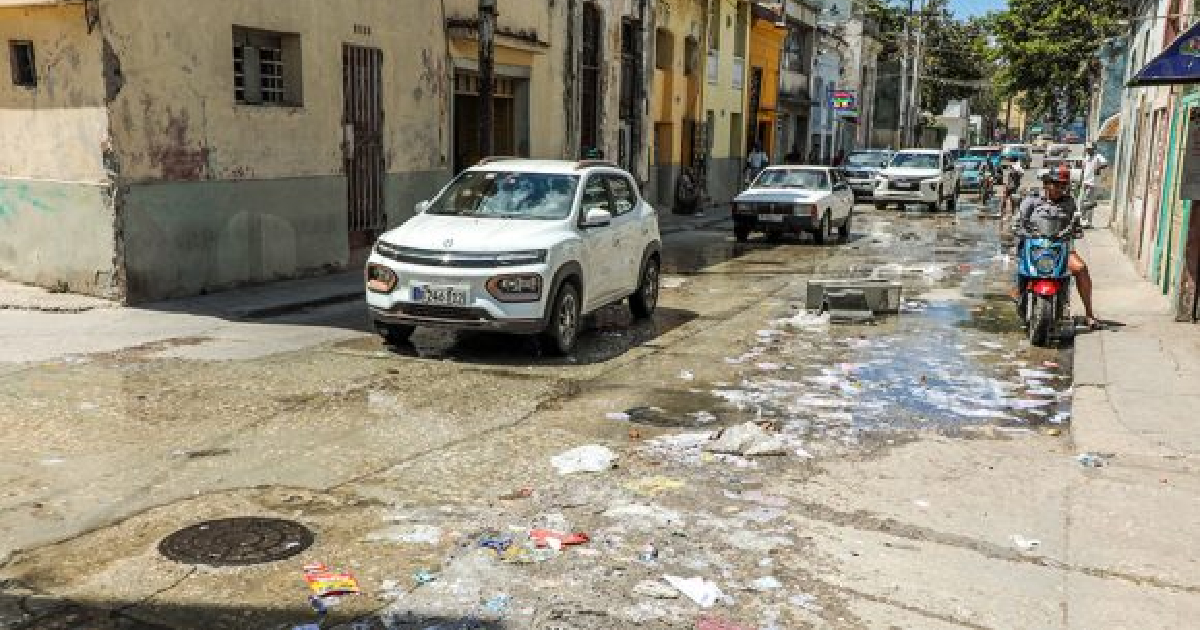
However, floods continue to strike the population, especially in the low-lying areas of the capital.
According to the authorities, the accumulation of garbage in the streets, the dumping of inappropriate objects, and the theft of manhole covers and drain grates cause blockages that hinder the proper functioning of the drainage system in Havana.
Officials from the company Aguas de La Habana (AH) stated that “the mismanagement of sanitation is influenced by the indiscipline of the population,” while failing to address the underlying cause: the trash piles up on the streets because the state entity they represent, responsible for collecting it, does not fulfill its duty.
Andrea Miranda López, director of Sanitation and Electromechanics of Aguas de La Habana, stated that “in several locations, when you remove the accumulated trash, within minutes the sewage system starts to function” and that “some grates end up clogged due to the lack of systematic sweeping on numerous roads in the city.”
The executives of AH argued that the theft of manhole grates and access covers is one of the main causes of flooding, and that these criminal activities are more frequent in the municipalities of La Lisa, Centro Habana, Cerro, Diez de Octubre, Plaza de la Revolución, and Playa.
A recent report from the official portal Cubadebate also highlighted other causes, such as the lack of maintenance of the outdated sewage and sanitation system, insufficient funding and equipment, aging facilities, and the absence of spare parts, which points to poor government management.
The deplorable state of the Havana sewage system, worsened by a large number of manholes and drains without covers, poses a risk to the lives of its inhabitants due to potential accidents, injuries, or fatalities, especially in the face of intense rain events or coastal flooding.
Local investments fail to change the outlook
In Havana, the first phase of the Casa Blanca Waste Treatment System has begun, with positive impacts in Old Havana and Central Havana, "as it addresses the significant discharges in these areas," according to a report from Granma.
Currently, the external infrastructure of several wastewater treatment stations is being completed as part of this investment, and five outlet elbows are being replaced in the Casa Blanca collector, specified Jorge Suárez García, Deputy Director of Sanitation and Storm Drainage at AH.
Despite these efforts, the results remain limited in the face of widespread infrastructure deterioration, population habits, and the insufficient and delayed governmental response.
The underground network of Havana was built in the early 20th century (1905-1915) for about 600,000 inhabitants, but today, the capital's population is around two million people, which far exceeds the system's capacity.
In other areas, there are cesspools, such as in San Miguel del Padrón and Arroyo Naranjo, while in La Lisa, Playa, and Marianao, they primarily rely on septic tanks. Due to years of use, many have lost their effectiveness and are places with constant discharges “and where we would like to build sewer networks,” recently stated officials.
In December 2024, the newspaper Granma itself pointed out that there were over 11,000 wastewater pits awaiting cleaning throughout Cuba.
Frequently Asked Questions about the Sanitation and Waste Management Crisis in Cuba
How many people in Cuba lack access to adequate sanitation systems?
More than 173,000 people in Cuba lack access to adequate systems for the elimination of wastewater and excreta.
What is the state of the sewer system in Havana?
The sewage system in Havana is obsolete and overwhelmed, as it was built for a population much smaller than the current one, resulting in frequent flooding and sanitation issues. The network was designed in the early 20th century for about 600,000 inhabitants, but now it must serve a population of approximately two million.
How does the accumulation of garbage impact flooding in Havana?
The accumulation of garbage clogs drainage systems, which prevents the proper flow of water during heavy rains, causing severe flooding. This situation is common in neighborhoods of the Diez de Octubre municipality and in El Vedado, in Plaza, worsening the living conditions of the residents.
What measures have the Cuban authorities taken to improve the sanitation system?
Despite some local investments, improvements in the sewage system in Cuba have been limited and ineffective. Projects such as the Casa Blanca Waste Treatment System in Havana have been undertaken, but the infrastructure remains deteriorated and the government response is inadequate to tackle the issue.
Filed under: