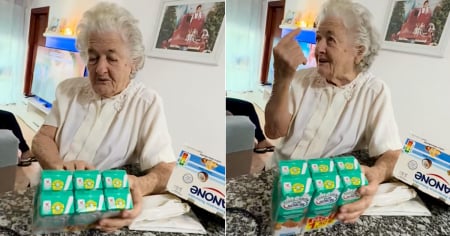
"We're laughing, but deep down we feel a great pain because it's not easy to leave for Cuba given the current situation. It's madness. Life goes on," said the granddaughter.
A young Cuban, identified as @bombonleal07 on TikTok, shared an emotional and reflective video that went viral on social media: her grandmother decided to voluntarily return to Cuba after having emigrated to the United States.
“My grandmother is going to self-deport to Cuba,” the young woman comments as she records her grandmother and other family members walking toward the boarding area at an airport in the United States.
The scene, which blends humor, sadness, and resignation, has resonated with many Cubans both on and off the island, as it touches on one of the most sensitive aspects of exile: the uprootedness and the struggle of older adults to adapt to life abroad.
“She wanted that, which is why I always tell them to talk to the older generation, to explain how the situation is here in the USA, because one spends too much money for them to ultimately want to leave and not feel good here,” the young woman reflected in the video.
Although the tone of the video seems light at first, it soon transforms into a heartfelt reflection. "We are laughing, but deep down we feel great pain because leaving for Cuba amidst the current situation is madness. Life goes on," he concluded.
The gesture of "self-deportation," as described by the granddaughter, highlights an increasingly common reality in the Cuban community abroad: not all migrants are able to adapt, especially the older ones.
Nostalgia, language barriers, social isolation, and unmet expectations can lead to radical decisions such as returning to a country in crisis.
The video has garnered thousands of views and comments expressing understanding, support, and also sadness regarding a situation that reflects the emotional complexities of the Cuban migration process.
Frequently Asked Questions about the Self-Deportation of Cubans and Returning to the Island
What is the self-deportation of Cubans from the U.S.?
Self-deportation is the process by which an immigrant decides to voluntarily return to their country of origin, in this case Cuba, often due to difficulties in adapting or legal issues in the host country, such as the United States. The term has gained relevance within the Cuban community, especially with programs that offer economic incentives to facilitate this voluntary return.
What are the reasons that lead Cubans to self-deport?
Cuban migrants who choose to self-deport often do so due to difficulties in adapting abroad, nostalgia, language barriers, social isolation, and unfulfilled expectations. The migration process can be emotionally complex, and some find that returning to their homeland offers a solution to achieve the happiness and emotional well-being that they did not find in their host country.
What impact does the self-deportation program promoted by Donald Trump have?
The program announced by Donald Trump offers one thousand dollars and a plane ticket to those immigrants who decide to voluntarily return to their country of origin. However, this option may have legal consequences, such as restrictions on re-entering the United States for an extended period. Despite the incentives, some criticize the program for not adequately addressing the needs and rights of immigrants.
How does self-deportation affect Cuban families?
Self-deportation can be a difficult and emotionally charged decision for Cuban families. Returning to Cuba means facing the economic crisis and lack of opportunities, but it also offers the possibility of reuniting with loved ones and regaining a sense of belonging and emotional support. Each case is unique, and families must weigh the advantages and disadvantages of this decision.
Filed under: