
Related videos:
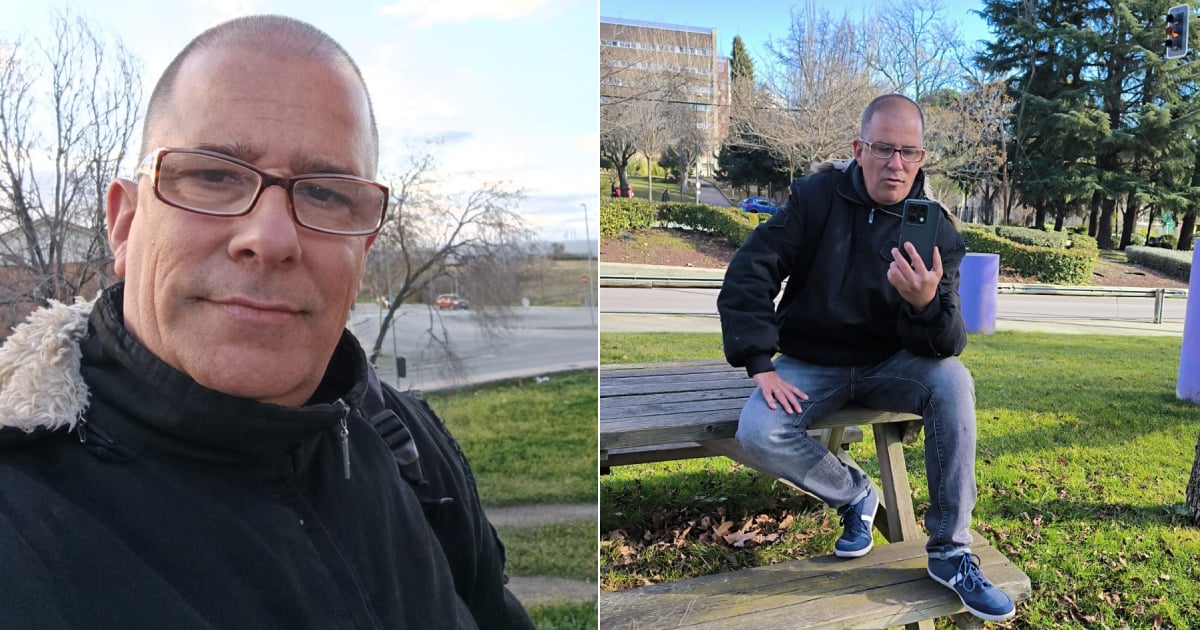
If we ask in the realm of sports journalism in Cuba about Juan José Rodríguez Girado, perhaps someone will recognize the name, but if we say "Kitín", everyone will raise their voice and say: "He is a great guy and an excellent journalist; he helps everyone and is a wonderful human being... a lover of sports and, above all, of his pinareño wolves!"
Living in Madrid, alongside his wife and her daughter, Kitín remains the same humble, affectionate, and cooperative "guajiro" as ever.
Who is Kitín? Where does his love for sports come from?
Kitín, as I told you, is simply Juan José Rodríguez Girado. I inherited that nickname from my father, the founder of radio in Pinar del Río. They called him Kito, and thus, they named the little one Kitín.
I have always believed that my passion for sports comes from my late mother. She told me that while she was pregnant with me, she would go to the Latinoamericano to watch the baseball games. And I say the Latino, because I was born in Marianao, at Maternidad Obrera, and my uncle, who was a civil engineer, lived in the capital of the country.
In my early days after being born, we spent some time with him and then we went to Pinar.
Which sport attracts you the most?
Baseball, no doubt. Then volleyball and basketball.
Your training is empirical; you didn't graduate from University (like many greats who came before us; there are plenty of examples). Why didn't you study Journalism or a related field?
Look, I don’t know what happened, but after having excellent academic results in elementary school and then in high school, I really struggled to get good grades in the sciences in college. I have always been very good with language and take pride in my impeccable spelling. Of course, I enjoy reading everything that comes my way!
So, I began my pre-university stage at IPUEC Antonio Guiteras and realized that my admission there was purely out of interest because passing was a struggle, especially in Mathematics, and I wouldn't pursue a degree that way.
I left halfway through the eleventh grade and completed the twelfth at the Workers' Peasant Faculty.
My main goal has always been to join the provincial station (Radio Guamá), as I made my debut as a young broadcaster at the age of 10; that magic captivated me forever.
How did that aspiration come to fruition?
At the age of 10, my father took me to Radio Guamá and introduced me to Nora Peláez Naranjo, who was directing a Pioneer Broadcasting Interest Group. That's where I started reading news broadcasts and children's programs. As a teenager, I was one of the announcers for the program "La Escuela en el Campo."
But officially, after resuming my studies at the Workers' and Peasants' Faculty, I began working at the age of 17 as an operator in the quality control room.
Later, I became a sound engineer, assistant, and head of the Publicity Department, director of music and news programs, until I landed where I wanted to be, in the news editorial team, specifically in sports.
Although it’s difficult, can you mention a moment you will never forget related to your career?
Working with Julio Duarte Alonso and Ferrer Pimienta has been a chapter that will never be erased. With them, I continued to learn what respect means behind a microphone, and later, directing the baseball program and the news show "Todo Deporte"... It was simply a dream come true!
On top of that, having the friendship and affection of athletes like Luis Giraldo Casanova, Félix Pino, Pedro Luis Lazo, Mijaín López... well! it's something that filled me with joy, something I will cherish in my heart for a lifetime.
I interviewed them and many others, not only for radio but also for television, as I had that privilege.
For nine years, I hosted a sports segment on Telepinar called "Tiempo Extra," which was part of the magazine "Visión 27," and there, you can understand me, Julita, I thrived; I was very happy.
I combined my work at the radio station with the role of baseball scorekeeper-coder. The then umpire Israel Redonet saw qualities in me after a course taught by the late Camilo Sánchez Díaz and Aristófanes Mesa Taylor.
The computer-related matter at the Capitán San Luis stadium came after I had gone to Spain in 2016 and returned to Cuba in August of that same year.
Upon my return, I tried to reintegrate into the station, but the director explained to me that she couldn't make such an absolute decision and had to consult with the staff of the News Department. Some there said that there was no issue with my returning, but we needed to see in what position, as those who had taken my place were not going to give it back.
So, the provincial sports director accepted me into the organization, and I took up the positions of head of the Mini-industry and IT Department shortly after. Ultimately, I preferred to return to Spain, which I did in 2018.
In terms of sports, your best and worst moments.
My most emotional moment was when, in May 2007, I was able to shout for the first time on the radio: “Pinar del Río CHAMPION!” It was during that year's National Youth Championship when Pinar, led by Giraldo González at the time, defeated Camagüey in the final playoff. I had never been able to narrate as the main commentator, and in that instance, the opportunity came to me. I will never forget that moment!
The moment that broke my heart was after the car accident involving cyclist Pedro Pablo Pérez. After struggling to obtain a non-professional camera from the Municipal Sports Directorate, I went to Abel Santamaría Hospital and managed to get statements from the on-duty specialist doctor regarding the athlete's health condition.
Upon exiting, I was met by two officials from the Party and the Government who warned me bluntly that I could not make the interview with the doctor public.
I told them that the only thing I had was the doctor's statements explaining Pedro Pablo's situation, and they bluntly said that they were sorry, but the only one who could authorize commenting on the matter was the then member of the Central Committee, José Ramón Fernández, "el Gallego."
I was left astonished and, forever, disappointed!
My bubble, in which I had been living until then, collapsed just like that! A brief note about the accident was published the next day in the newspaper Granma.
When do you decide to emigrate? Where do you live, what is your job or jobs...?
Look, I always lived with my mom five kilometers from the provincial capital, and after enduring countless challenges, by the end of the 80s and the beginning of the 90s (the time I worked at the radio station), living in hostels and renting because I couldn't afford the trips and so on, my situation became unsustainable.
I ended up living in Cuba at Ana's house (Madrina), an elderly woman who took me in as her son and was a loyal listener of the station and the programs I hosted.
One fine day in 2011, while I was writing the Sports News, I met my wife Diana through social media. We began to chat, and to my surprise, she was also from Pinar del Río, specifically from San Juan y Martínez.
He traveled from Spain to Cuba in June of that year, and we met in person. It was a long-distance relationship, quite challenging.
When Ana passed away in 2015, a hellish agony began. Several family members who had never even cared about her health started an all-out war to drive me out of the house.
I found myself without support from the government, the party, or any institution; I ate what I could on the street and sometimes stayed at my father’s or mother’s house when work allowed me until my wife said to me, “Enough of struggling. You’re coming to Spain.” I left Cuba to start another life that, honestly, I am truly grateful for. That was my first stay in Spain.
That's life, Kitín; when one door closes, another opens. And what do you think about life in Madrid? The jump is enormous... from the plains of Vueltabajo to the capital of the "Mother Country"!
This city impresses me, but I've already gotten used to it. I live in Madrid, work as a concierge in a residential complex, and, as time permits, I try to monetize my YouTube channel called Alto Average, where I interview various sports personalities who take the time to speak with me.
Here are conversations with notable former players such as José Ariel Contreras, Yadel Martí, Luis Alberto Valdés, Julio Alfredo Martínez, and Deinys Suárez; the former director of Metropolitanos, Professor Eulogio Vilanova; the extraordinary manager Alfonso Urquiola; journalist and broadcaster José Luis Basulto… in short, many valuable individuals who have enhanced and continue to enhance my channel.
Current family? Are you happy, do you miss Pinar, the neighborhood, the "cantao" of Pinar?
I no longer have my parents. Mom passed away in 2019 while I was here; and through a video camera and thanks to two good friends I have in Pinar, Dayan and Yohan, I witnessed the details of her wake and burial. Quite painful! Two years later, in 2021, due to COVID-19, my dad passed away as well. I was also here, working as a lifeguard at a community pool. These are scars that will never heal.
Thanks to Diana, my wife, and Elizabeth, her precious girl, as well as my son Omar Luis who is in Pinar, my life continues to have meaning. Currently, my in-laws are also here, completing the family. That makes me happy!
And of course I miss Pinar, walking through its streets, stopping to talk about baseball, and the rooster from the fifth of Coloma, who would wake me up with its crowing every day.
Cuba's all-time team?
Very difficult selection because there are several teams Cuba that can be made; mine is this:
Recipient: Juan Castro
First base: Antonio Muñoz
Second base: Alfonso Urquiola
Third base: Omar Linares
Torpedo: Eduardo Paret
Left fielder: Frederich Cepeda
Center fielder: Víctor Mesa
Right fielder: Luis Giraldo Casanova
Designated hitter: Orestes Kindelán
Right-handed pitcher: Braudilio Vinent
Left-handed pitcher: Jorge Luis Valdés
Relief pitcher: Pedro Luis Lazo
Manager: Jorge Fuentes Fleitas
Some say that since Omar, Pacheco, Casanova, Germán, Kindelán, Pestano, and Juanito didn't play in Major League Baseball, they can't be compared to Yuli, Yordan, Chapman, Adolis García, Luis Robert, or Randy Arozarena; others assert the opposite. Which side are you on?
It has always been said that what could have been and wasn't, is as if it never was, but I am clear that if many players who were always below Linares in Cuba were able to shine, then surely Casanova and Kindelán would have done the same.
Although the interview is with Kitín, I want to share that sentiment. And not just those I mentioned in the question. I believe that if professionalism in Cuban baseball had not been interrupted, there would be many Cuban stars currently in Cooperstown.
If you had the power, Kitín, how would you solve the problem of Cuban baseball?
A Kitín with power and resources would implement a Professional League in Cuba. It's the only thing that can save Cuban baseball.
Filed under: