
Related videos:
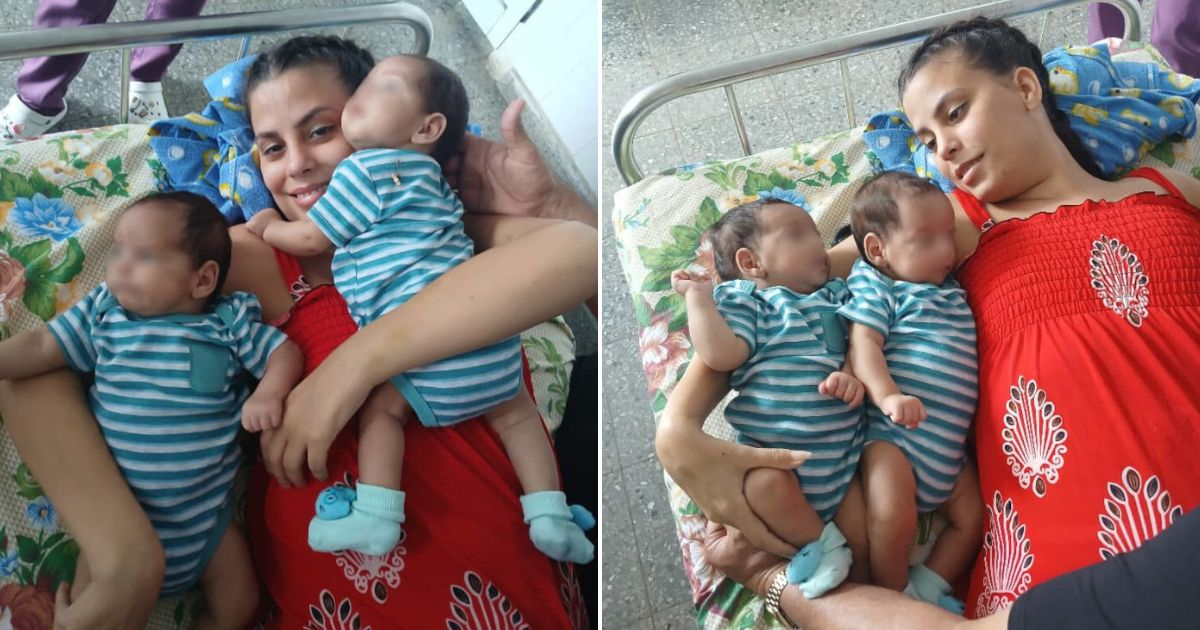
Daibelis Veloz López, a 26-year-old young mother, survived a complicated childbirth, multiple surgical interventions, and uncontrollable bleeding that kept her on the brink of death for weeks at the Abel Santamaría provincial hospital in Pinar del Río.
Today, she is at home recovering, but accompanied by her twin sons, Dairon and Darío, for whom she fought tirelessly, as reported by the newspaper Guerrillero, which covered her story.
Since October, when she was admitted to the hospital due to her twin pregnancy, her journey has been marked by uncertainty.
An urgent surgical intervention at 20 weeks of gestation was just the beginning of a series of complications, including preeclampsia and persistent bleeding that necessitated multiple surgeries and extreme treatments to try to save her life.
Just three days after being discharged with her babies in her arms, Veloz suffered a massive hemorrhage at her home in the Loma del Ganso community, which urgently brought her back to the hospital.
“I just remember my husband shouting at me not to close my eyes,” she recounted.
In the days that followed, her condition worsened and she underwent numerous surgeries, with continuous blood loss.
For more than three months, Veloz relied on transfusions, up to 21 a day, emergency interventions, and the support of family, friends, and anonymous individuals who donated blood.
Still without a definitive diagnosis, a serious condition affecting coagulation is suspected, but it cannot be confirmed for several months.
The medical team that treated her made difficult decisions, applied innovative treatments, consulted specialists, and shared medical literature in an effort to manage the bleeding.
Although he was conscious for most of the time, Veloz did not lose faith, even though he did lose his breath on more than one occasion.
"I cried thinking that I would never see my twins again," she said, visibly moved.
Today, he continues his recovery at home, with a wound that will take at least six months to heal.
She cannot carry her babies yet, but she is surrounded by her family and thankful to those who have supported her on this difficult journey.
The story of Veloz is a testament to resilience, family support, and a mother's love, making it clear that sometimes, life is won minute by minute.
The official journalist Lázaro Manuel Alonso published a message on Facebook praising the strength of Daibelis and the medical team that attended to her.
"The strength of Daibelis is impressive. And so is that of those who have cared for her. Wishing you a long life, dear cousin," she wrote, joining the expressions of support and admiration for the young mother who managed to survive one of the most extreme experiences of her life.
The stories of complicated births in Cuba reveal not only the fragility of the healthcare system but also the strength of mothers, families, and medical staff in the face of critical situations.
In Sancti Spíritus, two twins managed to survive after being born at just 28 weeks of gestation and weighing less than a kilogram. Intensive care for weeks was crucial for both girls to overcome a reserved prognosis.
Similarly, in Havana, a mother faced the challenging task of bringing her child into the world at just 29 weeks of pregnancy. The urgency of the premature birth necessitated an immediate medical response.
Although both were in serious danger, both the mother and the baby overcame the initial risks and progressed favorably after receiving specialized treatment.
Another hopeful story took place in Cienfuegos, where a newborn baby underwent emergency surgery just a few hours after birth, due to a severe intestinal obstruction.
The procedure was successful and made a vital difference in their recovery, preventing possible irreversible complications.
Frequently Asked Questions about the case of Daibelis Veloz López and the healthcare system in Cuba
How did Daibelis Veloz López survive her critical health condition?
Daibelis survived thanks to multiple surgeries, daily transfusions, and the support of anonymous donors who offered their blood. Despite the lack of a definitive diagnosis, the suspicion of a coagulation problem guided the medical decisions that ultimately saved her life.
What complications did Daibelis face during and after childbirth?
Daibelis faced severe complications such as preeclampsia and uncontrollable bleeding that required multiple surgeries and extreme treatments. After being discharged, she suffered a massive hemorrhage that brought her back to the hospital, prolonging her fight for life.
What is Daibelis's current condition and what challenges does she face in her recovery?
Currently, Daibelis is at home with her twin children, but she is still recovering from multiple surgeries. Her wound will take at least six months to heal, and although she cannot hold her babies, she is surrounded by her family and grateful for the support she has received.
What does the case of Daibelis reveal about the healthcare system in Cuba?
The case of Daibelis highlights the serious deficiencies in the Cuban healthcare system, where the lack of supplies and trained personnel complicates medical care. Despite these challenges, the commitment of the medical team and the solidarity of the community were crucial for her survival.
Filed under: