
Related videos:
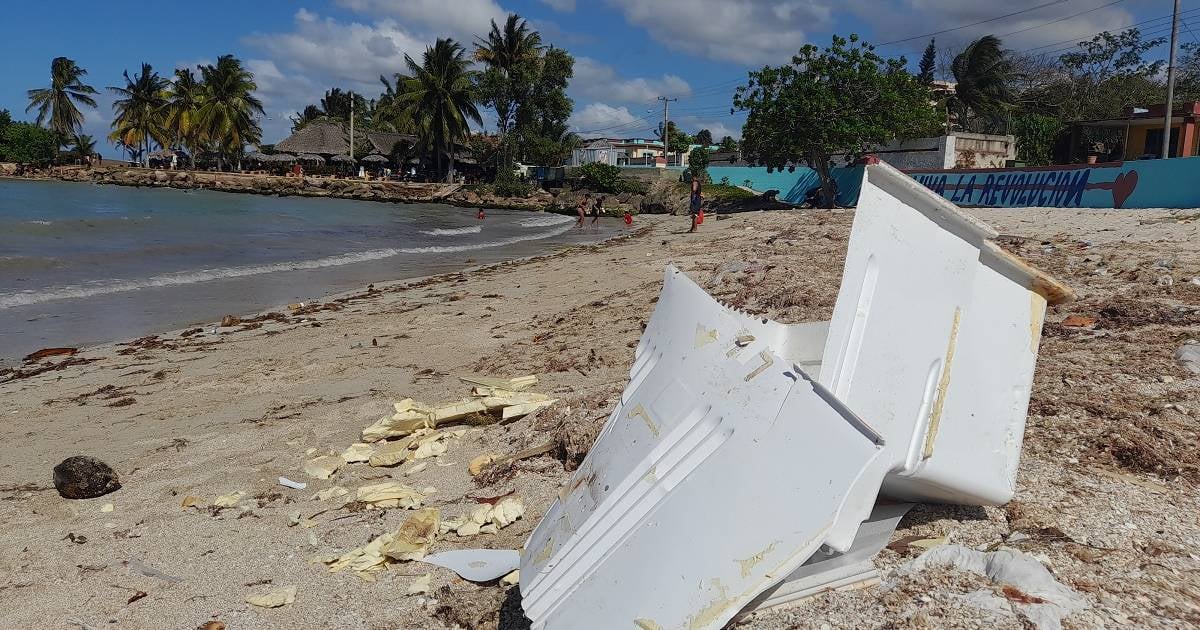
Just the end of May has passed, and some coastal areas in Matanzas already show a concerning picture: remnants of plastics, cans, nylon, and even discarded appliances are invading the sands, revealing a lack of effective environmental culture and responsible waste management.
The images are repeated in every corner of the coastline, from the Canímar River to the well-known El Tenis Beach; the visible traces are not just footprints from vacationers, but piles of trash that clash with the natural landscape and expose the wildlife, the vegetation, and the bathers themselves to a high risk of contamination.
"Just take a little stroll along the Matanzas coastline to kick a can, see a plastic bag flying, and who knows, maybe even come across that old piece of refrigerator someone discarded, and you can’t imagine how," noted a comment published in the official newspaper Girón.
While some justify the situation by citing a "lack of collectors," the truth is that the evidence points to a widespread disdain for the environment. Citizen negligence adds to institutional neglect, revealing an alarming lack of effective action in the face of a problem that grows as swiftly as the temperature rises in the Cuban summer.
Global data reinforce the urgency: more than 200 kilograms of plastic are dumped into the oceans every second; each day, the equivalent of 2,000 trucks filled with waste ends up in the sea. Estimates suggest that by 2040, this could reach 29 million tons annually.
Global strategies are being designed, but in practice, locally in Matanzas, reality seems to be moving in the opposite direction.
According to the media, there are concerns that "the trash along the coasts will meet the same fate as the piles of garbage scattered throughout the city of Yumurina and its arteries, as well as in the neighboring municipalities."
It remains to be seen whether, with summer around the corner, the beaches will continue to receive tourists and locals with the same indifference with which they have been treated. Because what is at stake is not just the landscape, but also collective health and the dignity of shared spaces.
Non-governmental organizations, along with child and youth volunteers, stand out for regularly promoting clean-ups of coastal segments in Cuba, in order to educate about the importance of protecting the environment and marine ecosystems, promoting through awareness activities the value of reducing, reusing, and recycling.
The accumulation of garbage has become a recurring problem in Cuban cities, with serious implications for public health.
Recent reports in Matanzas have raised alarms about the critical sanitation situation faced by residents of a community, depicting streets filled with garbage, overflowing pits, and a collapsed dump right next to a school.
The city of Cienfuegos, considered by many to be the cleanest in Cuba, reveals a dirty and neglected face every Saturday after the popular La Calzada Fair, a space for supply and trade that ultimately becomes a hotspot for waste and neglect.
In Santiago de Cuba, the old Hotel Venus has been turned into a dumping ground due to a lack of state management, amidst the neglect of architectural heritage. Meanwhile, in Vedado, Havana, residents have reported the proliferation of unsanitary conditions even near the Institute of Hematology and Immunology, which has led to rodent infestations and concerns about a potential larger public health crisis.
In the case of the Cuban capital, the arrival of trucks donated by Japan in 2019 helped to temporarily stabilize the waste collection service for approximately two years. However, the gradual deterioration of these vehicles, exacerbated by the lack of spare parts, has once again created chaos in the collection process.
Frequently Asked Questions about Pollution and Waste Management in Matanzas
What is the current situation of the beaches in Matanzas regarding litter?
The beaches of Matanzas are littered with trash, including plastics, cans, and discarded appliances. This is due to a lack of environmental awareness and waste management at both the citizen and institutional levels, exposing the flora, fauna, and bathers to risks of pollution.
What actions are being taken to address the waste problem in Matanzas?
At the local level, the institutional response has been inadequate in the face of the growing waste problem. However, non-governmental organizations and volunteers, including children and young people, are promoting clean-ups on the shores to raise awareness about the importance of protecting the environment.
What is the impact of government abandonment in Matanzas and other areas of Cuba?
The government's neglect has led to the deterioration of infrastructure and public spaces in Matanzas and other parts of Cuba. Examples of this include the decay of the railway bridge in Versalles and the unsanitary conditions in urban areas due to the lack of waste management.
What other environmental issues is Matanzas currently facing?
Besides the trash on the beaches, Matanzas is facing water pollution issues, such as the presence of fecal coliforms in its supply networks, which poses a risk to public health and necessitates preventive measures like boiling water before consumption.
Filed under: