The recent ETECSA rate hike has sparked a strong wave of criticism among Cubans living abroad, who claim that the new policy not only restricts internet access in Cuba but also imposes a direct burden on emigrants, who have become the economic support of the system.
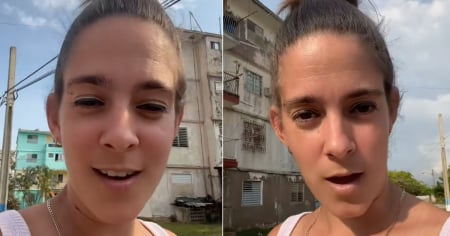
From the United States, the user @anay.armenteros.a, known as "La Bandida," posted a video in which she expressed her frustration over the emotional and financial impact of this measure. "They pressure us more because the government wants dollars at all costs, it wants to live off us, off those of us who are here," she said.
From Italy, the Cuban Yanet Friol, known on social media as Alegría Cubana (@alegriacubanaa), reacted sarcastically upon reviewing the new data plans from the state-run company. “It seems to me that they are just as well-made for us. Because if they can only recharge once a month, and we can, it feels like they are made for us, am I wrong?” she questioned. She also criticized that amidst the blackouts, the little that Cubans have is their phone, and now they will also be limited.
Another testimony that has resonated on social media is from @mividadecomedia, a young Cuban based in Miami, who described the measure as an eight-year setback. “We made six months' progress and then fell further back than we were during the coronavirus. The connectify and firewall applications were activated with mobile data to avoid spending too much money,” he said. “They don’t count on your people; they rely on those here who are in charge. Everything is a lie, and they want you to live that lie.”
From Mexico, the youtuber Michel Crónicas compared the Cuban system to that of his country of residence and criticized the high prices imposed by ETECSA. He also denounced that those who cannot pay in Cuban pesos will have to resort to packages in dollars, with prices ranging from 10 to 35 USD, making internet access a privilege for those who receive remittances or have relatives abroad.
Cuban activist Saily González Velázquez, for her part, had called from exile for an economic boycott: “They extort us with food packages, hotels for leisure, and now mobile data for communication. Enough is enough.” She proposed a complete halt on top-ups as a form of pressure against what she considers a model of digital exclusion. “Today it's the top-ups, but tomorrow they will charge for water in dollars.”
In parallel, voices of rejection have also risen from Cuba against the dollarization of the service. Lawyer Manuel Viera, for example, stated on Facebook: “I will not accept that they put a damn peso in my name for ETECSA. I don't want top-ups. I want ETECSA to starve even if I never use a cellphone again,” labeling the company as an “anti-people” entity in an economy designed exclusively for those who receive remittances.
The critic Jorge de Mello expressed his decision to leave social media due to his inability to afford the new prices and refused to “ask my emigrated friends to pay a single dollar to an inefficient state enterprise that engages in digital hustling, sheltered by the lack of freedoms.” Both denounced the high service cost as an expression of exclusion and blackmail, and demanded a Cuba that considers those who still resist within the country.
The official response has arrived partially. ETECSA attempted to appease university students by offering special packages of 12 GB for 720 CUP and free access to educational sites, but it did not change the limit of 360 CUP per month nor revert the dollar-based structure.
The discontent among Cuban exiles is growing, not only due to the new fee but also because of the feeling of being used as a forced source of income. As one emigrant expressed on social media: “We left to be free, but we still carry a burden. They live off what we send. And that has to stop.”
Frequently Asked Questions about ETECSA's Rate Increase and its Impact on Cubans
Why has ETECSA increased internet rates?
The increase in ETECSA's rates is due to the Cuban government's need to attract more foreign currency amid the severe economic crisis the country is experiencing. The goal is to adjust offerings in national currency and promote the consumption of packages in foreign currency to generate more income in dollars, especially from Cubans abroad.
How do the new ETECSA rates affect Cubans on the island?
The new tariffs from ETECSA primarily affect Cubans on the island by limiting internet access to those who can pay in dollars or receive remittances from abroad. The prices in national currency are exorbitant and exceed the average salary, making the service unattainable for the majority. This has been perceived as a form of social and economic exclusion.
What measures of protest have emerged in response to ETECSA's rate hike?
In light of ETECSA's rate hike, protest measures have been proposed, such as a "total halt" of top-ups from abroad, advocated by activists and Cubans in exile. This proposal aims to pressure the government by suspending international top-ups, which are a key source of dollar income for the regime. Additionally, there are calls for solidarity not to send top-ups as a form of economic resistance.
What justifications has ETECSA provided for the new rates?
ETECSA has justified the new rates citing operational difficulties and the need to maintain the network. However, many users and experts have questioned the validity of these justifications, accusing the company of incompetence and a lack of transparency. The official explanations have been viewed as a strategy to justify an unpopular price hike.
Filed under: