
Related videos:
The Cuban government acknowledged that the United States played a mediating role in the agreement that allowed for the release of a significant group of political prisoners, something it had repeatedly denied since the initial details of a pact with the Vatican emerged last January.
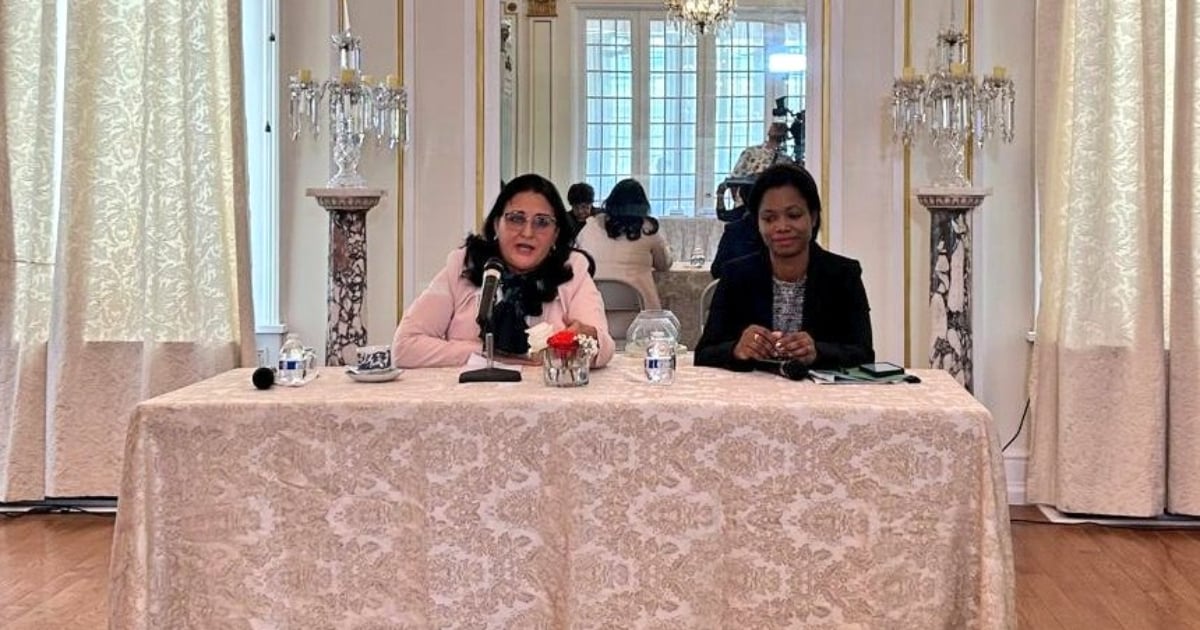
The statement came from Johana Tablada, Deputy Director General for the United States at the Ministry of Foreign Affairs of Cuba, who stated on social media that “the government of the United States has failed to fulfill commitments made with Pope Francis,” but that, despite this, “Cuba has indeed fulfilled its part of the agreement,” referring to the release of detained opposition members.
This recognition marks a turning point in the official narrative, which for months insisted that the release of prisoners was the exclusive result of a "sovereign gesture" prompted by the Jubilee called by the Catholic Church, with no direct foreign involvement.
The Biden administration announced in January 2025 a series of relief measures for Cuba, such as the suspension of Title III of the Helms-Burton Act and the temporary removal of the island from the list of state sponsors of terrorism.
At that time, a senior U.S. official stated that the gesture was in response to a commitment from Havana to the Holy See to release a significant number of political prisoners.
However, neither Washington nor Havana admitted at the time that it was an agreement between both governments.
Taboada's complaint stems from the fact that after Donald Trump came to power, he reversed Biden's measure and re-added Cuba to the list of state sponsors of terrorism.
Just days after Trump confirmed the reversal of the relief measures, the Cuban government denounced the U.S. for noncompliance and deemed that the restored sanctions broke the spirit of the agreement.
Meanwhile, organizations such as the Cuban Observatory for Human Rights continue to report new sentences against Cuban citizens for political reasons.
The Cuban regime allegedly released more than 500 prisoners under the agreement; however, it also reversed some decisions, such as those regarding the opponents José Daniel Ferrer and Félix Navarro.
Frequently Asked Questions about the Release of Political Prisoners in Cuba and the Role of the U.S.
What was the role of the U.S. in the release of political prisoners in Cuba?
The United States acted as a mediator in the agreement that facilitated the release of political prisoners in Cuba, although it initially denied this. The Biden administration conditioned certain concessions, such as suspending Title III of the Helms-Burton Act and temporarily removing Cuba from the list of state sponsors of terrorism, on the release of Cuban dissidents. However, this agreement was not directly acknowledged by either government at the time.
What did the Cuban regime do after the U.S. failed to comply with the agreement?
The Cuban regime accused the United States of failing to uphold the commitments made with Pope Francis, following the reversal of relief measures by the administration of Donald Trump. The Cuban government stated that the restoration of sanctions violated the spirit of the agreement, although it claimed to have fulfilled its part in the release of political prisoners.
How many political prisoners have been released in Cuba?
Although the Cuban regime announced the release of 553 prisoners, only around 230 political prisoners have been confirmed released, according to human rights organizations. The total number of prisoners of conscience in Cuba exceeds one thousand, and the announced releases have not been fully verified independently.
What is the current situation of political prisoners in Cuba?
Prisoners Defenders and various human rights groups report that the Cuban regime keeps 1,150 political prisoners incarcerated, many of whom were jailed for participating in peaceful protests. Those who have been released remain under surveillance and face restrictions, while international organizations continue to call for their unconditional release.
Filed under: