
Related videos:
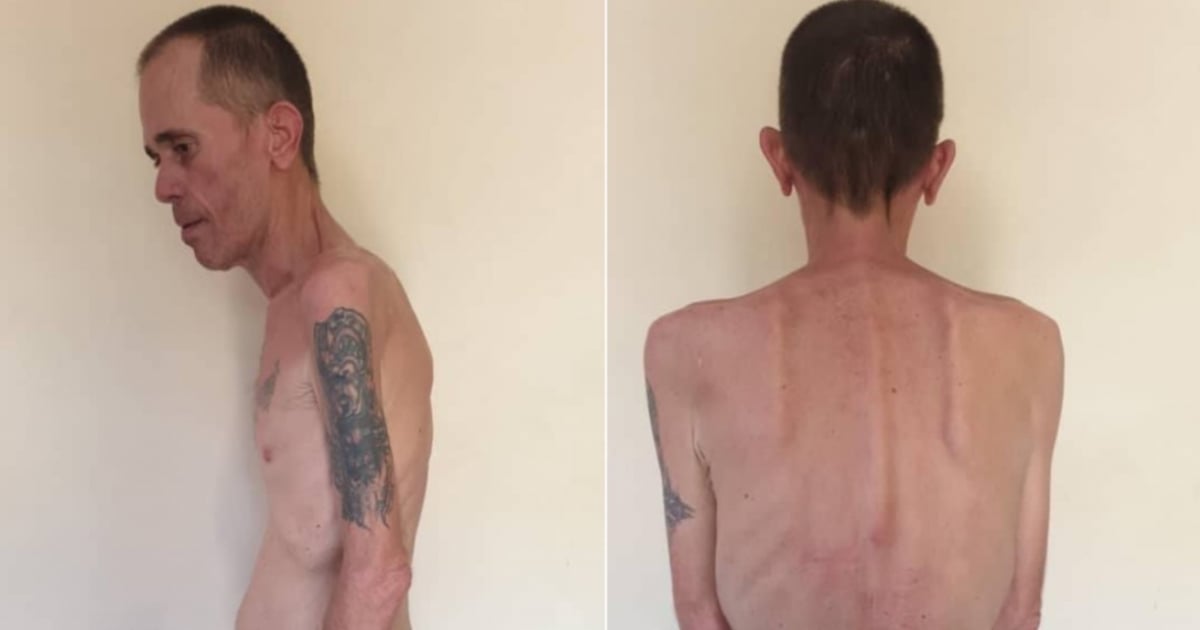
The case of political prisoner Alexander Díaz Rodríguez, a demonstrator from the 11J protests diagnosed with thyroid cancer, has sparked deep concern among activists, family members, and international organizations, following reports that he remains incarcerated without receiving appropriate medical treatment, despite his fragile health condition.
In a heartfelt public message, Moraima Rodríguez Batista, the mother of the inmate, called for his immediate release on humanitarian grounds, asserting that her son "can be saved if he undergoes surgery," but that the Cuban regime refuses to grant him prison leave.
"I have had three applications rejected. I have been mistreated, beaten, and I am not allowed to submit documents. All I want is for my son to be able to live. He has cancer and is getting worse," stated Moraima in an audio message released by the Center for a Free Cuba, based in Washington, D.C., after being brutally assaulted while attempting to apply for a humanitarian license for her son.
Rodríguez Batista reported that his son was diagnosed in October 2022 and has been transferred multiple times between prisons and hospitals, experiencing long periods of family disconnection and medical neglect.
Last April, he was briefly hospitalized at Abel Santamaría Hospital after vomiting and coughing up blood, but he was taken out a few days later and sent to a forced labor correctional facility in Cabo de San Antonio, at the western end of the country, to work making charcoal.
According to statements gathered by journalist José Raúl Gallego, the case of Alexander Díaz reflects the consequences of the Cuban prison system on political prisoners.
“The photos are recent and show the physical deterioration caused by prison,” Gallego posted on his social media, comparing the young man's situation with the prison privileges of former regime agents, such as Gerardo Hernández.
For more than six months, Alexander's mother was unable to see him, misled by the prison authorities. "They told me that he didn't want to see me, and they told him that I wasn't showing up. They psychologically tortured us," she reported.
Organizations such as the Center for a Free Cuba have sent letters to democratic governments and human rights entities requesting urgent intervention to ensure the freedom and medical care of Díaz Rodríguez.
"We are asking for help from the free world. Alexander needs to be operated on immediately," stated John Suárez, the executive director of the center.
Activist Janisset Rivero and other human rights defenders have also called for international visits to Cuban prisons, which the International Committee of the Red Cross has not been able to inspect since 1989.
Currently, it is estimated that there are more than 1,150 political prisoners documented in Cuba, although organizations warn that the actual number could be even higher, given the opacity of the island's prison system.
Frequently Asked Questions about the situation of political prisoners in Cuba and medical negligence in prisons
What is the current situation of Alexander Díaz Rodríguez, the political prisoner from 11J who has cancer?
Alexander Díaz Rodríguez, a 11J protester diagnosed with thyroid cancer, remains incarcerated without receiving appropriate medical treatment, which has raised international concern. His mother has reported medical negligence and the mistreatment he has endured, calling for his release on humanitarian grounds.
How does the Cuban prison system affect political prisoners?
The Cuban penitentiary system has been criticized for its inhumane treatment of political prisoners, marked by medical negligence, deplorable prison conditions, and systematic abuses. These issues have resulted in a significant deterioration of the inmates' health, even leading to deaths.
What actions have international organizations taken regarding political prisoners in Cuba?
International human rights organizations have demanded the immediate release of all political prisoners in Cuba and have called on the Cuban government to ensure proper medical care for inmates. Additionally, they have requested international visits to Cuban prisons to assess the conditions of the prisoners.
How many political prisoners from 11J have been recently released in Cuba?
Recently, several political prisoners from 11J have been released as part of a process of incarcerations that the Cuban regime has undertaken following negotiations with the United States and the Vatican. However, the releases are conditional and do not represent a significant improvement in human rights on the island.
Filed under: