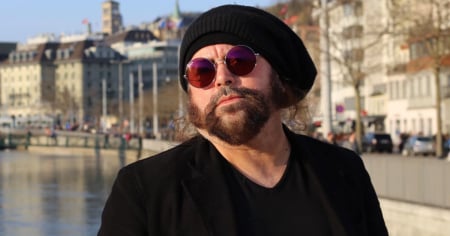
Amid the protests of Cuban students against ETECSA’s price hike, which has resulted in an academic strike and public statements at several universities, the singer-songwriter Carlos Varela has once again raised his voice.
He did it with a fragment from his famous "William Tell," a song that for many symbolizes the generational conflict between the father and the son seeking his opportunity.
The artist, known for being one of the most outspoken and sincere voices in Cuban music, shared a quote from the song on Facebook: "Guillermo Tell, your son has grown, he wants to shoot the arrow. It’s his turn to prove his worth, using his crossbow."
This powerful metaphor about the need for young people to prove themselves and the challenge of facing adversity takes on new relevance today, in the context of the student rebellion that has caught the regime by surprise.
The protest of Cuban university students: a response to ETECSA's rate hike
Cuban students are demanding an urgent review of the increase in mobile internet service fees imposed by ETECSA.
The call for a strike made by the students of the Faculty of Mathematics at the University of Havana has turned into an unprecedented act of resistance in recent decades.
In meetings with ETECSA executives, the youth have raised their voices not only regarding the internet access crisis but also about the living conditions and the increasing economic challenges the country is facing.
Varela and the Metaphor of 'William Tell': A Relevant Song
Although the singer-songwriter has not explicitly mentioned the recent student actions on his social media, his post of the excerpt from "Guillermo Tell" is a clear reference to the current situation.
In this song, Varela speaks of a young man who seeks to prove his worth, something that strongly resonates with the new generations of Cubans fighting for their rights against a system that seems unwilling to yield to their demands.
The song, released in 1989, remains an anthem for young Cubans who feel the need to make their voices heard, despite the restrictions and challenges faced by the people.
Throughout his career, Varela has managed to connect with the youth, providing a soundtrack for the everyday struggles of Cuban society.
Carlos Varela and his stance on politics
Carlos Varela, known as the "Cuban Bob Dylan," has always taken a critical stance towards the Cuban regime, while not explicitly engaging in party politics.
Despite never being regarded as a political singer-songwriter, his songs address social and freedom issues that are uncomfortable for both the government and those opposed to the regime.
In recent interviews, he has expressed his dream of seeing a democratic Cuba, and on several occasions, he has made it clear that he supports those who are fighting for greater freedom.
In a conversation with the PBS News network last February, he stated: "I have faith and dream that [democracy in Cuba] will be possible. This could be a wonderful and prosperous country simply by opening the doors and granting individual freedom to all Cubans."
Additionally, he has supported causes such as the release of Luis Manuel Otero Alcántara, one of the most emblematic artists of the protest movement in Cuba, and has criticized the censorship that affects creators on the Island.
Cuban youth continues to seek their space
The young audience that has followed Carlos Varela's career sees in his songs a reflection of their own struggles.
In times of crisis, such as the one the country is facing with the economic downturn and protests over ETECSA's rate hike, Varela remains a significant voice, not only in the musical sphere but also as a symbol of resistance.
In this context, her song "Guillermo Tell" not only reflects the desire of a generation to face the challenge of living in Cuba, but also the courage of those who, like university students, fight for a better future and for the possibility of having a place in a freer society.
The implicit message in Varela's post and his song aligns with the demands of today's Cuban youth: freedom, opportunities, and above all, the right to prove their worth in a country that still does not allow them to reach their full potential.
Frequently Asked Questions about Student Protests in Cuba and Carlos Varela's Response
Why are Cuban students protesting against ETECSA?
Cuban students are protesting against the increase in telecommunications service rates imposed by ETECSA, which they consider an "unjustified rate hike." This increase has dramatically limited internet access and has partially dollarized the service, excluding those who only have Cuban pesos. The protests are a response to the economic impact of these measures in a country where the average salary is very low.
What does the use of the song "Guillermo Tell" by Carlos Varela symbolize in the current context of Cuba?
The song "Guillermo Tell" by Carlos Varela symbolizes the struggle of young Cubans for their right to prove their worth and face adversities, resonating with the current student protests. Varela, known for being a critical voice of the Cuban regime, uses this song to reflect the desire for freedom and opportunities of new generations who challenge a system that prevents them from reaching their full potential.
How has the Cuban government responded to the student protests?
The Cuban government has responded to the student protests with an unyielding stance, refusing to reverse the fare increase and claiming it is necessary to prevent a technological collapse. Furthermore, they have attempted to discredit the academic strike by accusing the students of being manipulated from abroad.
What has been the reaction of the Cuban community to ETECSA's measures and the support from artists like Carlos Varela?
The Cuban community has reacted with outrage to ETECSA's measures, expressing their discontent through protests and on social media. Artists like Carlos Varela have shown their support for the student cause, using their music to amplify the demands of the youth and criticize the regime for its unwillingness to address the needs of the people.
Filed under: