
Related videos:
Despite the new announcements regarding the expansion of renewable sources, Cuba continues to face a severe electricity generation deficit that exceeds 1,500 megawatts, according to the daily report from the Electric Union (UNE).
In an official statement published this Monday, the state-owned company acknowledged that the electrical service was affected throughout the previous day and continued into the early hours of Sunday morning. The highest recorded impact was 1,533 MW at 10:00 p.m., coinciding with the peak demand period.
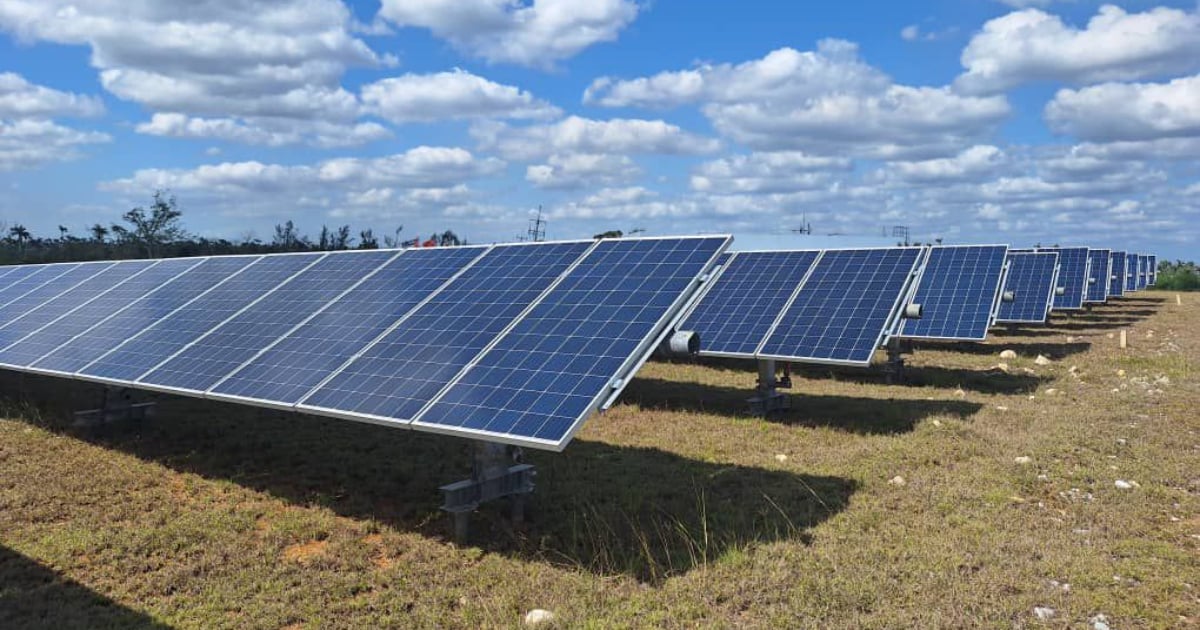
Despite the fact that 16 photovoltaic solar parks collectively delivered 1,542 MWh, with a maximum capacity of 440 MW, the actual system availability was far below demand. The UNE specified that in the morning on Sunday, there was an availability of 1,935 MW, compared to a demand of 2,850 MW, resulting in an impact of 950 MW. By noon, it was estimated that the impact would increase to 1,005 MW.
The forecast for peak evening hours is not promising: the projected generation would be around 2,000 MW, while the demand would rise to 3,500 MW, resulting in a deficit of 1,500 MW and an estimated impact of 1,570 MW.
They inaugurate a solar park, but the collapse persists
Shortly after its daily report, UNE itself celebrated on social media the commissioning of the "Hoyo Colorado" Solar Park in the municipality of Martí, Matanzas, with a capacity of 21.8 MW. With this addition, the instantaneous power generated from solar energy in Cuba surpassed 400 MW for the first time, even exceeding the Guiteras thermoelectric power plant.
The state company emphasized that this advancement would reduce dependence on imported diesel, improve the situation in Matanzas, generate local jobs, and prevent the emission of 30,000 tons of CO₂ annually. It also described it as a solid step towards the goal of ensuring that 24% of the country's electricity is renewable by 2030.
Scheduled blackouts in Havana highlight the contrast
While the UNE promoted advancements in solar generation, the Electric Company of Havana published a schedule of power outages due to generation deficits for June 9. The schedule includes electricity cuts in five different blocks between 10:00 a.m. and 12:00 a.m., distributed as follows:
- B4: 10:00 a.m. – 2:00 p.m.
- B5: 11:00 AM – 3:00 PM
- B2: 3:00 PM – 7:00 PM
- B3: 7:00 p.m. – 11:00 p.m.
- B1: 8:00 p.m. – 12:00 a.m.
Additionally, it was noted that if the conditions of the SEN required it, new rotation cuts would be implemented after midnight, prioritizing the circuits that were not affected during the day. The average additional time of disruption would be one hour.
This plan for blackouts in the capital of the country reinforces the contrast between the discourse on growth in renewable energy and the everyday reality that citizens face.
A structural crisis that persists
Although the authorities promote a discourse of technological advancements and clean energy, official data confirms that the installed capacity remains insufficient, even with support from renewable sources. The collapse of the electrical system continues to impact the population with prolonged and recurring blackouts, amidst a context of fuel shortages, paralysis of thermal plants, and a lack of structural investments.
Frequently Asked Questions about the Energy Crisis in Cuba and the Role of Solar Parks
Why is there still an electricity deficit in Cuba despite the new solar parks?
The electrical deficit in Cuba persists because the installed capacity of solar parks is insufficient to meet the country's energy demand, especially during peak hours. Despite the addition of new solar parks, renewable energy generation remains marginal compared to total needs, and the national electrical system faces serious structural problems, such as the deterioration of thermal power plants and fuel shortages.
What is the actual contribution of solar parks to Cuba's energy matrix?
The contribution of solar parks to Cuba's energy matrix is still limited. Although efforts have been made to increase solar generation capacity, it accounts for less than 5% of the national energy matrix. The intermittency of solar energy and the lack of adequate infrastructure for its storage and distribution limit its real impact on the country's electricity supply.
What measures is the Cuban government taking to address the energy crisis?
The Cuban government has announced plans to build more solar parks and increase the share of renewable energy in the energy matrix. However, the lack of investment and ineffective management have hindered significant progress. Additionally, the government has resorted to scheduled blackouts to manage the energy deficit, but these measures do not address the structural causes of the crisis, such as the deterioration of thermal power plants and fuel shortages.
Why isn't solar energy sufficient to meet the electricity demand in Cuba?
Solar energy is intermittent and depends on weather conditions, which limits its ability to meet electricity demand, especially during peak consumption hours, such as nighttime. Furthermore, the current infrastructure is not prepared to efficiently integrate solar energy, which reduces its effectiveness in the national electricity grid.
Filed under: