
Related videos:
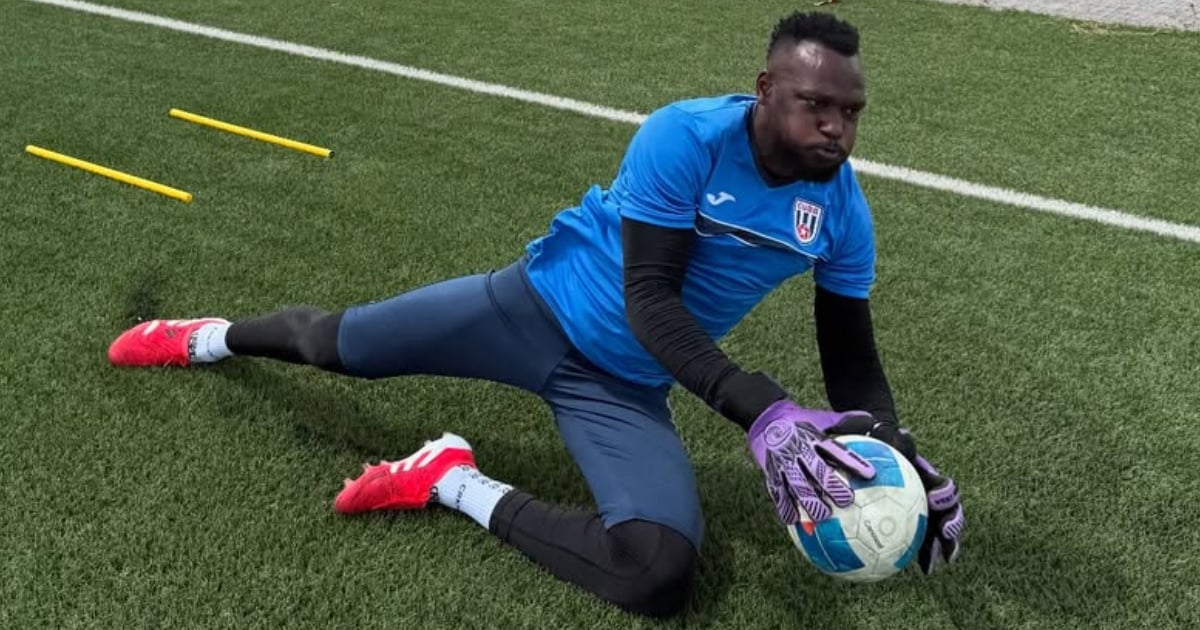
The goalkeeper of the national team Raiko Arozarena has withdrawn from participating in the qualifying match for the 2026 World Cup, as officially reported by the Cuban Football Association (AFC) in a statement released by official media.
The decision was announced hours before the team's trip from Antigua and Barbuda to Santiago de Cuba, the venue for the match against Bermuda scheduled for this Sunday, June 9, where the Cuban squad will aim to advance to the next stage of the tournament.
According to Arozarena, brother of Major League Baseball player Randy Arozarena, his decision is motivated by concerns over the recent immigration measures imposed by the Donald Trump administration, which restrict entry to the United States for certain individuals from countries like Cuba.
A preventive decision, although it shouldn't affect him
Although the measure should not directly affect him, since he is legally residing in the United States and the provisions clarify that permanent or legal residents are not included in the stricter restrictions, the goalkeeper chose not to take any risks, concerned about the potential consequences for his club career.
The AFC considered that this case reflects the climate of uncertainty and pressure generated by such measures, as well as the associated media campaigns, which ultimately have an indirect impact on Cuban sports and its athletes residing abroad.
"We understand that this is a personal decision based on individual circumstances," stated the Association in its note, while reiterating the rest of the delegation's commitment to the global cause.
Trump signs order to partially limit the entry of citizens from Cuba and other countries to the U.S.
The President of the United States, Donald Trump, signed a presidential proclamation last Wednesday that imposes new travel restrictions on citizens from several countries, including Cuba, citing "risks to national security."
"I have decided to partially restrict and limit the entry of nationals from the following seven countries: Burundi, Cuba, Laos, Sierra Leone, Togo, Turkmenistan, and Venezuela. These restrictions distinguish between the entry of immigrants and non-immigrants, but they apply to both categories," states the official text.
The measure completely prohibits entry into the United States for citizens of 12 countries, including Afghanistan, Iran, Somalia, and Yemen.
At the same time, it imposes partial restrictions on individuals from seven nations, including Cuba, as well as Venezuela, Turkmenistan, Laos, Burundi, Sierra Leone, and Togo.
Regarding the Cuban case, it states that the island "is a state sponsor of terrorism. The Government of Cuba does not cooperate or share sufficient law enforcement information with the United States. Historically, Cuba has refused to accept the return of its deportable nationals. According to the Overstay Report, Cuba had a B-1/B-2 visa overstay rate of 7.69% and an overstay rate of 18.75% for F, M, and J visas."
"Therefore, the entry of Cuban citizens into the United States is suspended as immigrants and as non-immigrants under the visa categories B-1, B-2, B-1/B-2, F, M, and J," adds the presidential order.
It emphasizes that "consular officials must reduce the validity of any other non-immigrant visa issued to Cuban citizens to the extent permitted by law."
The White House specified that the partial restrictions allow for certain exceptions for legal permanent residents in the U.S., individuals with valid visas, applicants for visas in specific categories, and individuals whose entry is considered to be in the national interest.
Filed under: