
Related videos:
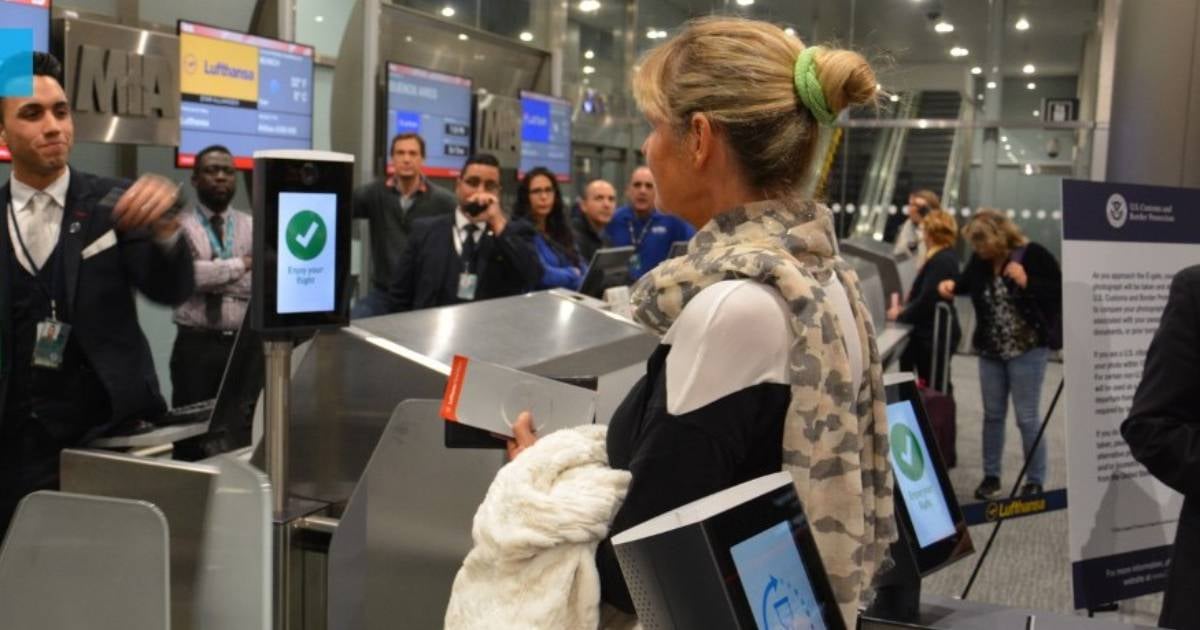
On the first day of the new travel ban imposed by President Donald Trump, the Miami International Airport (MIA) operated with apparent normalcy.
Flights from Cuba, Haiti, and other regions of the Caribbean landed without incidents. However, for many travelers, the silence in the waiting rooms was not synonymous with calm, but rather with a tense atmosphere and unanswered questions: Will this be the last time they can enter the United States?
Magda Moreno, 58-year-old American citizen, arrived at MIA this Monday from Cuba. Although her journey went smoothly, she did not hide her concern for the future.
“When these four years are over, the United States will return to what it was, at least a country that has welcomed countless immigrants. […] Just by the whim of one man, everything has been turned upside down”, he stated to the Miami Herald.
Moreno was not the only one to express her concerns. Other Cubans and Cuban Americans interviewed by the local newspaper also reported smooth entries, but they warned about the confusion and frustration that the measure generates.
Juan Carlos Torres, a Cuban resident in the U.S., who returned without complications, joins a day marked by no visible rejections. However, the uncertainty is growing, fueled by testimonies such as that of Narayana Lamy, a Haitian with a visa, who managed to enter without issues but fears it may not be so easy next time.
Other passengers, such as Mo François, an American of Haitian descent, directed their criticism at local governments. "Haitian authorities should oppose this. We have no one to defend us," he declared resignedly to the Miami Herald.
Although the Department of State has assured that valid visas will remain valid, the ambiguity in the wording of the proclamation and the discretion of border agents leave many in uncertainty.
The proclamation signed by Trump directly affects Cubans and Venezuelans, partially suspending the issuance of new visas. More than 125,000 non-immigrant visas and up to 34,000 immigrant visas could be blocked, according to calculations from the American Immigration Council cited by The Miami Herald.
For those who dream of reuniting with their families, studying in the U.S., or simply visiting their loved ones, this measure is a door that closes unexpectedly.
Although there are exceptions, such as permanent residents, refugees, diplomats, and athletes, experts warn that travelers from the affected countries may face a higher level of scrutiny when entering the country.
A migratory déjà vu
The measure marks a continuation of the restrictive policies that Trump implemented during his first presidency, under the argument that the affected countries lack reliable mechanisms to verify the identity of their citizens and control expired stays, in addition to the fact that their governments do not cooperate with the United States. For the Cuban community, which has endured decades of forced separation and uncertain migration processes, the proclamation revives old ghosts.
Despite the apparent calm in MIA, what is being experienced is a tense wait. Thousands of Cuban families, both on and off the island, are today further away from reuniting, closer to the fear of being trapped by a policy that, as many have denounced, does not differentiate between rights, dreams, and nationalities.
Filed under: