
Related videos:
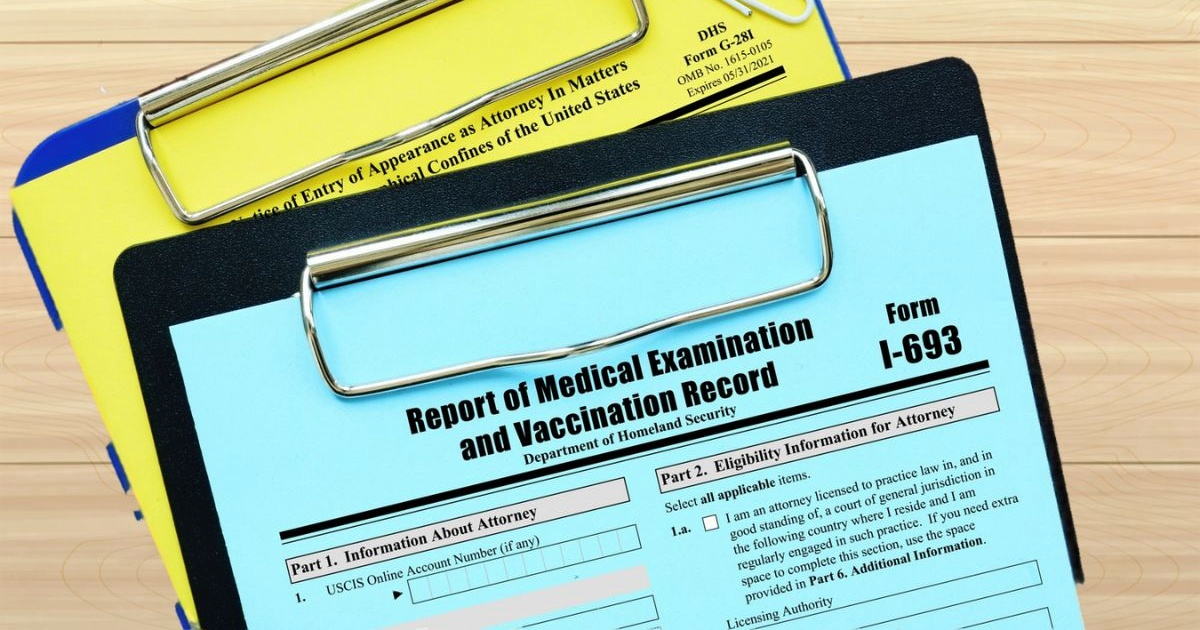
The United States Citizenship and Immigration Services (USCIS) announced this Tuesday a key change regarding the use of the I-693 Form, the medical examination required for those applying for immigration benefits such as permanent residency (Green Card).
Starting from June 11, 2025, this form will only be valid while the associated application is active and pending.
This adjustment represents a significant shift in U.S. immigration policy, as it reverses the previous decision—effective since April 2024—that granted indefinite validity to the medical form as long as it was signed from November 1, 2023.
That policy facilitated the reuse of the I-693 for new applications, even years later, as long as the applicant had not developed new medical conditions.
However, USCIS concluded that this practice did not ensure current medical evaluations, and therefore could pose a risk to public health.
From now on, the I-693 will be considered valid only for the duration of the pending immigration application with which it was submitted.
Once the application is rejected or withdrawn, the medical form automatically becomes void.
What does this change mean for migrants?
In practical terms, applicants who have already submitted the I-693 as part of a pending case will not need to undergo the examination again.
However, if that case is denied or abandoned, and the applicant wishes to reapply— for example, through a new adjustment of status— they will need to undergo a new medical examination conducted by a civil doctor authorized by USCIS and submit a new updated form.
This adds an extra burden of time, logistics, and cost for applicants, who are already facing long waiting periods and demanding procedures.
Moreover, it can pose a problem for those living in areas with limited access to authorized doctors or who have financial difficulties in affording a new evaluation.
Who does this new policy affect?
The measure is primarily aimed at the following groups:
-Those seeking to obtain permanent residency through Form I-485.
-Applicants who have received a denial or withdrawn their previous case and plan to reapply.
-People with medical conditions that could make them inadmissible for public health reasons.
Migrants who, although not initially required to submit the I-693, may be requested to do so if USCIS deems it necessary.
In this latter case, the agency has reminded that it can exercise its discretion to request a medical examination at any point in the process, even when the applicant was not initially required to do so.
"We may require, at our discretion, a foreign national who would not otherwise be obligated to undergo a medical examination [...] if the evidence indicates that there may be a public health concern," the USCIS statement specifies.
What is the cost of a USCIS-approved medical examination?
The medical examination required by the United States Citizenship and Immigration Services (USCIS) is an essential part of the process for applying for permanent residency.
Its main objective is to ensure that the applicant does not pose a threat to public health and complies with the medical standards established by the immigration authorities.
What does the exam include?
The procedure is comprehensive and includes the following stages:
Detailed medical history: The applicant must present a comprehensive summary of their medical history, including serious illnesses, previous surgical interventions, and any chronic conditions.
General physical examination: Parameters such as blood pressure, body temperature, and other basic health indicators are assessed.
Mandatory tuberculosis (TB) detection: This is conducted through a skin test or a blood test. If there are positive results or suspicious history, a chest X-ray or a sputum test may be required.
Sexually transmitted disease testing: A syphilis and gonorrhea test is required for applicants aged 15 and older.
Required vaccinations: The applicant must be up to date with the immunizations as stipulated by the Centers for Disease Control and Prevention (CDC), including measles, mumps, rubella, hepatitis A and B, tetanus, diphtheria, and chickenpox, among others.
Additional tests (in specific cases): If the doctor finds signs of substance abuse or psychological disorders, they may request supplementary tests or psychiatric evaluations.
What is the total cost?
The price of the medical exam varies depending on the clinic, the state, and the necessary services. Here is an approximate estimate:
Basic exam: between $200 and $400 USD.
Vaccines: they can cost between $50 and $200 USD per dose, depending on which ones are missing.
Additional tests (X-rays, blood tests, etc.): between $50 and $150 USD extra.
In total, the cost can range between $400 and $700 USD, depending on the specific case.
Why is the 2024 policy being reversed?
When USCIS announced in April 2024 that the I-693 would have indefinite validity, many viewed the measure as an administrative relief.
It allowed a recent medical examination to accompany not only an active application but also future applications if the health history remained unchanged.
Nevertheless, in its internal review, USCIS concluded that this policy was “excessively broad.”
The possibility of reusing old medical exams raised questions about their actual validity when assessing new applications, especially in contexts where a health condition may have emerged that affects the applicant's eligibility.
The agency stated: “By limiting the validity period solely to the current request or petition [...] we ensure that foreigners receive timely and appropriate medical exams and treatment, which protects public health.”
Immediate application and foresight for new cases
The new guideline is effective immediately and applies to cases submitted starting June 11, 2025, as well as to those currently in process.
This means that the validity of the I-693 is no longer automatic or indefinite; its use is exclusively tied to the case with which it was submitted.
A new exam will not be required for those who have already submitted the form with a request that is still under review, but it will be necessary for those who reapply after a rejection or withdrawal.
Therefore, applicants should plan ahead and consider the additional resources that this change may require.
Filed under: