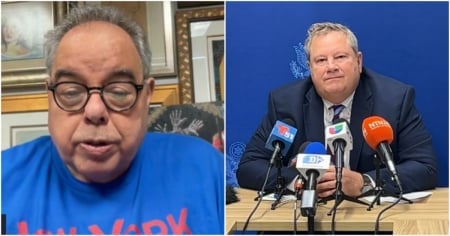
The Florida immigration attorney Willy Allen continues to believe that the I-220A will be legalized, but now he admits that the path will be a bit more difficult than he envisioned a few months ago and that there will be "victims" along the way. In his opinion, these will be those who have been in the United States for less than two years, entered through the border, did not pass the credible fear interview, and are unfortunate enough to be detained. This does not mean that the rest are safe. "It is random," he said this Monday during his weekly program on CiberCuba, at 11:00 AM Miami time.
"I have absolute confidence that the vast majority of I-220A will be legalized, and that this will happen in the near future every day, but the path is going to be a bit more challenging, and I fear that there will be casualties along the way who will have a negative experience," he stated.
In response to CiberCuba's question about whether these victims are the people with I-220A forms, who have been in the United States for less than two years, the lawyer answered affirmatively, adding those who have the misfortune of being detained randomly. "Let's give credence to the memos in which they say they are detaining people who have been here for less than 2 years, who enter through the border and who did not have a credible fear interview."
"To the people, I-220A, who have been here longer and are reporting to ICE (Immigration and Customs Enforcement), last year they were told, don't come anymore, go home and wait to be able to legalize, but now those who were reporting are not being detained, but they are being scheduled for a future court appearance," he added.
In this regard, he reiterated that "the reason they are detaining people with 220A is because they did not have a credible fear interview." Therefore, he clarified that if someone is I-220A and has a positive credible fear, they also have the opportunity to file and argue for full asylum in the United States. In those cases, the risk of being detained is lower, the lawyer emphasized.
Now, "if there are hearings, you must attend all of them," he noted before confirming that the avalanche of immigration decisions made in the United States, which are halted in the courts, means that even he, with 40 years of experience, cannot say with certainty that this or that will likely happen in one way or another.
Regarding Cubans with humanitarian parole, Allen maintains that he is not concerned. "I believe that the president has full power to eliminate humanitarian parole, and that’s what he did, he eliminated it because it was an executive action of the previous president. Revoking it is more difficult, and saying that the entry was illegal is even more challenging because the previous president (Biden) stated it was a legal entry and granted a parole. At the same time, I worry about what happens if they revoke it because the Cuban Adjustment Act requires an inspection, an entry, or an admission or parole, and those who entered with parole had an inspection, an admission, and a parole. So they have everything. And I believe that sooner or later, although there is still a pause that was for 90 days, that pause continues, Cubans with humanitarian parole will also be legalized," he insisted.
Filed under: