
Related videos:
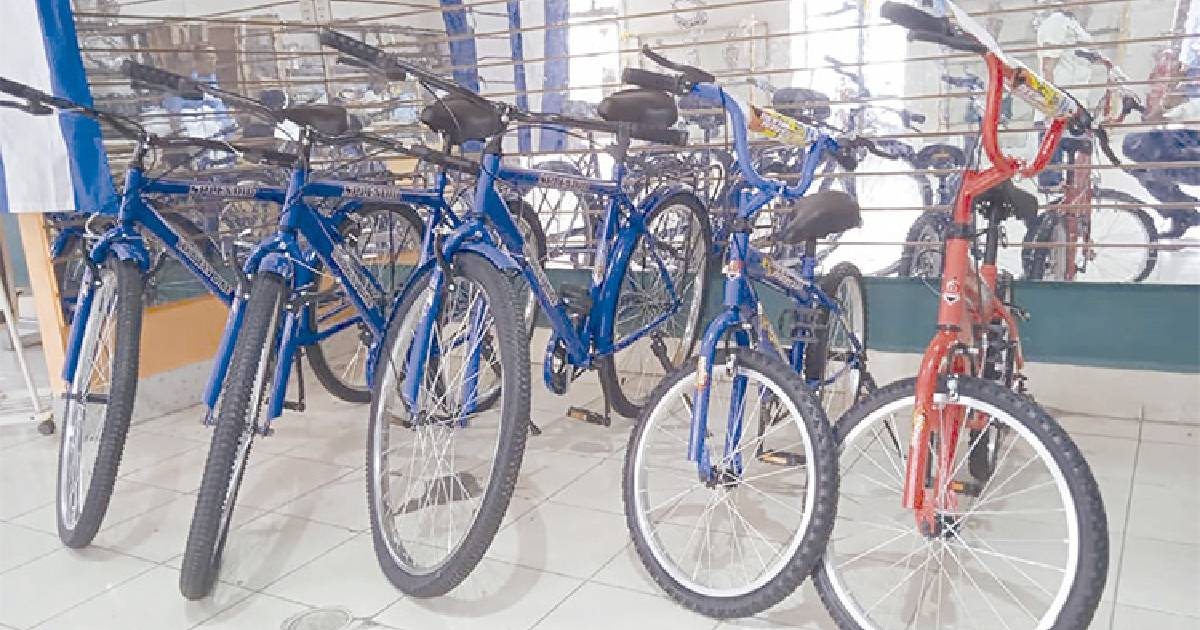
The Commercializing Company Axess announced a contract with the bicycle factory Minerva to produce and sell 10,000 mechanical bicycles in CUP, as part of the agreements established at the International Transport and Logistics Fair (FITL 2025), held in April.
The contract was signed between the Marketing Company Axess, part of the Business Group for Motor Transport Services (GEA), and the Industrial Company Ángel Villarreal Bravo (known as the Minerva bicycle factory), located in the province of Villa Clara, reported the official newspaper Trabajadores.
According to Leonides Licea, general director of Axess, the bicycles will be available in the entire network of stores across the country, including the Isle of Youth, once production is completed. Additionally, provincial workshops will be available for their repair and spare parts such as tires and brakes will be sold.
Although the initiative aims to alleviate the severe public transportation crisis, it does not address the main concerns of citizens. The prices and sales conditions have not been revealed, nor will priority be given to the workers who genuinely need them to reach their workplaces. It has also not been stated whether payment can be made in installments, or if the scheme will be accessible for those surviving on meager salaries in CUP.
The comments generated by the publication reflect widespread distrust. Armando Bruzón recalled that during the Special Period, "the working class was taken into account," and asked whether this time the same logic would be applied, or if it would be "every man for himself," with long lines, speculation, and questionable maneuvers that ultimately exclude those who truly rely on a bicycle to get to work.
"They could be sold to the workers in two or three installments," he suggested, "starting with those who genuinely commute to their workplaces by bike and have managed to keep them in good condition."
Another reader, Omar Medina Quintero, requested clarity on the financial scheme: “The news summary omits this part that will accompany the sale of the equipment that will once again replace fossil fuel, oil, with human muscle power. Tell us if this solution is associated with any form of dollarization or if it will be sold at a non-remitted CUP price.”
According to the outlet, the contract also includes the production of 300 electric tricycles for cargo and passenger transport in different areas.
Licea also stressed that “a contract was signed with a micro, small, and medium-sized enterprise for the marketing of parts, components, and accessories intended for automotive transport, particularly in the provinces of Havana, Ciego de Ávila, and Holguín. A similar purpose was served by the letter of intent signed with the Spanish company Primor.”
In a country where getting around every day has become a luxury, the bicycle emerges as a viable and sustainable option. However, without transparency or equitable access policies, what could be a solution ends up smelling more like a closed business than a collective relief. Because in Cuba, even pedaling has become a uphill struggle.
Since the beginning of 2021, the Cuban government announced its commitment to increase the production of electric tricycles and bicycles to sell them in stores in Freely Convertible Currency (MLC).
In March of that year, the Business Group of the Sideromechanical Industry (Gesime) announced that it would produce 10,000 electric bicycles in 2021 and that the company responsible for this task was Ciclos Minerva.
It was also arranged for the sale of approximately 18,000 mechanical bicycles in these establishments, stated David Rodríguez Seijas, deputy director of the entity.
Shortly thereafter, the official press announced that Ciclos Minerva would sell 6,270 mechanical bicycles in national currency, as part of a project by the Ministry of Transport funded by the state budget.
The government aims for bicycles to regain the role they played in the mobility of Cubans during the special period, in order to address the fuel shortages in the country and the shortcomings of public transportation services.
In light of the public transportation crisis facing Cuba, at the beginning of May, the government of Havana called for a public competition for the management of bicycle mobility services in the city, funded by the United Nations.
At the beginning of 2023, a pilot project for bicycle rental was launched to facilitate transportation in the Havana municipality of Boyeros and at the José Antonio Echeverría Technological University (CUJAE). Services began at two stations (CUJAE and Reloj Club), before expanding to a total of six bike stations located in the areas of Reloj Club, CUJAE, Abel Santamaría, Wajay, and Fontanar, with 300 bicycles available.
The management is handled by the local development project Ha'Bici - Inteliforja, after being put out to public tender by the Transportation Directorate of Havana (DGTPH) months ago.
Frequently Asked Questions About Bicycle Sales in Cuba and Their Impact on Transportation
How many mechanical bicycles will be sold in Cuba and who is involved in the project?
10,000 mechanical bicycles will be sold in national currency (CUP) as part of a contract signed between the Commercial Company Axess and the Industrial Company Ángel Villarreal Bravo, known as the Minerva bicycle factory. This initiative was agreed upon during the International Transport and Logistics Fair 2025.
How will the bicycles sold in Cuba be distributed and maintained?
Bicycles will be available across the entire network of stores in the country, including the Isle of Youth. Provincial workshops will be set up for their repair and spare parts such as tires and brakes will be sold. However, no details have been given regarding pricing or specific sales conditions.
What concerns do Cubans have regarding the sale of bicycles in national currency?
There are significant concerns due to the lack of information about the price, sales conditions, and whether there will be payment plan options. The distrust stems from the fear that the bicycles may end up in the hands of those who do not urgently need them for work, as happened in the past, and that the sales scheme may not be accessible for those living on CUP salaries.
How is this initiative connected to the current transportation situation in Cuba?
The sale of bicycles aims to alleviate the severe crisis of public transportation in Cuba, where daily mobility has become a luxury due to fuel shortages and service deficiencies. Furthermore, the Cuban government has been promoting the production of tricycles and electric bicycles as sustainable alternatives.
Filed under: