
Related videos:
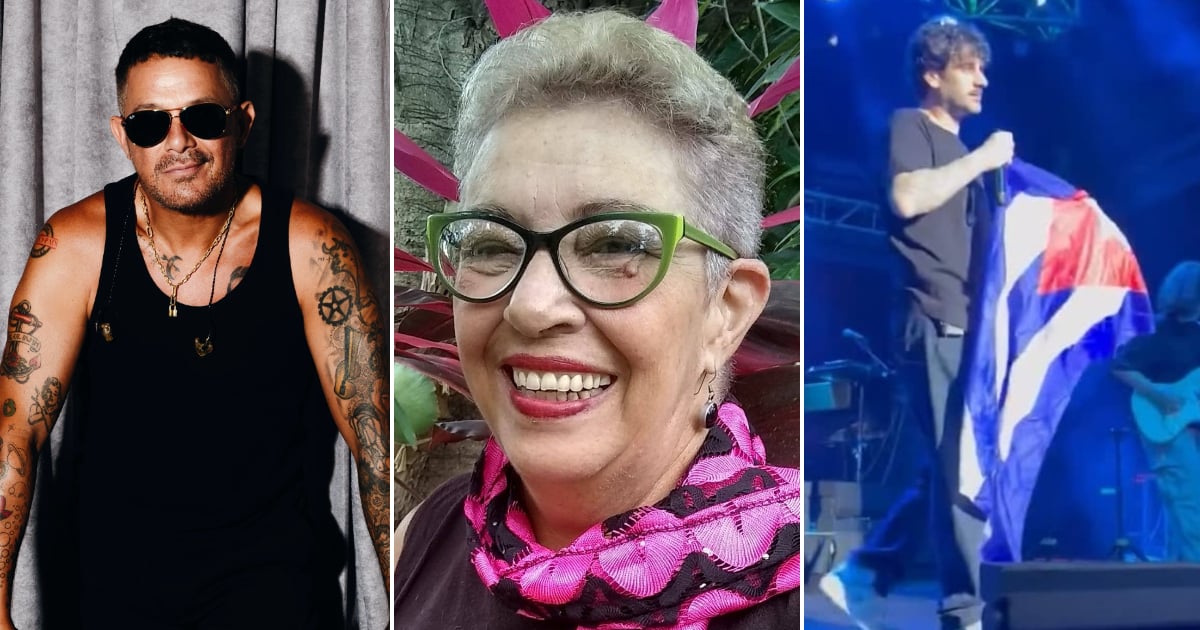
María del Carmen Hernández Carús, a professor of technical careers at the "Marta Abreu" Central University of Las Villas (UCLV), posted a message on Facebook in which she criticized artists, youtubers, and foreign students who have expressed support for Cuban university students protesting against the increase in mobile data rates on the island.
In his post -shared by Cubadebate -Hernández Carús directly questions Alejandro Sanz, Melendi, and Spanish content creators, suggesting that they should focus on social issues in their own countries instead of showing solidarity with the demands of the Cuban student body. “Why don't you help solve that problem, back in your beloved Spain?” he wrote, referencing homeless people at Madrid airport. He also criticized young Argentinians who have shown support for Cuban students, asking why they do not protest against repression in their own contexts.
The professor makes a series of statements against those who, from the outside, denounce the repression of the Cuban regime and highlight the protests against the so-called “tarifazo” de ETECSA. She accuses them of ignoring the abuses committed in countries like the United States while labeling their statements about Cuba as hypocritical. "Such hypocrisy is disgusting!" she concludes her post.
The professor's statements come just a few days after Alejandro Sanz expressed his support for the young Cubans protesting against the ETECSA rate hike, and after Melendi displayed a Cuban flag at one of his concerts, saying, “Long live my free Cuba!”.
Messages of support have also been shared from Argentina, where university students and socialist leaders posted videos expressing solidarity with Cuban students, as well as from Chile and other countries. Additionally, Spanish YouTubers from the Black Mango channel released an episode describing their impressions of the social situation on the island after visiting humble neighborhoods in Havana.
Since the announcement of ETECSA's new rate scheme on May 30, students from several universities across the country have called for an academic strike in protest. They have publicly denounced that the new conditions limit access to the internet and force reliance on top-ups from abroad. The authorities have responded with a call for unity, while reports have emerged of visits and warnings from State Security to organizing students, particularly at UCLV.
In parallel, the FEU announced the creation of a "multidisciplinary group" to engage in dialogue with ETECSA and propose solutions, although the company has already made it clear that there will be no reversal of its rates. This initiative has been met with skepticism among students, as it is seen as an attempt at a dialogue simulation without any real impact.
On its part, the FEU of UCLV stated in a release that its priority is to "maintain tranquility" within the campus, in response to what it perceives as a manipulation campaign on social media. This stance has been criticized by sectors of the student body itself, demanding greater transparency and representation in the management of the crisis.
Frequently Asked Questions about Student Protests in Cuba and the ETECSA Rate Hike
Why are Cuban students protesting against ETECSA?
Cuban students are protesting against the increase in ETECSA fees, which they consider discriminatory and exclusionary. They argue that these measures exacerbate inequality by limiting access to the Internet, an essential right for education and communication. The discontent has led to academic strikes and demonstrations at several universities across the country.
How has the Cuban government reacted to the student protests?
The Cuban government's response to student protests has been one of censorship and threats. Students have reported visits from State Security and threats of expulsion and imprisonment. Additionally, the government has reaffirmed that there will be no rollback on the increase in fees, labeling the protests as externally manipulated.
What role have artists and international figures played in this conflict?
Artists such as Alejandro Sanz and Haydée Milanés have expressed their support for Cuban students. This has generated criticism from the Cuban government, which accuses these figures of ignoring issues in their own countries. However, their support has been essential in highlighting the student struggle and criticizing the repressive policies of the Cuban regime.
What measures have Cuban universities taken in response to the protests?
Cuban universities have had mixed reactions. Some have shown support for the students, while others, like the University of Havana, have reaffirmed their backing of the Communist Party and have tried to maintain normal academic activities. The FEU has created a dialogue group with ETECSA, although many students believe this is merely a simulation without real impact.
Filed under: