
Related videos:
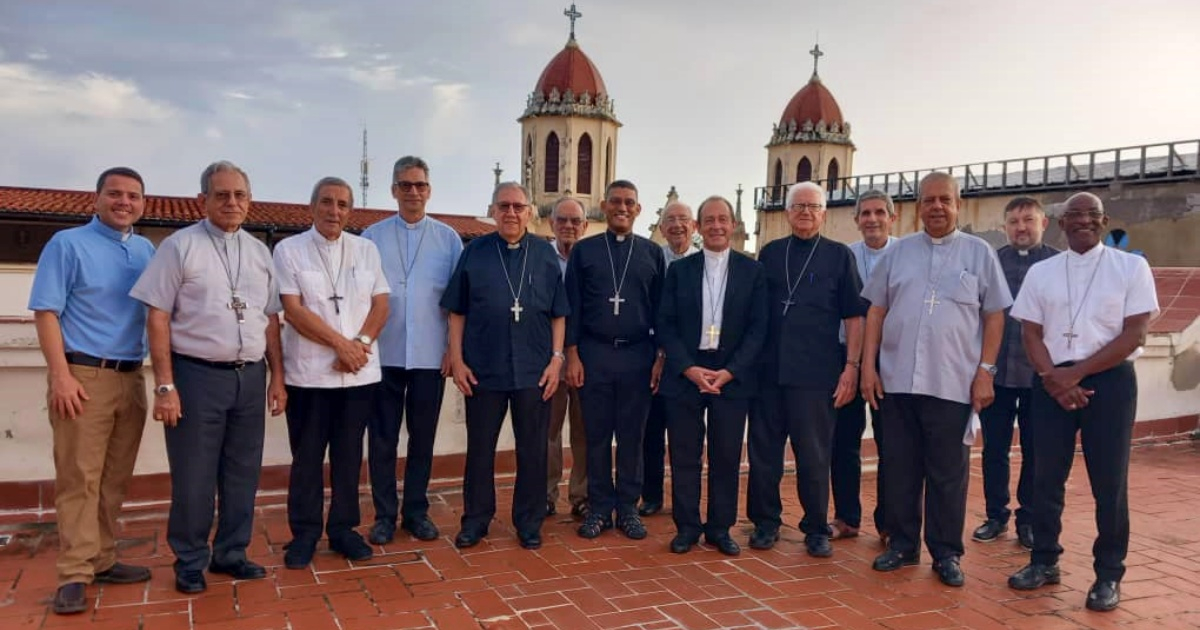
In a strong released on June 15, during the Solemnity of the Holy Trinity, the Catholic bishops of Cuba stated that we must "do something to save Cuba" and restore hope to the people.
Under the slogan "Pilgrims of Hope," the message is framed within the celebration of the Jubilee Year, a period that represents a special time of grace, reflection, and spiritual renewal throughout the Catholic Church.
However, the Cuban episcopate published a message that not only invites prayer but also demands structural transformations, calls for genuine dialogue without exclusions, and firmly denounces the daily suffering of the country.
"Without hope and joy, there is no future for any people,” warned the bishops, who called for opening new paths with courage and without fear.
“Things are not well, we cannot continue like this, we must do something to save Cuba and restore our hope," with that direct and chilling phrase, the Catholic bishops signed one of the most critical, courageous, and compassionate messages they have directed to the people in recent years.
"With despair and without joy, there is no future for any people."
The document revolves around a central truth: hope is weakened in Cuban society, and without it, there is no viable path for any people.
Throughout the text, the bishops described a nation battered by economic strain, emotional exhaustion, and social fragmentation.
"Also among us, there are many who live in despair, trapped by uncertainty and confusion in the face of a dramatic present and a future that remains unclear, because there is a feeling that we have lost the springs, the dynamism, and the will to change the harsh living conditions of the people," they stated.
No se trata, explican, de un mensaje derrotista sino de un llamado urgente a actuar y transformar.
“The painful and urgent reality we are experiencing calls for us not to remain solely in analysis, describing the problems and their multiple causes. It demands that we change the course of this situation”, they warned.
Everyday pain and social fracture
In one of the harshest fragments of the document, the bishops provide a concrete description of the daily anguish faced by millions of Cubans:
"When daily life forces one to anxiously seek basic necessities, the prolonged lack of electricity disrupts rest and halts study and work; families become increasingly fragmented due to rising emigration, and disenchantment and apathy take hold of many, overwhelmed by the repetition of promises that never come to fruition… when all of this invades our souls, the horizon of hope fades, and sadness grips our hearts."
Far from being a religious text, the bishops articulated a political and social perspective imbued with ethical responsibility:
"It is time to create an environment, free from internal and external pressures and constraints, where the structural, social, economic, and political changes that Cuba needs can be implemented."
No one is expendable in the construction of the future
In another key passage, the episcopate rejected all forms of exclusion in the national debate, advocating for a plural Cuba where all viewpoints have a place
“This concern has accompanied the repeated messages that the Catholic Bishops of Cuba have addressed in recent decades, with the sole desire to serve the common good of the homeland, encouraging respectful listening from all those who, loving the land where they were born, wish to contribute, with their skills and potentials, to the building of a more prosperous, just, and happy nation.”
They also added that "the diversity of perspectives is a necessity and a richness when seeking the greater good of the homeland, above individual interests."
Dialogue, dignity, and trust in the people
The message did not evade responsibility nor shelter in neutrality, but demands courage, respect, and a willingness to engage
"With Pope Leo XIV, we aim to build bridges and work towards an environment of genuine peace that 'requires a sincere willingness for dialogue, fueled by the desire to connect rather than to confront.'"
In this regard, the Church declares itself "in communion with the Holy Father" and reaffirms its commitment to "always choose dialogue, to respect the dignity of every human being, and to trust in the immense potential of the Cuban people."
Aware of their pastoral role, the bishops also urge to intensify prayer for Cuba:
"Today we renew this commitment, confident in the power of prayer, because ‘unless the Lord builds the house, the builders labor in vain’ (Psalm 127:1)."
The message concluded with an expression of faith and comfort that does not shy away from pain, but confronts it with active confidence:
“May [Christ the Risen and the Virgin of Charity] move our minds and our wills, so that, setting aside resistances, distrust, and fears, we may be able to open for our people the bright and beautiful door of hope.”
The message has been very well received by thousands of citizens who have responded positively to a perspective that urges opening a path of hope for the Cuban people.
Filed under: