
Related videos:
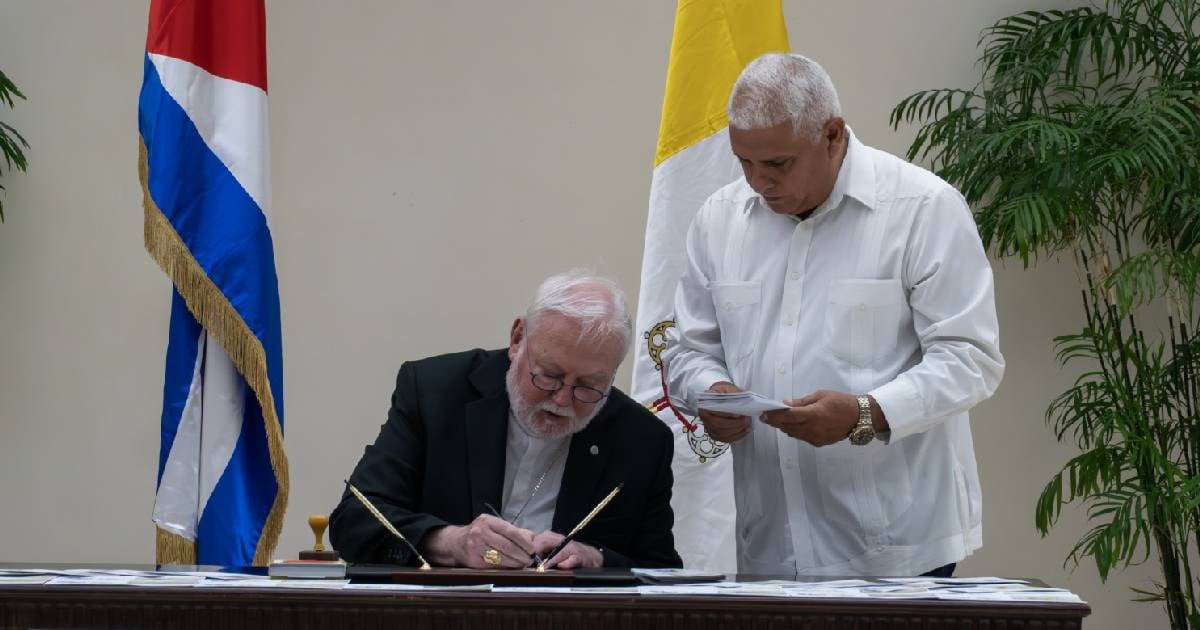
On the occasion of the 90th anniversary of diplomatic relations between the Holy See and Cuba, the Secretary for Relations with States of the Vatican, Archbishop Paul Richard Gallagher, reaffirmed on Thursday in Havana the Catholic Church's commitment to the defense of human rights, fundamental freedoms, and dialogue as a means to resolve conflicts.
During the main event held at the Palace of the Revolution, Gallagher emphasized the role of the Church and Vatican diplomacy in promoting "open communication with one another" and in building bridges between peoples and institutions.
"The Holy See cannot cease to promote both rights and freedoms and their foundation in the transcendent dimension of man," stated the prelate, in the presence of the ruler Miguel Díaz-Canel and Chancellor Bruno Rodríguez.
Rodríguez, for his part, highlighted the “respectful, ethical, and constructive” nature of the dialogue between Cuba and the Vatican, and positively assessed the continuity of bilateral ties over time.
Although Gallagher's visit had been scheduled in advance, it takes on a particular symbolism as it is the first since the election of Pope Leon XIV; and following the mediation of the Holy See for the Havana regime to agree to release over 500 prisoners.
Relations between Cuba and the Holy See have evolved significantly since the initial break following the triumph of the revolution in 1959.
The island, which was officially atheist from 1959 to 1992, has since welcomed visits from the last three popes—John Paul II, Benedict XVI, and Francis—contributing to a gradual normalization of relations.
The Vatican has played a significant role at key moments in recent Cuban history, such as the mediation that facilitated the restoration of diplomatic relations between Havana and Washington in 2014.
More recently, he acted as an intermediary in negotiations between the Biden and Díaz-Canel governments for the release of more than 500 prisoners, alongside efforts to remove Cuba from the U.S. list of state sponsors of terrorism.
Although those advancements were reversed following Donald Trump's return to the White House, the Holy See has continued its humanitarian efforts, including negotiations for mass releases in the country, some of which have thousands of beneficiaries, although not always linked to political causes, the agency EFE reported.
Gallagher assured on Wednesday that “Cuba has a little place in the heart of the Holy Father,” referring to Pope Leo XIV's affection for the people of the island.
After his election, it was revealed that León XIV, formerly known as Robert Francis Prevost, maintained direct contact with Harold Cepero Escalante, the activist who died alongside Oswaldo Payá in a controversial traffic accident in 2012.
Frequently Asked Questions about the Vatican's Visit to Cuba and Human Rights
What was the main objective of the Vatican secretary's visit to Cuba?
The main objective of the visit by the Vatican Secretary, Paul Richard Gallagher, to Cuba was to reaffirm the Catholic Church's commitment to the defense of human rights and fundamental freedoms. The visit took place in the context of the 90th anniversary of diplomatic relations between the Holy See and Cuba, and aimed to promote dialogue as a means to resolve conflicts.
How has the relationship between Cuba and the Vatican evolved since the revolution of 1959?
The relationship between Cuba and the Vatican has evolved significantly since the initial break following the 1959 revolution. Cuba, which was officially atheist from 1959 to 1992, has received visits from the last three popes and has worked towards normalizing ties, including significant mediations such as the release of prisoners and the restoration of diplomatic relations with the United States in 2014.
What role has the Vatican played in the releases of prisoners in Cuba?
The Vatican has played a crucial mediating role in the releases in Cuba, facilitating the liberation of more than 500 prisoners. This action has been framed within humanitarian efforts and has been part of agreements with the United States, which included the lifting of sanctions in exchange for these releases.
What is Pope Leo XIV's stance towards the Cuban people?
Pope Leo XIV has shown a close and affectionate stance towards the Cuban people. Since his election, he has demonstrated his emotional connection and concern for the social and economic situation in Cuba, emphasizing the need for spiritual and humanitarian support.
What criticisms have been expressed regarding the process of releases in Cuba?
The criticisms regarding the release process in Cuba have highlighted the lack of transparency and the potential manipulation of the criteria for release. Human rights organizations have questioned that only a minority of those released are political prisoners and have demanded clarity on the names and reasons behind the convictions of the released individuals.
Filed under: